


Iris Seeds | Iris
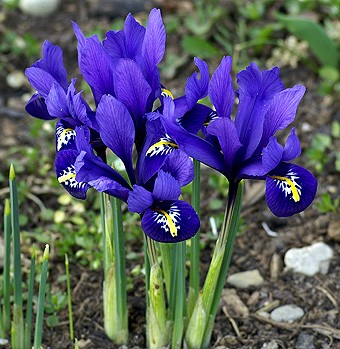
LATIN NAME: Iris
COMMON NAME: Iris
Plant Profile
Bearded iris grows from a thick, horizontal rhizome that runs at or just above the soil surface, throwing up fans of upright, sword-shaped leaves. The leaves are grey-green, stiff and drought-tolerant, and they stay present long after the flowers fade, giving the plant a structural role in the border even out of season. Because the rhizome sits proud of the ground, planting it too deep is the classic mistake that keeps an iris from flowering.
Few perennials deliver so much drama from so little water once established.
Clumps flower best when not crowded, so lift and divide the rhizomes every few years, just after the bloom finishes. Cut the leaves back to a fan, discard the old woody centre, and replant the young outer sections with the rhizome barely covered. This refresh is the single most reliable way to keep a bed of iris in full flower rather than in gradual decline.
Bearded iris flowers in late spring, exactly when the border is waking up but before the summer perennials hit their stride, so it acts as a colourful bridge between the bulb season and high summer. Its upright fans also provide a useful vertical accent and a foil for rounded plants, and the evergreen foliage keeps a presence long after the bloom is done, giving the bed structure through winter.
Science & Biotechnology
Iris flowers and rhizomes are rich in iridoid compounds and related volatiles that give the bloom its distinctive, slightly powdery scent and the rhizome its orris character when dried.
The famous blue and violet tones of bearded iris come from isophthalic-derivative pigments, the same chemical family that colours many blue flowers, layered with flavonoids and carotenoids to push the palette from palest cream through gold to near-black purple. Breeders have used this chemistry to assemble an enormous range of colour patterns, including the prized bitone and plicata forms.
Uses & Benefits
The most overlooked feature of a bearded iris is the fuzzy strip on its drooping lower petals, the “beard.” It is not a decoration but a landing strip and a nectar signpost. A bee grips the beard, slides down the petal, and the flower’s architecture dusts the bee with pollen from the overhanging anthers before it can escape. The whole bloom is a one-way pollination machine shaped over centuries, and the beard is the handle the insect is meant to grab. Stand a few inches away and the engineering is obvious.
Dried and aged bearded-iris rhizome, known as orris root, has been used for centuries as a fixative in perfumery and as a scent in potpourri and sachets, developing a soft, violet-like odour only after a year or more of drying. The preparation is slow but the result is prized by traditional perfumers, and few garden perennials double as a raw material for the scent industry. The fresh rhizome itself is acrid and not for eating, which is worth remembering when dividing a clump.
Growing from Seed
The bearded group is the sun-loving, dry-land cousin of the moisture-loving yellow flag (Iris pseudacorus). Where the flag wants bog and shallow water, the bearded iris wants hot sun and lean, free-draining soil, and it resents a wet crown. The two share the same basic flower plan but occupy opposite ends of the garden, which is why mixing them in one bed usually disappoints one of them.
Success with bearded iris is mostly about keeping the crown dry and the top in the sun.
Set the rhizome on a small ridge of lean, gritty soil so that the top sits at the surface and the sun can bake the neck. Space the fans about 40 centimetres apart to let air move between the fans, and water sparingly once established. A wet, shaded crown is what invites the soft rot that kills more iris than any pest, so err on the side of dryness.
Our Take
Bearded iris is the plant for the gardener who forgets to water; it positively prefers neglect once its roots are down. Try it with blue flax for a cool colour echo, or contrast it with yellow flag at the pond’s edge.
Related Reading
Continue exploring with these related plants: