


Iris germanica Seeds | German Iris
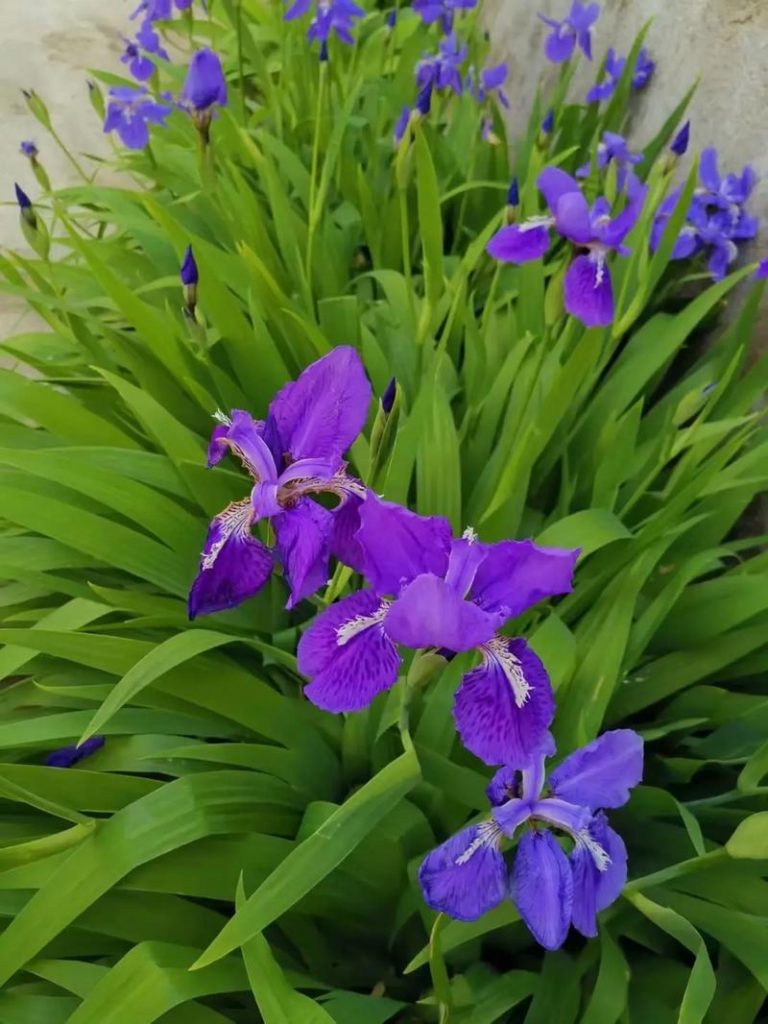
LATIN NAME: Iris germanica
COMMON NAME: German Iris
Plant Profile
German iris is the bearded iris of gardens, a rhizomatous perennial of hybrid origin that has been bred for five centuries into thousands of named cultivars. It makes a fan of stiff, grey-green, sword-shaped leaves and, in late spring, sturdy stems carrying three to seven large flowers in every colour but true red, each with three upright standards and three drooping falls, often with a beard of contrasting hairs along the centre. The rhizome creeps along the soil surface, half exposed, and the plant increases steadily by branching. It is a plant of hot, dry, sunny places, and it flowers best when the rhizome is baked in summer. The scent ranges from none to a heavy, sweet fragrance depending on the cultivar.
Science & Biotechnology
Iris germanica is a hybrid, probably between Iris pallida and Iris variegata, and most garden cultivars are triploid and sterile, which is why they are propagated by division. The genus has a long history in cytology: chromosome counts range from diploid to polyploid across the bearded irises, and the pattern of polyploidy is one of the classic examples used to explain how hybrid swarms generate diversity. The beard on the falls is a row of multicellular hairs that guide bees to the nectary, and the flower’s structure is adapted to force the insect to brush against the stigma on the way in. Rhizome rots, caused by several fungi and bacteria, are the main cause of losses in wet climates, and iris borer larvae hollow out the rhizome in summer. Breeders now select for reblooming and for tolerance of wet winters.
Uses & Benefits
The plant is grown for its flowers, which are among the most spectacular of any hardy perennial, and for cut flowers, which open successively over two weeks. It is also used in dry gardens, on banks and at the foot of walls, where the rhizome can bake, and it is a traditional planting on graves and along borders in southern Europe. The rhizome has a long history in medicine as an irritant purge and as a fixative in perfume, and orris butter is still produced from related species. In the garden it needs full sun, sharp drainage and shallow planting, with the rhizome exposed. It should be divided every three or four years, and the old centre of the clump discarded, or flowering declines and rot sets in. All parts are toxic if eaten.
Growing from Seed
Sow fresh seed in autumn, in a gritty mix, and leave the pots outdoors for the winter; germination is slow and uneven and may take two springs. Most garden plants are sterile, so seed is only worth sowing from species or from fertile cultivars. Plant rhizomes in late summer, with the top exposed and the roots spread, in full sun and sharply drained soil. Space them thirty to forty centimetres apart. Water once, then leave them. Divide every three years, cutting the leaves back to fifteen centimetres and discarding the woody centre. Remove and destroy any rhizome with borer holes, and keep the foliage dry in winter to reduce rot.
Our Take
The bearded iris in all its colours, and a plant that wants its rhizome baked. Shallow planting, full sun, divide every three years.
Related Reading
If German Iris appeals to you, these related plants are worth a look: