


Linum perenne Seeds | Blue Flax
LATIN NAME: Linum perenne
COMMON NAME: Blue Flax
Plant Profile
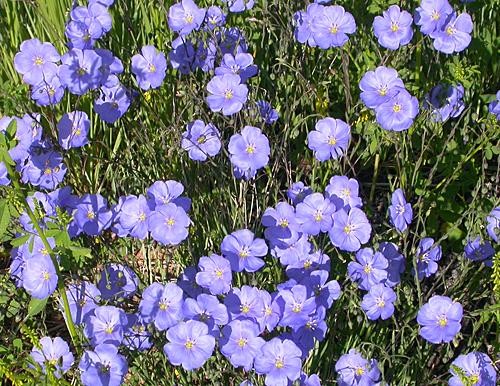
Blue flax performs a small daily magic that most gardeners miss because it happens while they are at lunch. Each sky-blue, five-petalled flower opens early in the cool of the morning and then folds shut by midday, lasting a single day before it is replaced by the next bud. The plant keeps this up for weeks, so the show is continuous even though no individual bloom survives past noon. A drift of Linum perenne therefore shimmers with fresh flowers at dawn and quiets to green by afternoon, a rhythm worth planning a garden seat around.
The species forms slender, wiry clumps of narrow, grey-green leaves and even finer stems that rise above the foliage in a loose, airy mound. It is not a bold plant; its charm is in the lightness, the way it threads through heavier neighbours without competing. In a hot, dry border few blue flowers stay cool-toned rather than bleaching, which makes it a reliable filler for gaps that need colour without weight.
Blue flax is a classic plant for the sunny, free-draining bank where little else flowers for long.
In its European home blue flax grows on chalk and limestone banks where the soil is thin and the competition is fierce, and that origin explains its dislike of rich, damp ground. It is therefore a natural fit for the wildlife or alpine edge of a garden, where lean soil and full sun let it flower at its densest. A spring shear after the first wave keeps the mound compact and prompts fresh stems, and the plant quietly self-sows to widen its patch year by year without ever becoming a nuisance.
Science & Biotechnology
The useful chemistry of flax sits in the seed, not the bloom. The seed coat of Linum is rich in mucilage that swells into a soothing gel when wetted, the property behind the traditional use of flaxseed as a demulcent and the modern use of ground flax as a soluble-fibre food. The garden blue flax is grown for ornament rather than for fibre or oil, but it carries the same seed character as its famous crop cousin.
Uses & Benefits
The genus Linum is best known through the annual flax (Linum usitatissimum), source of linseed oil and linen fibre, but the perennial species shares its chemistry in a hardier, longer-lived package.
Where the annual flax is grown as a field crop for oil and fibre, Linum perenne is a border plant that returns year after year with almost no input. Both show the same clear blue flower and the same mucilaginous seed, so the garden form is a living reminder of where linen and linseed oil begin. The perennial simply trades yield for permanence.
Growing from Seed
Left to itself the plant self-sows modestly, sending up new wiry seedlings among its neighbours so the clump appears to spread without ever becoming invasive. The seedlings are easy to spot and move while small, which lets you redistribute the blue wherever a gap appears. A light shear after the first flush often prompts a second, softer wave of bloom.
The seed is fine and quick, and it behaves best sown where it is to grow rather than transplanted.
Sow the seed on the surface of a gritty, free-draining compost and press it down without covering, because light helps it sprout. Keep the surface evenly moist until the seedlings show, then thin them to stand about 20 centimetres apart so the slender stems have room to branch. Once established the plants shrug off drought and ask only for sun.
Blue flax looks best as a loose cloud rather than a tight row, so resist the urge to space it like bedding. Thin to leave a scatter of young plants, then let them mingle with neighbouring perennials. The result is the airy, naturalistic effect that the species shows in the wild on European calcareous banks, where it weaves through grass in a sheet of blue.
Our Take
Blue flax is the gardener’s easy blue: sow it once on a sunny bank and it will thread itself through the border for years. It sits well beside bearded iris for a cool echo and among fleabane in a meadow mix, with blazing star for a vertical partner.
Related Reading
If Blue Flax appeals to you, these related plants are worth a look: