


Thermopsis lanceolata Seeds | Tapered False Lupin
LATIN NAME: Thermopsis lanceolata
COMMON NAME: Tapered False Lupin
Plant Profile
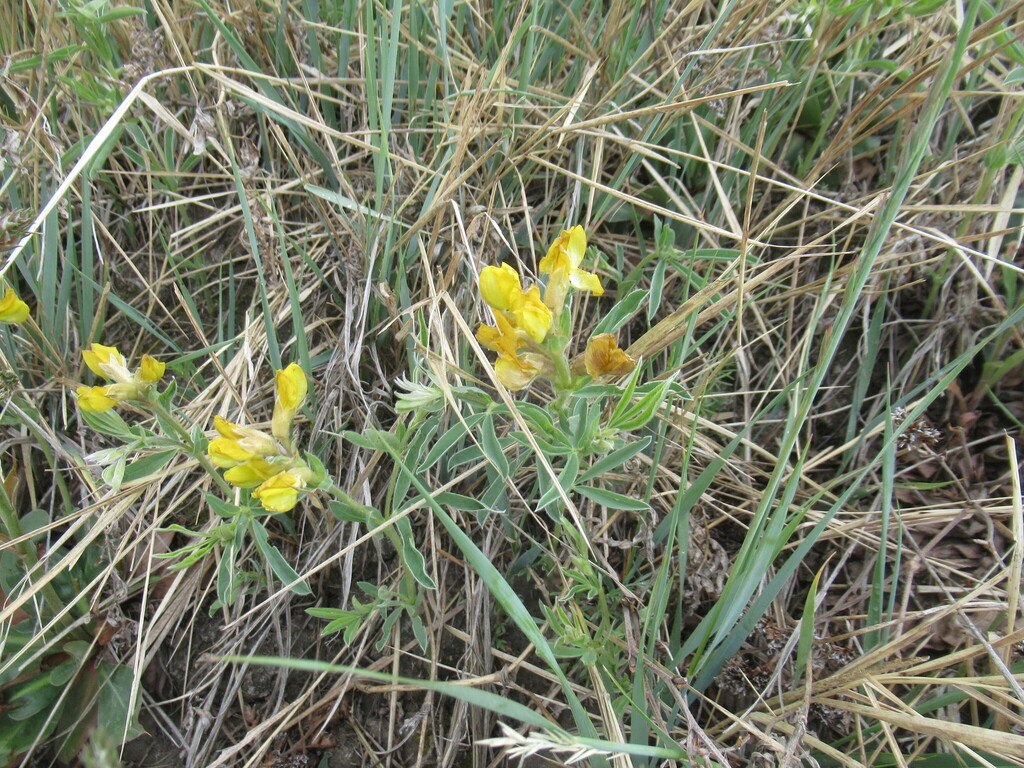
Tapered false lupin is the closest thing to a lupin that the Asian steppe produces. Thermopsis lanceolata is a herbaceous perennial reaching a metre, with grey-green leaves of three spear-shaped leaflets and erect, tapering spikes of pale yellow pea flowers in late spring and early summer.
The range is the cold heart of Asia: southern Siberia from the Altai to Kamchatka, Kazakhstan, Mongolia, and down through Nepal into the Chinese provinces of Hebei, Gansu, Shanxi, Shaanxi and Qinghai, with the southern edge of Inner Mongolia. It grows on steppe, stony slopes and open pine woodland across that span.
It is closely related to the garden lupins and looks like a tougher, narrower version of them: less leaf, more flower, and a bushy rather than a clumping habit. The species epithet lanceolata refers to the spear-shaped leaflets, which distinguish it at a glance from its broad-leaved relatives, and the whole plant carries a sparse covering of appressed silver hairs that catch the low steppe light.
The plant is tough and undemanding in cultivation but resents disturbance, and that single fact governs its placement. Once the root is down, it is better left alone; a clump dug and divided usually sulks for a season and sometimes does not come back at all.
Science & Biotechnology
The plant contains thermopsine, a quinolizidine alkaloid also found in the lupins, and it shares the family’s general toxicity to livestock. Grazing animals avoid it where better forage exists, and the alkaloid profile of the genus has been studied for its effects on the nervous system rather than for any practical use.
The flower is a standard papilionaceous pea flower with a working mechanism: the keel is held closed by tension, and a bee of the right weight lands on it, the keel springs down, and the stamens brush pollen onto the insect’s underside. Lighter visitors cannot trigger it, which is a filter as effective as any floral tube.
Observation records peak hard in June, with May and July close behind and almost nothing outside the warm months, which fits a steppe plant whose whole flowering season is compressed into a few weeks between the last frost and the summer drought.
Uses & Benefits
There is no food use and no modern medicinal one. The genus has a place in Russian and Chinese folk medicine as an insecticide and a topical agent, and the alkaloids justify the insecticidal claim, but the plant is not a safe herb and should not be treated as one.
In the garden its value is structure rather than spectacle: a metre of grey-green foliage from April, yellow spires in early summer, and a quiet presence afterwards that holds a dry slope together. It is a plant for the back of a gravel bed rather than the front of a border.
Its nitrogen-fixing root nodules are the ordinary legume equipment, and on poor ground they make the plant a modest improver of its own patch. The flowers are visited by bumblebees and are worth a place for that alone in a garden managed for pollinators. Fellow Fabaceae members here: Securigera varia, Astragalus laxmannii and Samanea saman.
Growing from Seed
The seed has a hard coat and benefits from scarification: nick it with a blade or pour boiling water over it and soak overnight. Sow in deep cells rather than trays, because the taproot develops within weeks and a seedling that has been disturbed early rarely makes a good plant.
Germination is irregular over three to five weeks at eighteen to twenty degrees, and it improves with a period of cold beforehand, so an autumn sowing in a cold frame is the simplest route. Pot on without breaking the root ball, and plant out in its first autumn.
Choose the site finally, in full sun and any soil that drains, and do not move it afterwards. Water the first summer and never again; established plants take drought and hard frost without complaint, and the only real maintenance is cutting the old stems down in spring.
Our Take
False lupin is for gardeners who like the idea of a lupin but not the slugs, the mildew and the three-year decline. This one comes from a harder place than any garden lupin and behaves accordingly: it shrugs off drought, it never needs staking, and its only demand is that you leave it alone.
The pale yellow is softer than the blues of the garden hybrids and suits a gravel or steppe planting better. Sow a few, plant them once, and the clumps will outlast most of what is around them, flowering quietly every June for years without a change of routine.
Related Reading
Gardeners who grow Tapered False Lupin often pair it with these related subjects: