


Lupinus bicolor Seeds | Miniature Lupine
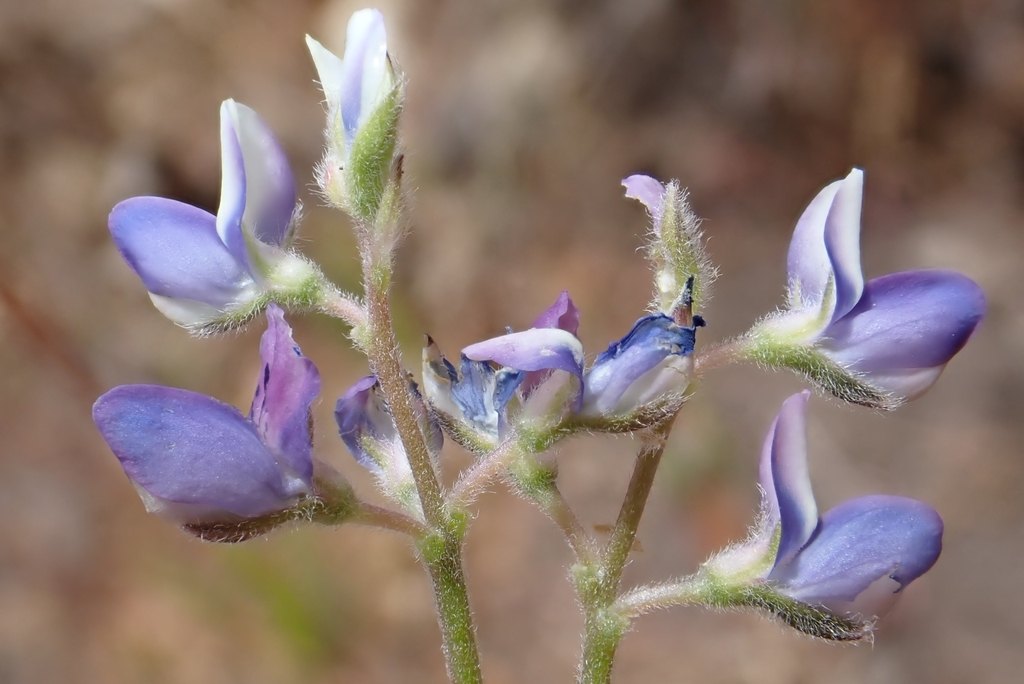
LATIN NAME: Lupinus bicolor
COMMON NAME: Miniature Lupine
Plant Profile
Lupinus bicolor is a small annual lupine of the Fabaceae, native to California and Oregon, where it grows in grassland, chaparral and open woodland, often on sandy or gravelly soil. It is 20 to 40 cm tall, with palmate leaves of five to nine narrow leaflets and spikes of small pea flowers in blue and white.
The two-tone flower is the reason for the name: the standard petal is usually blue or violet, while the keel and wings are white, and the contrast gives the spike a bicolour look that is unusual among lupines. The flowers open from the bottom of the spike upwards, and a single plant can be in bloom for a month.
The plant is one of the smaller lupines, and it is often overlooked in favour of the tall garden hybrids, which are larger and more colourful but which need richer soil and more water. It is a plant of poor, dry ground, and it ranks among the species that was used in the restoration of disturbed sites in California.
The genus Lupinus is large, with about 600 species, and it is centred on western North America and the Andes. The annual species of California are a distinct group, adapted to the Mediterranean climate of wet winters and dry summers, and they complete their life before the drought arrives.
Science & Biotechnology
Lupinus is a genus of the Fabaceae, the pea family, and it ranks among the few genera in the family with palmate leaves and with a strong preference for acid, sandy soils. The genus is divided into two groups, the Old World species and the New World species, and the Californian annuals belong to the latter.
The nitrogen-fixing ability comes from a symbiotic relationship with rhizobia bacteria, which live in nodules on the roots and convert atmospheric nitrogen into ammonia. That is why lupines can grow on poor soil and why they are used in restoration, and it is also why they are sensitive to phosphates, which inhibit the symbiosis.
The alkaloids that make lupine toxic are quinolizidine alkaloids, which are bitter and which deter herbivores. Some species have been bred for low alkaloid content and are used as stock feed, but the ornamental species retain the full complement, so they are not eaten.
The bicolour flower is produced by a difference in pigment between the standard and the keel, and it is under simple genetic control. The same pattern appears in several other lupine species, and it is thought to function as a nectar guide, directing bees to the centre of the flower where the reward is.
Uses & Benefits
It is used in meadow plantings, on dry banks and in wildflower mixes, where its small size and its tolerance of poor soil make it useful. It is also a nitrogen fixer, and it improves the soil where it grows, which is one reason it is included in restoration seed mixes.
The plant is not a significant cut flower, since the spikes are small and the flowers drop, but it is valuable in a meadow for its colour and for its role in the ecosystem. It is visited by bees and by butterflies, and it is a larval host for several species of blue butterfly.
The seed of some lupine species is edible after prolonged soaking and cooking, which removes the bitter alkaloids, but the annual Californian species are not grown for food and should not be eaten without expert preparation. The foliage is toxic to livestock, particularly to sheep, and lupine poisoning is a known problem in pastures.
In a garden the plant is grown for ornament and for soil improvement, and it ranks among the species that can be used to prepare a poor site for other plants. It is not a plant for a rich border, where it will be overwhelmed by stronger growers. Three more Fabaceae sit in the same catalogue: Lupinus luteus, Lupinus pubescens and Psophocarpus.
Growing from Seed
Lupine seed has a hard coat and germinates unevenly without treatment. Nick the seed coat with a file or soak the seed in warm water for twelve hours before sowing, at 15 to 18 °C. Germination is spread over a fortnight to three weeks.
Sow direct where the plants are to flower, since the taproot resents disturbance, or raise seedlings in deep cells and plant out while they are small. Space plants 25 cm apart in full sun and poor, well-drained soil. Water it through its first summer, then hardly at all. Do not feed, and do not add manure or compost, since rich soil produces soft growth and few flowers and the plant will be short-lived. In a meadow, sow with other annuals of the same schedule and let the plants self-sow.
Our Take
Miniature lupine is a plant for a meadow or a dry bank, not for a border. It is small, modest and useful, and it does a job that the large garden lupines cannot do: it grows on poor ground, fixes nitrogen and feeds the bees. Sow it in a wild corner, let it seed, and do not expect it to compete with the bigger perennials. It is a plant that earns its place by being part of a community rather than by standing out from it.
Related Reading
Gardeners who grow Miniature Lupine often pair it with these related subjects: