


Lupinus polyphyllus Seeds | Lupine Rose
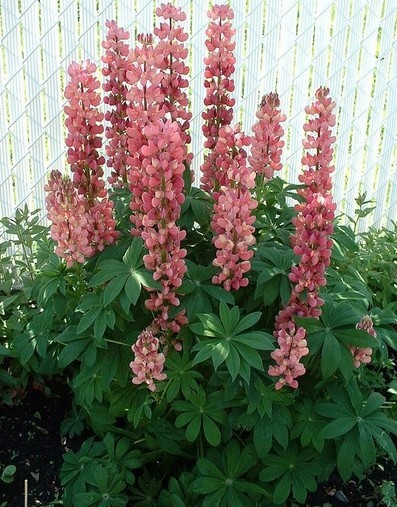
LATIN NAME: Lupinus polyphyllus
COMMON NAME: Rose Lupin
Plant Profile
Rose lupin is a pink-flowered form of the garden lupin, with the same palmate foliage and tall, dense spikes as the blue and red types. Plants reach 80-120 cm, and the colour runs from pale rose to deep magenta depending on the seedling and the soil.
Flowering begins in late May and lasts about five weeks, with a lighter second flush in August if the first spikes are cut. The foliage stays handsome after flowering, and the seed pods that follow are worth leaving for their fuzzy texture and their seed.
The species, Lupinus polyphyllus, comes from damp meadows and stream banks in western North America, from British Columbia to California. That origin explains why garden lupins do best in soil that does not dry out completely, and why they sulk in shallow chalk.
Science & Biotechnology
The garden lupins are hybrids, and the pink forms arise from combinations of anthocyanin pigments rather than from a separate species. Seed from a pink spike will give a range of pinks, purples and occasionally white, which is the honest expectation with any lupin sowing.
Lupin seed is unusually rich in protein and oil, and the genus has been studied as a protein crop for cool climates. The bitter alkaloids that protect the plant in the wild are the obstacle, and sweet varieties have been bred by selecting low-alkaloid lines over many generations.
The plant’s root system includes cluster roots on poor soil, and the nodules that fix nitrogen are visible as pinkish swellings when a plant is lifted. A lupin that has been in place for two years will have improved the soil around it measurably.
Uses & Benefits
Rose lupins are the backbone of the early-summer cottage border, and they are one of the few plants that give height and colour in poor acid soil. They work well in a meadow planting, at the edge of woodland and along a fence, where their self-sowing is an asset.
Cut spikes are dramatic in a tall vase and last several days if the stems are seared. The plants are useful for stabilising sandy banks and for adding nitrogen to a new bed. Commercially the garden hybrids are sold as seed mixtures and as named plants, and the Russell strain remains the standard.
Growing from Seed
Sow from February to May at 15-18°C, 1 cm deep. Soak the seed overnight or nick the coat to speed germination, which otherwise can take three weeks or more. Direct sowing is preferable to modules because of the taproot.
Plant out at 40 cm apart in full sun or part shade, in soil that stays reasonably moist. Water through dry spells in the first year, and mulch in spring. Cut the first flush of spikes when the lowest flowers fade to encourage more, and cut the whole plant to the ground in autumn. Divide nothing: lift and replace old plants every fourth year, since the crown does not divide reliably.
Our Take
A pink that holds its own among the blues, cheap from seed and generous with it, provided the soil stays cool and moist.
Related Reading
If Rose Lupin appeals to you, these related plants are worth a look: