


Lupinus Seeds | Lupine
LATIN NAME: Lupinus
COMMON NAME: Lupine
Plant Profile
Lupines are members of the pea family, and like their relatives they strike a bargain with soil bacteria that lets them pull nitrogen straight out of the air and lock it into the soil. A lupine spire is therefore not just a flower but a quiet fertiliser factory: after the bloom fades and the leaves rot down, the ground where it stood is richer than before. Few border plants improve their own neighbourhood as they grow, which is why lupines have been used both as ornament and as green manure for centuries.
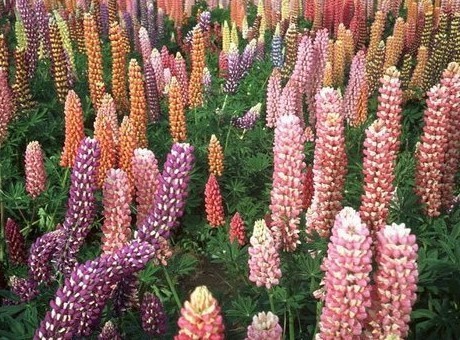
The plant is built like a classic legume. Its leaves are palmate, divided into many narrow leaflets that fan out like fingers, and its flowers are the familiar pea-type bloom carried in dense, upright racemes. The spires come in blue, purple, pink, white, yellow and bicolour forms, and the overall shape is a vertical exclamation mark in the early summer border. The fuzzy, pea-like pods that follow carry the round, mottled seed.
Wild lupine seed is famously bitter and, in some species, toxic, because it accumulates alkaloids such as lupinine and sparteine as a chemical defence. This bitterness protected the plant in the wild but also gave lupines a poor reputation as livestock poison in places where the wrong species grew in pasture. The story of the garden lupine is in large part the story of breeding that bitterness out.
The same alkaloids that made wild seed dangerous became the target of one of the more useful plant-breeding programmes of the last century.
Science & Biotechnology
Breeders selected “sweet” lupine lines with sharply reduced alkaloid content, turning a toxic wild seed into a palatable, protein-rich grain and fodder crop suited to poor sandy soils. The sweet white lupine and its relatives are now grown as a sustainable pulse in parts of Europe and Australia, a neat reversal of the plant’s poisonous reputation. The ornamental border forms are selected for flower, not for seed chemistry, but they carry the same legume biology.
Uses & Benefits
In the garden the lupine is a cottage-garden staple, valued as much for structure as for colour.
The garden forms most grown today descend from the Russell hybrids, bred in the early twentieth century for taller, denser spires in a wide colour range, including the coveted bicolours. They flower in late spring and early summer, bridging the gap between the spring bulbs and the high summer perennials, and their pea flowers are worked busily by bumblebees that are heavy enough to trip the keel and release the pollen.
The nitrogen fixed by lupine root nodules is not all used by the plant; a good share leaks into the surrounding soil and is left behind when the foliage breaks down, so a lupine patch enriches the ground for the plants that follow. This is why lupines have long been used as a green-manure and cover crop on poor land, and why a row of them in the border is doing quiet fertility work while it flowers. The effect is strongest in light, open soils where the nitrogen-fixing bacteria thrive.
Growing from Seed
Lupines dislike root disturbance, so the aim is to get them settled young and leave them alone.
The seed has a hard coat that benefits from a little help before sowing; nicking it or rubbing it on sandpaper, then soaking it briefly in tepid water, lets moisture in and speeds a strong start. Sow the treated seed in a deep module so the taproot can run straight, because a circled root is the usual reason a transplanted lupine sulks.
Move the young plants to their final spot while they are still small, setting them out in full sun and light, well-drained soil that is slightly acid, at roughly 40 centimetres apart. Once in the ground they establish a deep taproot and resent being moved again, so choose the site with care. A low nitrogen feed is best, because too much lush growth weakens the flower and lets the plant lean.
Our Take
Lupines reward a cool start and a permanent home; disturb the root and they will tell you. They make a classic cottage trio with Sweet William and foxglove, and they pair with sunflower in a summer meadow.
Related Reading
Continue exploring with these related plants: