


Psophocarpus Seeds | Winged Bean
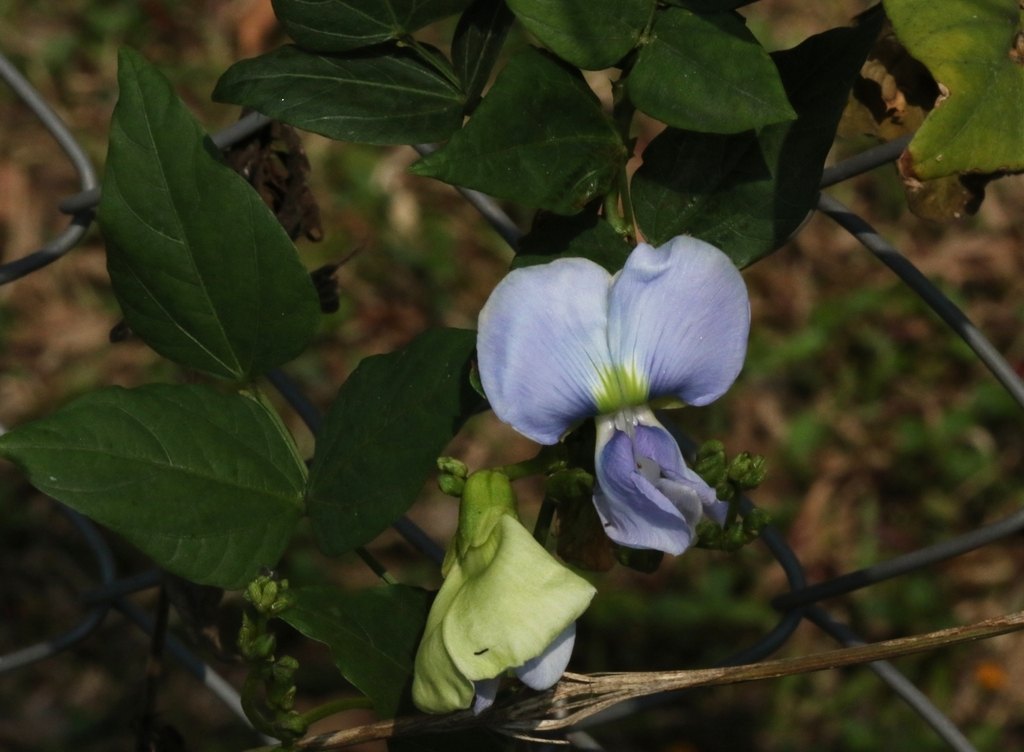
LATIN NAME: Psophocarpus
COMMON NAME: Winged Bean
Plant Profile
Psophocarpus is a genus of about nine twining legumes from the Old World tropics, and one of them, the winged bean, is among the most promising food plants never to have become a crop. The others are fodder plants, marsh scramblers and botanical curiosities. The genus is small, the variation inside it is large, and the agronomy is still being worked out.
The name comes from the Greek for noise and fruit: the dry pods rattle when shaken, which is how a collector finds them in scrub. It was published by de Candolle in 1825. The genus sits in the Phaseoleae, alongside the beans and cowpeas, and it shares their nodulation and their three-leaflet leaves.
Psophocarpus tetragonolobus is the crop. It climbs three to four metres on twining stems, carries trifoliolate leaves and produces pods fifteen to twenty centimetres long with four frilled wings running their length. The wings are the reason for the name and for its other common name, the four-angled bean. Pods are cut young and eaten whole.
The species is known only from cultivation and has never been found convincingly in the wild, which is unusual for a crop and still unexplained. Its relatives are African, and the crop is grown across southeast Asia and New Guinea. The centre of diversity is probably New Guinea, where the greatest range of pod forms is recorded. The origin remains a puzzle. Other Fabaceae on the list: Astragalus laxmannii, Samanea saman and Trifolium subterraneum.
Science & Biotechnology
The seed is the reason for the interest. It carries thirty to forty per cent protein and fifteen to twenty per cent oil, close to soybean, and the oil is rich in unsaturated fatty acids. The amino acid profile is good, with adequate lysine and methionine for a legume. In trials it has matched soybean as a protein source for monogastric animals.
The plant also makes tubers, and they are edible, starchy and twenty per cent protein by dry weight. That gives four crops from one plant: green pods, mature seed, young leaves and tubers. The tuber crop is the least exploited, partly because it needs a long season and partly because harvesting destroys the stand. It is a perennial grown as an annual.
Two traits have kept it out of large-scale agriculture. It is short-day, so it flowers late or not at all in long summer days, which limits it to the tropics and to a narrow band of latitudes. And the seed contains trypsin inhibitors and tannins that need heat to be destroyed, as soybean does. Neither is fatal, and both slow adoption.
Uses & Benefits
The young pods are the market product in southeast Asia, sold in bundles and cooked like French beans, with a faintly nutty flavour and a firm texture. The mature seeds are boiled or fermented, and in Indonesia they go into tempeh alongside soybean. The leaves are eaten as a green, and the flowers are dipped in batter and fried.
Agronomically it is a soil improver. The roots nodulate freely with cowpea-type rhizobia, and the plant fixes nitrogen through a long season, which makes it useful in rotations and in intercropping with maize or cassava. It also covers the ground and suppresses weeds, and the tubers break up compacted soil. Those are real advantages on small farms.
For a garden in a warm climate it is a curiosity worth growing: a vigorous vine for a fence, with pale blue flowers and winged pods that children find interesting. In temperate gardens it makes a lot of leaf and few pods, because the days are too long. Grow it as an ornamental annual and eat what it gives you.
Growing from Seed
Scarify the seed and soak it overnight before sowing, at twenty-five to thirty degrees. Germination is fast, five to ten days, and the seedlings are vigorous. Sow after the last frost, in full sun, at thirty centimetres apart along a fence or trellis. The plant needs a support from the start, because the stems are weak until they find one.
It wants a long warm season, at least four months without frost, and it responds to water and to phosphorus. Inoculate with the right rhizobia if the soil has not grown cowpeas before. Pods are ready about sixty to seventy days after sowing and are picked every few days while young. Leaving them to mature stops further flowering.
Seed is saved from pods left on the plant until they dry and rattle, which is the noise the genus is named for. Dry them further indoors and store in a sealed jar. The seed loses viability quickly in heat, so keep it cool. In cool climates, grow a short-season variety and accept a smaller crop.
Our Take
The winged bean was promoted in the 1970s as a crop that would feed the tropics, and it did not happen. The reasons are agronomic and economic rather than biological, and they are the usual ones: day length, harvest labour, and a market that had never seen a four-winged pod. The plant is still there, and still good.
Grow it if you have heat, a fence and four months. It will give pods, leaves and a tuber, and it will fix nitrogen while doing it. It is not going to feed a continent, but it will feed a household, and that has always been the more modest and more reliable promise.
Related Reading
More species in the same orbit as Winged Bean: