


Benincasa hispida Seeds | Wax Gourd
LATIN NAME: Benincasa hispida
COMMON NAME: Wax Gourd
Plant Profile
Wax gourd is a cucurbit native to South and Southeast Asia, and it is grown across Asia for a fruit that ranks among the largest in the family. The vines are thick and the stems coarsely hairy, with large rough leaves 10 to 30 cm long.
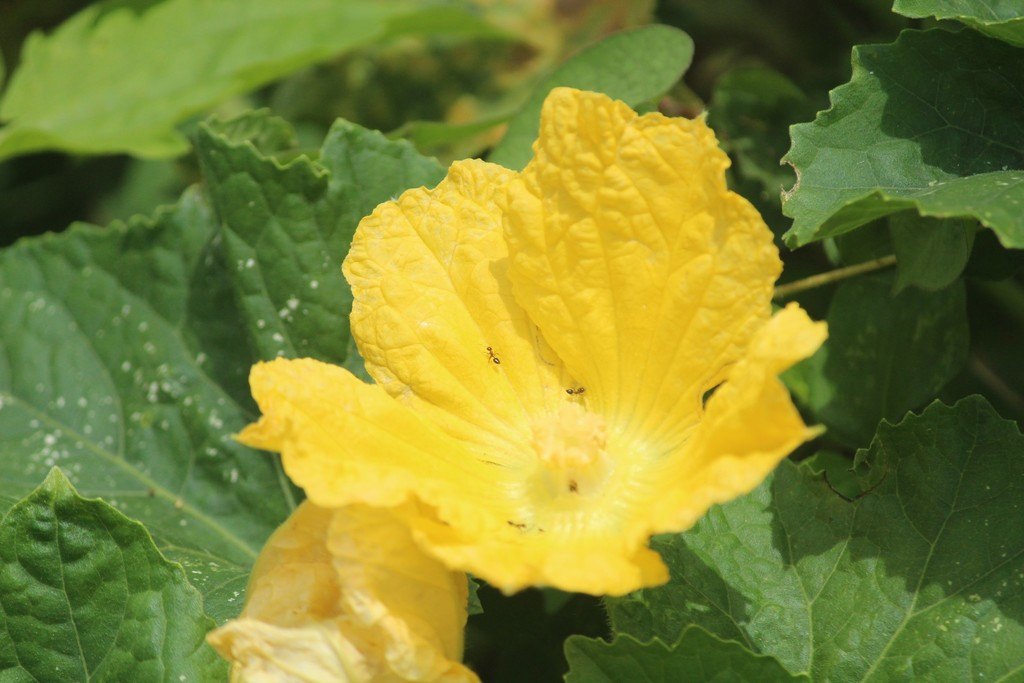
Golden yellow flowers form in the leaf axils from June to September, and after pollination they set an oblong fruit 50 to 60 cm long and 10 to 25 cm wide. Typical weight is 5 to 10 kg, and specimens of 34.5 kg have been recorded. The young fruit is covered in soft fuzzy hairs, which disappear as it matures.
What replaces them is a waxy coating, and that coat is the plant’s commercial reason for existing. It seals the fruit, slows water loss and gives wax gourd a shelf life of up to a year without refrigeration, which in a tropical climate is a remarkable thing for something the size of a small dog. Close allies on the list: Melothria scabra, Ipomoea quamoclit and Convolvulus tricolor.
Science & Biotechnology
The wax is a complex mixture of long-chain alkanes and triterpenoids, laid down in the cuticle as the fruit matures. It is hydrophobic and effectively self-sealing, and it is why a whole wax gourd can sit in a shed for months, its flesh still crisp, long after any other cucurbit would have collapsed.
The flesh itself is mild and slightly sweet, with a high water content and very little flavour of its own. That neutrality is why it works in soups and braises: it absorbs whatever it is cooked with, and it holds its shape through long cooking in a way that courgette does not.
The plant is a vigorous climber and needs support or a lot of ground. In Asia it is often grown on frames over paths or ponds, which uses the vertical space and keeps the fruit off the soil. The seeds are white or yellow and are roasted as a snack in parts of Southeast Asia.
Uses & Benefits
In Chinese cooking it is dongua, the winter melon, and it goes into soup, stir-fry and the hollowed-out fruit used as a serving vessel. It is also candied and made into a sweet tea, which is the reason the English name calls it a melon when botanically it is a gourd.
In Cambodia it is tralach, the base of samlor tralach, a soup with pork; in China it is stir-fried or simmered with pork bones for a clear broth. The young shoots are eaten as a green in parts of Southeast Asia. In India it is grown as a summer crop on trellises over irrigation channels, which keeps the fruit cool and off the ground.
A distinct variety, chi qua, is grown for its young fruit and used as a summer vegetable in southern China. It is picked small, before the wax develops, and cooked like courgette. The seed has a medicinal use in traditional Chinese practice, and the fruit is used in Ayurvedic preparations. The flesh is low in calories and high in water, which makes it a useful bulk ingredient in hot climates, though it is not a significant source of protein or fat.
Growing from Seed
Sow in late spring, once soil is above 20 °C, at 2 cm deep. The seed has a hard coat and benefits from soaking overnight before sowing. Germination takes one to two weeks, and the seedlings grow fast enough that a May sowing will fruit by September in a warm season.
Give it room. A single plant will run 3 to 4 m, and the fruit needs support if it is not to sit on wet ground and rot. A strong frame, a fence or a trellis against a warm wall all work, and the vine will need tying in at first.
Pinch out the growing tip when the vine has set two or three fruit, so the plant puts its energy into filling them rather than into more flowers. Harvest when the skin has lost its hairs and the wax coat is fully formed, and leave a short piece of stem attached for storage. Seed is saved from the largest fruit, left on the vine until the skin hardens and the stem dries.
Our Take
This is a crop for someone with a warm wall and a lot of patience, not a small garden. The fruit is impressive and the storage quality is genuinely useful, but you need the space and the heat. In a cool summer you will get vines and flowers and nothing worth harvesting, and there is no way around that.
Related Reading
Gardeners who grow Wax Gourd often pair it with these related subjects: