


Samanea saman Seeds | Rain Tree
LATIN NAME: Samanea saman
COMMON NAME: Rain Tree
Plant Profile
The rain tree is a huge, wide-crowned legume of the Fabaceae, named Mimosa saman by Jacquin and moved to Samanea by Merrill in 1916. It reaches 25 metres, occasionally 40, and the umbrella crown spreads 25 to 30 metres, wider than the tree is tall. Leaves are bipinnate with three to nine pairs of pinnae, each carrying two to ten leaflets 1.5 to 6 cm long. A single leaf may hold more than a hundred leaflets, and the shade they cast stops grass.
The leaflets fold at dusk and before rain, which is where the name comes from. The movement is fast enough to watch, and on a tree carrying a hundred thousand leaflets it produces a sound like a shower passing through the crown. Each leaflet hinges on a pulvinus, a swelling that pumps potassium ions in and out of its cells and changes their turgor. The species has 26 chromosomes, counted repeatedly across its range.
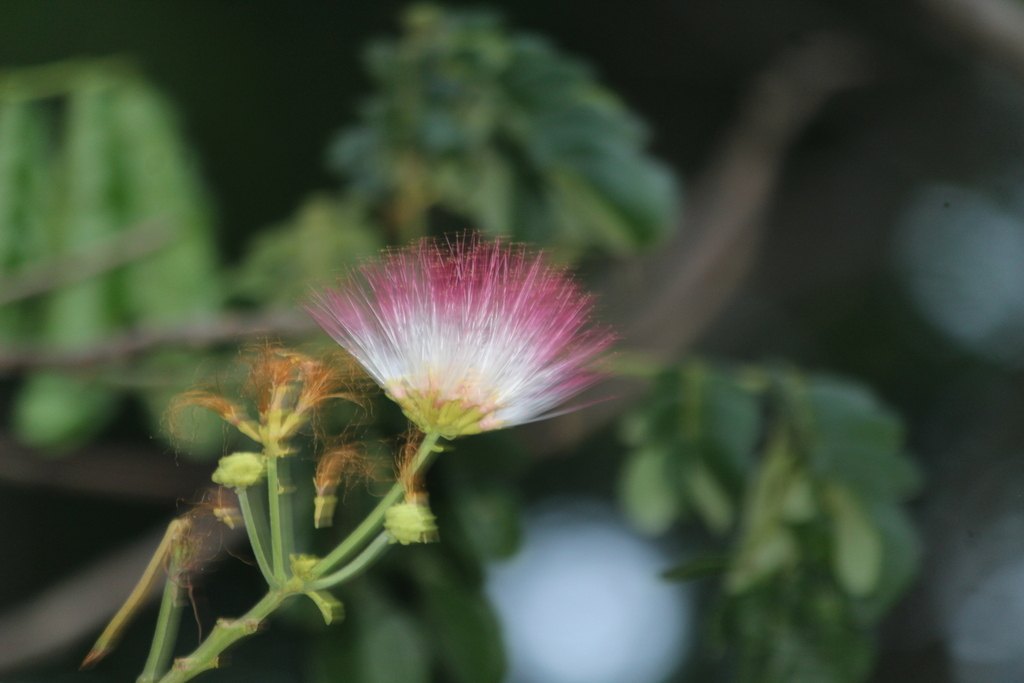
The flowers are heads of 20 to 25 pink powder-puff stamens, borne two to five together in the leaf axils and opening in flushes through the dry season. The pods that follow are thick and fleshy, 10 to 22 cm long and 1.5 to 2.2 cm wide, with a sweet pulp around five to 20 seeds. They fall in quantity and make a mess on a pavement, so the tree belongs in parks rather than streets. It shares the family with Gueldenstaedtia, Lupinus bicolor and Securigera varia.
Science & Biotechnology
Samanea sits in the mimosoid clade of the Leguminosae, and its position has moved about: it is placed in Samanea by some authors and sunk into Albizia by others, and the argument is not settled. The genus is small, and the species is variable across a range that runs from Mexico to Brazil and Peru.
It fixes nitrogen through root nodules, like most of its relatives, and it also pumps water. The deep roots lift moisture from below the reach of crops, and some reaches the surface through litter and shallow roots. The leaves carry 22 to 27 per cent crude protein and digest at 58 to 68 per cent, so the tree is planted over coffee and cacao and cut for fodder in the dry season.
The leaf movement is one of the best-studied cases of nyctinasty in plants. The rhythm persists for days in constant darkness, so it is not simply a response to light, and it can be reset by a pulse of red light, which implicates phytochrome. The advantage is debated: reduced transpiration at night, reduced herbivory, or a lower chance of damage in wind and rain.
Uses & Benefits
It is planted as shade for coffee, cacao and cattle, as a park and avenue tree across the tropics, and as a forage tree. The pods carry twelve to eighteen per cent protein and are eaten eagerly by stock, and the tree drops them at the end of the dry season, when fodder is scarcest.
The wood is soft enough to work easily and hard enough to last, with a density of 550 to 700 kg per cubic metre at 12 per cent moisture and almost no shrinkage. Green planks can be carved without splitting, and the timber resists dry-wood termites. In Hawaii it became the wood of the roadside craft trade, under the name monkeypod.
The bark and leaves have traditional medicinal uses across the range, and the tree is a host of bees that make a dark, strongly flavoured honey. In a garden it is only for the largest spaces: the crown can span thirty metres, the roots run further, and the litter is constant.
Growing from Seed
The seed has a hard coat and germinates unevenly. Nick the end away from the hilum, or pour water at about 80 °C over it and leave it to soak overnight, and sow while it is still swollen. A kilogram holds 4,500 to 8,000 seeds, and untreated seed may come up over three months, with a proportion never coming up at all.
Sow in a deep pot, because the seedling makes a long taproot before it makes many leaves, and plant out while it is small. A rain tree moved at two metres tall is a dead rain tree, and a large one cannot be transplanted without a machine and a lot of luck.
Give it full sun, room, and ground that drains. It will grow two metres a year in the tropics once it is established, and it will start to drop branches in wind at about fifteen years, which is the price of fast wood. Prune the young tree to a single leader and remove the lowest limbs early.
Our Take
The rain tree is one of the great trees of the tropical world and one of the worst choices for a small garden. It is a plaza tree, a coffee-shade tree, a tree for a cattle ranch, and it should be planted with that in mind. If you have the room, plant it for the shade and the folding leaves. If you do not, admire the one in the park and plant something smaller.
Related Reading
If Rain Tree appeals to you, these related plants are worth a look: