


Securigera varia Seeds | Crown Vetch
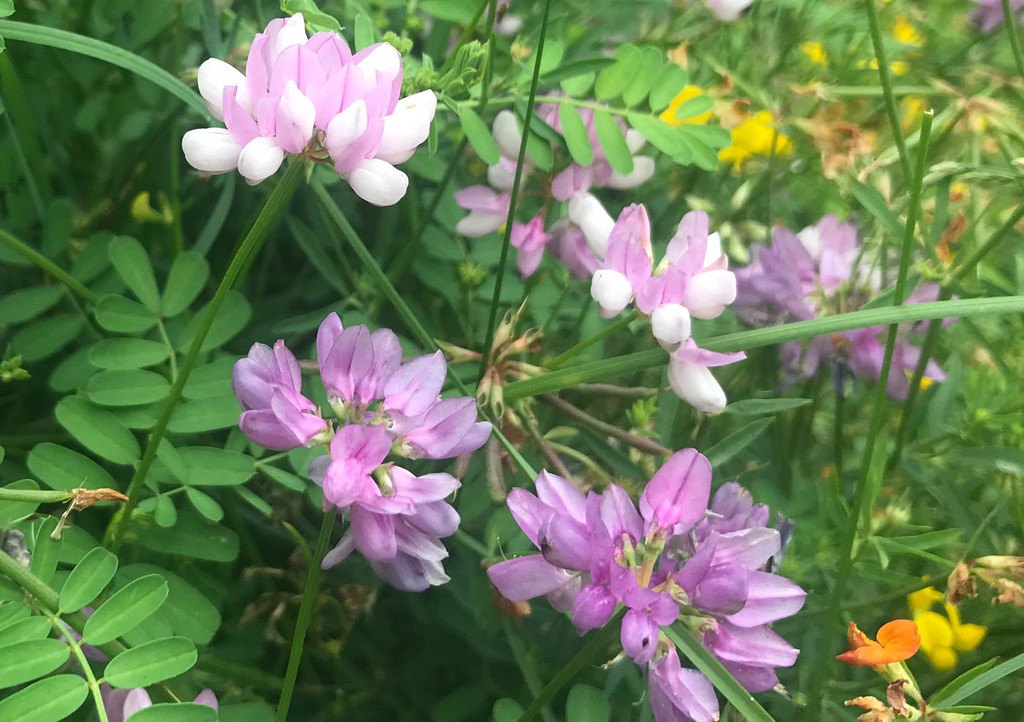
LATIN NAME: Securigera varia
COMMON NAME: Crown Vetch
Plant Profile
Securigera varia, long known as Coronilla varia, is a herbaceous perennial of the Fabaceae, native to open ground and scrub from Europe to western Asia. The name changed when the genus was split on molecular evidence, and the old one is still on most seed packets. Both describe the same scrambling plant.
The flowers are 1 to 1.5 cm long, carried in a rounded head of a dozen or more, and they are followed by long, slender pods that contain several seeds. The plant spreads by rhizomes and by seed, and it forms dense mats that bind the soil.
It has been sown on roadsides, strip-mine spoil and railway banks across North America since the 1950s, and it now appears in nearly forty thousand records there against forty-five thousand in France. The vigour that holds a slope will also take a meadow, and the plant does not stop at the fence.
That same vigour makes it invasive, and several American states list it as a noxious weed, where it escapes plantings and colonises natural areas. A plant with a job, and one that does the job too well. The trait that reclaims a slope also takes a meadow. It sits among Lupinus bicolor, Astragalus laxmannii and Samanea saman, all Fabaceae.
Science & Biotechnology
Securigera is a small genus of about 10 species in the Fabaceae, separated from Coronilla on molecular evidence. The genus is characterised by the pinnate leaves, the umbellate flowers and the long, segmented pods. Fixation is done by rhizobia housed in root nodules, which reduce atmospheric nitrogen to ammonia. That partnership lets the plant colonise poor ground and explains its use in restoration, and it also explains the sensitivity to phosphate, which suppresses the symbiosis.
The toxicity comes from nitrotoxins, chiefly miserotoxin, a glycoside that releases 3-nitropropionic acid and blocks respiration in the cell. Horses and other non-ruminants suffer most, and poisoned animals stagger, breathe hard and can die within days. Ruminants tolerate more, so it was once grazed.
Uses & Benefits
Erosion control, soil improvement, wildlife cover: it does all three, and seeding mixes for roadsides and reclaimed land rely on it. A wild garden or a bank suits it too, where the flowers and the mat-forming habit are assets. Cheap, quick and reliable, so it spread so far.
A nitrogen fixer, it improves the soil where it grows, which is one reason restoration projects use it. Bees and butterflies work the flowers, and several blue butterflies use it as a larval host. Rhizomes and seed both spread it, and both work.
Livestock poison runs through the plant: nitrotoxins cause paralysis and death in cattle and horses. That keeps it out of forage crops and out of pasture, whatever its value for nitrogen. The risk outweighs the gain, and farmers learn the plant by its dead stock.
People cannot eat it, and the seed is poisonous. Its work is engineering and reclamation rather than gardening, and its value lies in what it does to the land rather than in what it yields. Seed it on a bank, not in a bed.
Growing from Seed
The seed has a hard coat and germinates unevenly without treatment. Scarify the seed with sandpaper or soak it in warm water for twelve hours before sowing, at 18 to 22 °C. The seedlings appear between the fourteenth and the twenty-first day.
Either sow where they are to stay, since moving upsets them, or raise them in deep cells and plant out young. Space plants 45 cm apart on a bank or a slope, where they will spread to form a mat.
Water it until established, then leave it to its own devices. Drought does not trouble it, feeding is unnecessary, and the poorest ground will do. Cut it back in spring if it straggles, and divide clumps every three or four years to keep them vigorous. In poor soil it needs nothing at all.
Do not plant it near a pasture, since it is toxic to livestock, and do not plant it near a natural area, since it can escape and become invasive. In a garden, grow it in a wild corner or on a bank where its spread can be tolerated.
Our Take
Crown vetch is not a garden flower, and nobody should sell it as one. It is an engineering plant, used to hold soil on slopes and reclaim damaged land, and it does that better than almost anything else. If you have an eroding bank, it is a good choice. If you have a flower border, it is the wrong plant, and it will take over. Know which situation you are in before you sow it.
Related Reading
Gardeners who grow Crown Vetch often pair it with these related subjects: