


Stipagrostis pungens Seeds | Pungent Needlegrass
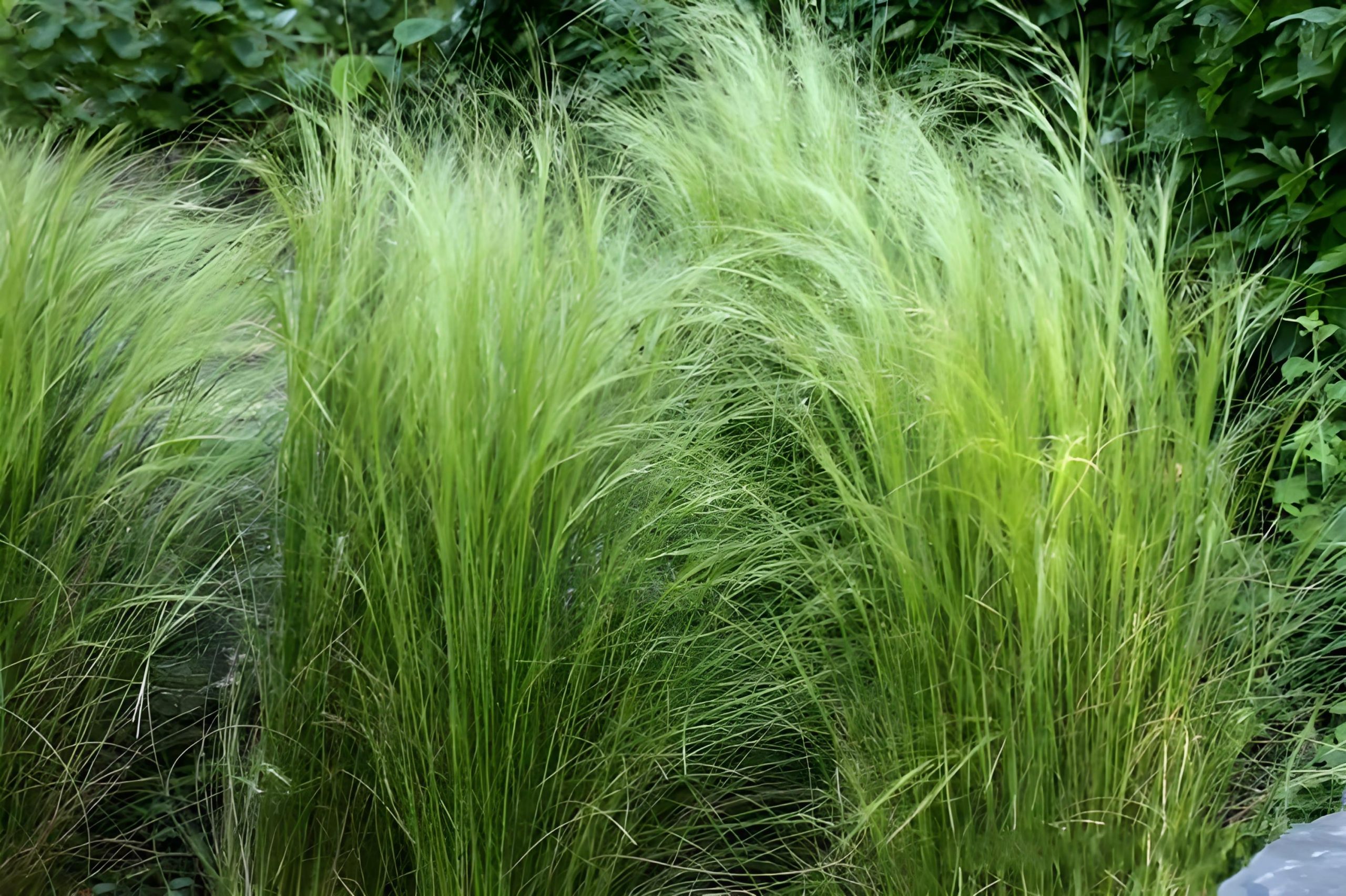
LATIN NAME: Stipagrostis pungens
COMMON NAME: Pungent Needlegrass
Plant Profile
Stipagrostis pungens is the drinn of the Sahara, a tough sand grass whose awns twist with the weather and screw the seed into the ground. It grows across the Sahara and the Arabian Peninsula to Iran and Pakistan, on dunes and deep sandy plains where the rainfall is under a hundred millimetres and the summer temperature passes forty-five. The plant forms a tussock of stiff, rolled, sharply pointed leaves that rise from a woody base, with flowering stems up to a metre. The seed head carries spikelets with three long awns, and those awns are hygroscopic: they bend and straighten with changes in humidity, and the movement works the seed into the sand like a screw. It is one of the most important sand-binding grasses of the deep desert, and it is grazed by camels when young. The name drinn is used across North Africa for this and closely related species.
Science & Biotechnology
Stipagrostis pungens is a C4 grass that survives in one of the driest habitats on earth, and it does so by combining deep roots with an unusual dispersal mechanism. The awns on the seed attach to the sand and, as they absorb and lose moisture, they rotate the seed and drive it downward, so that it ends up several centimetres below the surface where the sand is cooler and damper. The species also spreads by short rhizomes, which hold the tussock together when the dune moves. Its leaves roll tightly in dry weather and are covered with a waxy cuticle, and the sharp tips deter grazing. It germinates quickly after rare rain, flowers within weeks, and sets seed before the sand dries out again. Like other desert grasses it is a nurse for tree seedlings, and it is one of the first plants to return after a dune has been stabilised by a fence.
Uses & Benefits
The grass is grazed by camels, goats and sheep, and it is one of the few green feeds in the deep desert after rain; it is cut and dried as fodder in some areas. The stems are used for mats, baskets and thatch, and the roots are used as a brush and for fibre. In desert reclamation it is planted or sown to stabilise dunes, and it is one of the species used in the great shelterbelt projects of North Africa and China, where sand drift threatens roads and oases. In traditional medicine the plant is used for stomach complaints. For a dry garden it is a curiosity rather than an ornament, needing deep sand and no irrigation, but it is worth growing to see the awns work. It cannot be grown in a wet climate, and it resents any soil that holds water.
Growing from Seed
Sow the seed in spring in deep sand at 25 to 30 degrees, pressing it into the surface rather than burying it; the awns will work it in. Keep the sand barely moist until germination, which takes one to three weeks. Grow the seedlings in full sun and in deep tubes, since the roots go down fast. Plant out into pure sand or very sandy soil, in the hottest, most exposed site available, and water only to establish. Do not add compost or fertiliser, which produce soft growth and rot. The plant tolerates burial by moving sand, salt spray and drought, but not shade or waterlogging. Cut the old leaves to the ground in late winter. It is hardy to about minus five in dry conditions.
Our Take
The drinn of the Sahara, whose awns screw the seed into the sand. Deep sand, full sun, and no water at all.
Related Reading
Continue exploring with these related plants: