


Gueldenstaedtia Seeds | Gueldenstaedtia
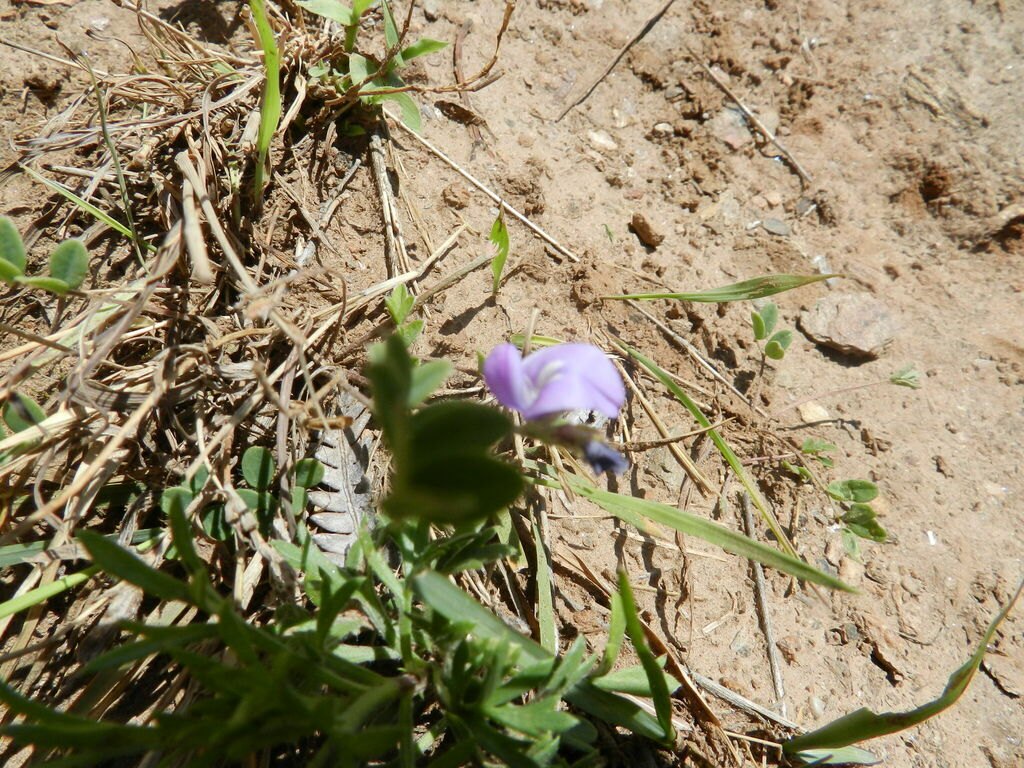
LATIN NAME: Gueldenstaedtia
COMMON NAME: Gueldenstaedtia
Plant Profile
Gueldenstaedtia is a small genus of alpine legumes from the mountains of China, Korea, Mongolia and the Himalayas, grown in rock gardens for a brief flush of violet pea flowers in spring. Outside specialist collections it is almost unknown, and it is not easy. Plants are small, the taproot long, the season short.
They make low cushions of pinnate leaves, five to fifteen centimetres tall, with silky hairs on the underside and on the young growth. The flowers are borne in umbels of two to six, violet-purple or pink, on stems that barely clear the leaves. The pods are small, inflated and hairy, and they ripen in early summer.
The genus is named for Johann Anton Güldenstädt, a Baltic German naturalist who explored the Caucasus for Catherine the Great in the 1770s and died of fever at forty. The plant that carries his name comes from the other end of Asia, which is a small irony of eighteenth-century botany. The genus was published in the 1820s.
Gueldenstaedtia verna is the species in the trade, a plant of the Mongolian and north Chinese steppe, sold under several names including G. multiflora and G. pauciflora. The genus has never been properly revised, and the species limits are unclear. What is sold is usually a small spring-flowering cushion with violet flowers. Three other Fabaceae are catalogued alongside it: Senna sulfurea, Psophocarpus and Thermopsis.
Science & Biotechnology
The genus belongs to the Fabaceae, in the group that includes Astragalus, sharing a taproot deeper than the plant is tall and a taste for open, dry ground. It nodulates like most legumes. Flowers are papilionate, with a standard, two wings and a keel that deposits pollen on a visiting bee.
Alpine legumes of this group often carry a long taproot and a short shoot, an adaptation to a short season and to grazing: the shoot can be eaten to the ground and the root regenerates. Hence the hatred of transplanting, and hence the deep tubes in nurseries. It also explains the persistence in the wild.
The seeds are small and hard-coated, and they carry the same dormancy as other steppe legumes: a proportion germinates at once, and the rest wait for a second season. That spread of germination is a hedge against a wet spring followed by drought, and it makes propagating the plant an exercise in patience. Scarification helps, but not uniformly.
Uses & Benefits
A rock garden plant, at home in a trough or a raised bed where drainage can be controlled and the taproot can run. Borders do not suit it, and competition from larger perennials will finish it. In the right place it makes a tight cushion that flowers for three weeks and then vanishes into the gravel.
Chinese herbal tradition uses related legumes, but no reliable modern account supports this genus as a medicine and it should not be used as one. Its value in cultivation is ornamental and, for the specialist, botanical: few growers have seen it, and fewer have flowered it well.
For the alpine house it is a curiosity that rewards a gritty mix, a deep pot and a cold winter. It wants a dry rest after flowering and rots in a wet summer. A wet climate makes it a plant for a covered frame rather than an open rockery, which limits its audience. The flowers repay those who take it on.
Growing from Seed
Sow in autumn or early spring in deep pots of gritty compost, after scarifying the seed lightly. Germination is slow and uneven, three weeks to three months, and some seed will wait a year. Keep the pots cold through winter and protect them from mice. Fresh seed is much better than old, and it should never dry out completely.
The taproot means the seedling must be potted on early and never coiled in a shallow tray. Use a tube or a deep pot, and handle the root with care. Plant out into a raised bed or a trough of grit and leaf mould, in full sun, with the crown just above the surface. Water only to establish.
Keep it dry through summer dormancy, the opposite of what most rock garden plants want, and cover it from autumn rain where the climate is wet. Take root cuttings in winter if you can get them, and sow seed whenever it appears. Division is rarely possible with a taproot like that. Slow and long-lived.
Our Take
This is a genus for the specialist, and there is no point pretending otherwise. Small, slow, hard to establish, impossible to buy in most countries. It is also a genuine alpine from the steppe edge, with violet flowers on a cushion of silky leaves in April, and that combination is worth a trough.
If you find seed, sow it deep, scarify it, and expect to wait. Give the plant grit, sun and a dry summer, and leave the taproot alone. It will not become a garden plant, and it does not need to. It is for the person who wants something nobody else on the street grows.
Related Reading
Gardeners who grow Gueldenstaedtia often pair it with these related subjects: