


Trifolium subterraneum Seeds | Subterranean Clover
LATIN NAME: Trifolium subterraneum
COMMON NAME: Subterranean Clover
Plant Profile
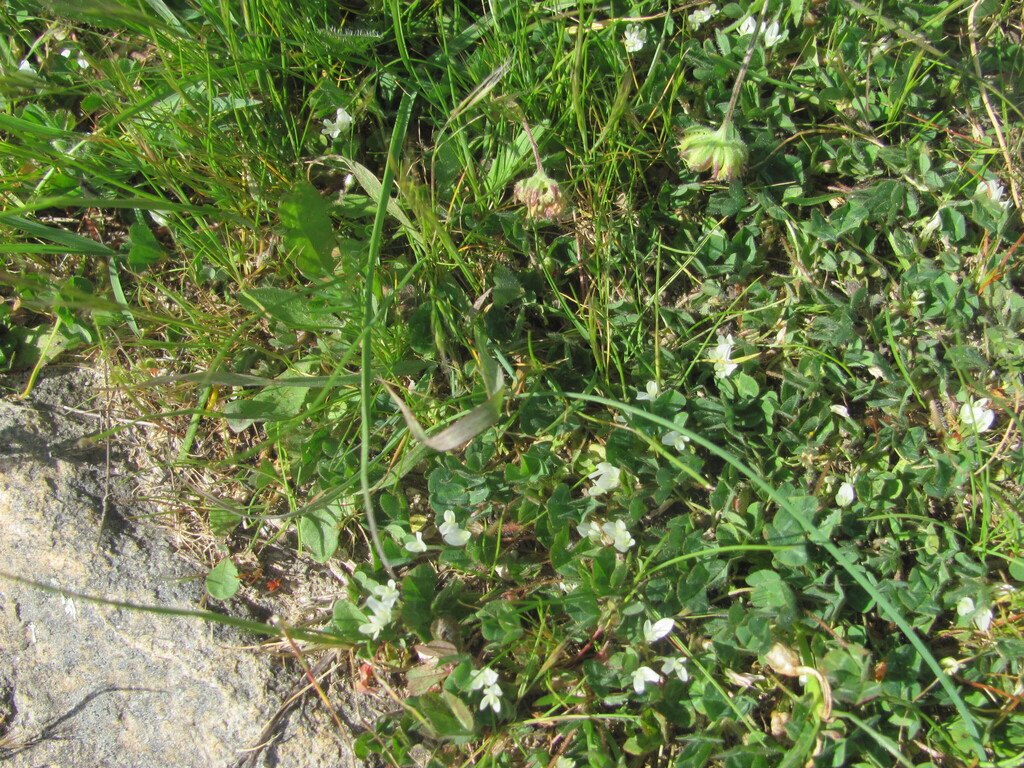
Subterranean clover is a low, prostrate annual, spreading by stolons rather than standing up, with the trifoliate leaves and small white flowers of its genus. It is native to Europe, south-west Asia, north-west Africa and Macaronesia, and it grows on ground too poor and too dry for white clover. The whole plant is soft and hairy, and it lies flat.
The name is the story. After flowering, the peduncle turns downward and pushes the developing burr into the soil, a habit called geocarpy, and the seed ripens underground. No other clover does it. That single adaptation is why the species survives a Mediterranean summer and why it spread across southern Australia.
The flowers are borne low, often beneath the leaves, and they are small and poor in nectar, which makes them awkward for bees and unappealing besides. The plant does not need them. It is self-fertilising, unlike white clover and lucerne, so a stand sets seed without a pollinator and a single plant can start a paddock.
Science & Biotechnology
Three subspecies are used in agriculture and they are not interchangeable. Subsp. subterraneum is the generalist and grows in the widest range of conditions. Subsp. yanninicum takes wet ground and flooding. Subsp. brachycalycinum is the fussy one: its seed needs dry, cracked soil to germinate, so it suits clay that opens in summer and fails where the surface stays sealed.
Mixing the three in one field is standard practice, because a mixed stand hedges the season: whichever subspecies matches the year will fill the gaps left by the others. Some systematists would split them into three species, and the argument is not settled. The seed trade treats them as one crop with three options.
The plant carries oestrogenic isoflavones, and at high levels these interfere with reproduction in the animals that graze it. Ewes on a heavy diet of it can suffer permanent infertility, and the problem appeared on a large scale in the decades after the clover was widely sown. Breeders then selected low-oestrogen cultivars, and those are what is sold now.
Uses & Benefits
It is a pasture plant, and one of the most important in Australia, where it turned struggling farms into viable grazing properties. It fixes nitrogen, it grows through winter when the native grasses are dormant, and it provides high-quality feed at the point in the year when stock need it. In California and Texas it is used for the same reasons, over a wider range of soil and rainfall than most clovers tolerate.
Its discovery as a fodder crop belongs to Amos Howard of Mount Barker in South Australia, who found it growing as a roadside weed, proved its value, and spent the rest of his life promoting it. He published what he learned, gave seed away around the world, and advised anyone who asked. By his death in 1930 thousands of hectares were carrying it.
In a garden it is a green manure and a living mulch, sown in autumn to cover ground through winter and dug in before it seeds. It is low enough to go under fruit trees and tough enough for a verge. Do not expect it to look like a lawn; it lies down, and it browns off in summer. The rest of the Fabaceae here runs to Trifolium incarnatum, Gueldenstaedtia and Lupinus bicolor.
Growing from Seed
Sow in autumn, 5 mm deep, at 15 to 20 °C, into a firm, fine seedbed. It needs a pH above 5.5 and adequate calcium and phosphorus; on acid ground it fails without lime, which is the commonest reason a sowing comes to nothing. Inoculate the seed with the right rhizobium if the species has not grown there before.
Seed rates for a pasture run to 20 kg per hectare or more, because the seed is large by clover standards and the seedlings are weak. For a garden green manure, 5 g per square metre broadcast and raked in is enough. Keep the ground damp until the stand closes, then leave it.
Let it run to flower if you want seed, and expect the burrs to be carried on wool, on tyres and on boots. The seed is hard-coated and will come back for years, which is a virtue in a pasture and a nuisance in a rotation. Mow before the burrs bury if you want it gone.
Our Take
It is not a pretty plant and it is not meant to be. What it is, is the cheapest nitrogen and the earliest winter feed available in a Mediterranean climate, and the fact that a roadside weed became the basis of a farming system is a better story than most garden plants can offer.
Grow it as a cover crop, not as a lawn, and respect the oestrogen question enough to rotate it rather than graze it year after year. Modern cultivars have that bred out, but the old stands are still out there, and the lesson they taught Australian agriculture was expensive.
Related Reading
If Subterranean Clover appeals to you, these related plants are worth a look: