


Ornamental Grass Seeds | Mixed Grasses
LATIN NAME: Ornamental grasses
COMMON NAME: Ornamental Grasses
Plant Profile
Ornamental grasses are a horticultural grouping, not a botanical one. They are the members of the grass family that gardeners grow for form rather than for lawn or fodder, and they come from tribes scattered across the family. What unites them is architecture: linear leaves, a tufted or running habit, and an inflorescence that holds through winter.
The basic division is between clump-formers and runners. Clump-formers, such as Miscanthus, Calamagrostis and Pennisetum, stay where they are put and can be lifted and divided. Runners, such as Elymus and some Spartina, spread by rhizome and are unsuitable for a small garden. The distinction matters more than the colour of the flower.
The second division is seasonal, and it follows the photosynthetic pathway. Cool-season grasses, mostly C3, grow in spring and autumn and flower early; warm-season grasses, mostly C4, wait for heat and flower in late summer. That is why a border can have a grass in flower from May to November if the right species are chosen.
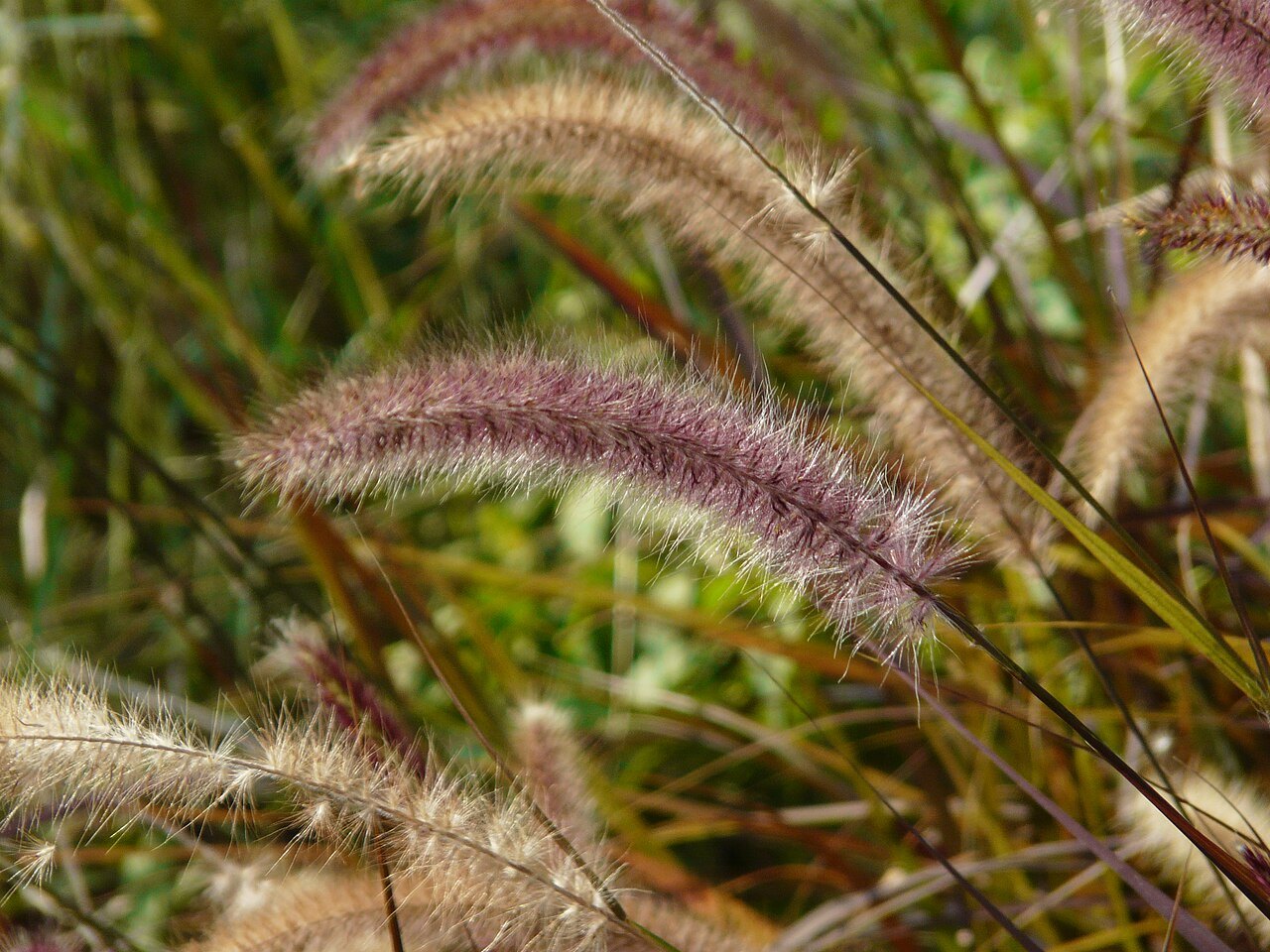
The inflorescence is the reason most of them are grown. A panicle of spikelets, backlit by a low sun, is a structure that no broadleaf flower can imitate, and it holds its shape after the seed has gone. The colour is usually in the glumes and awns rather than in petals, so it lasts so long and why it dries so well. Closest relatives on the list are Phleum pratense, Chasmanthium latifolium and Hordeum murinum.
Science & Biotechnology
The grass flower is reduced to two bracts, the lemma and palea, enclosing stamens and a stigma, and it is pollinated by wind. There are no petals, no nectar and no scent, and the whole apparatus is designed to release pollen into moving air. That is why grasses cause hay fever and why their flowering is invisible except as a haze.
C4 photosynthesis evolved in grasses more than twenty times, and it is the reason warm-season grasses are so productive in heat. The pathway concentrates carbon dioxide around the enzyme that fixes it, which suppresses photorespiration and lets the plant keep its stomata partly closed. In a hot dry summer the advantage is large and visible.
Most named cultivars are propagated by division, because seed does not come true and because some are sterile hybrids. That is also why the trade can guarantee a colour and a habit. Seed strains exist for the wild species and for a few annuals, and they are cheaper and more variable. A plant from seed may flower in its second or third year.
Uses & Benefits
In design they do three things: they move, they are translucent, and they hold structure in winter. A grass in a border lets light through in a way a shrub does not, and the sound of it in wind is part of the effect. They are also the cheapest way to give a new garden height and volume in one season.
They are not all safe to plant. Miscanthus, Cortaderia, Pennisetum and Phalaris have naturalised in many countries, and some are legally restricted. The rule is to choose a sterile cultivar where one exists, to deadhead before seed sheds, and to check the local list before planting anything vigorous near wild ground. That is a real obligation.
The maintenance is annual and brutal. Most are cut to the ground in late winter, before the new shoots appear, and the dead stems are the only part that needs removing. Some, like Miscanthus, benefit from being burnt where that is legal; others simply need shears. Divide clumps every three or four years, when the centre dies out.
Growing from Seed
Sow in spring at eighteen to twenty-two degrees on the surface of a moist mix, and cover lightly. Germination takes two to four weeks. The seed is small and the seedlings are grass-like from the start, which makes them easy to recognise but hard to weed around. Pot them on individually as soon as they can be handled.
Plant out after the last frost in full sun, at a spacing that matches the mature spread rather than the pot. Water through the first season; after that most are drought-tolerant. A mulch of compost in spring is enough feeding. Stake nothing: a grass that needs staking is in the wrong place or the wrong climate.
Divide in spring, when the new shoots show, using a spade or two forks back to back. Replant the vigorous outer pieces and discard the woody centre. Water well and keep them shaded for a fortnight. For annual species, sow in succession for a supply of cut stems, and dry them head down in a dark room.
Our Take
Grasses are the most useful plants added to the garden repertoire in the last fifty years, and the least demanding. They give movement, winter structure and height in one season, and they ask for sun and an annual haircut. The risk is not cultivation but spread, and that is manageable with the right cultivar.
Start with a clump-former, check that it is not a known invader, and cut it back in February. That is the whole method. The rest is choosing which panicle you want to look at in November, and that is a matter of taste rather than of horticulture.
Related Reading
Continue exploring with these related plants: