


Agrostis nebulosa Seeds | Cloud Grass
LATIN NAME: Agrostis nebulosa
COMMON NAME: Cloud Grass
Plant Profile
Agrostis nebulosa was described by Boissier and Reuter from Spanish material, and it is an Iberian annual with a small outlier in Morocco, growing on dry open ground and stony slopes. Spain holds almost all the records and Portugal a few, and the plant has appeared once in New Zealand as a garden escape.
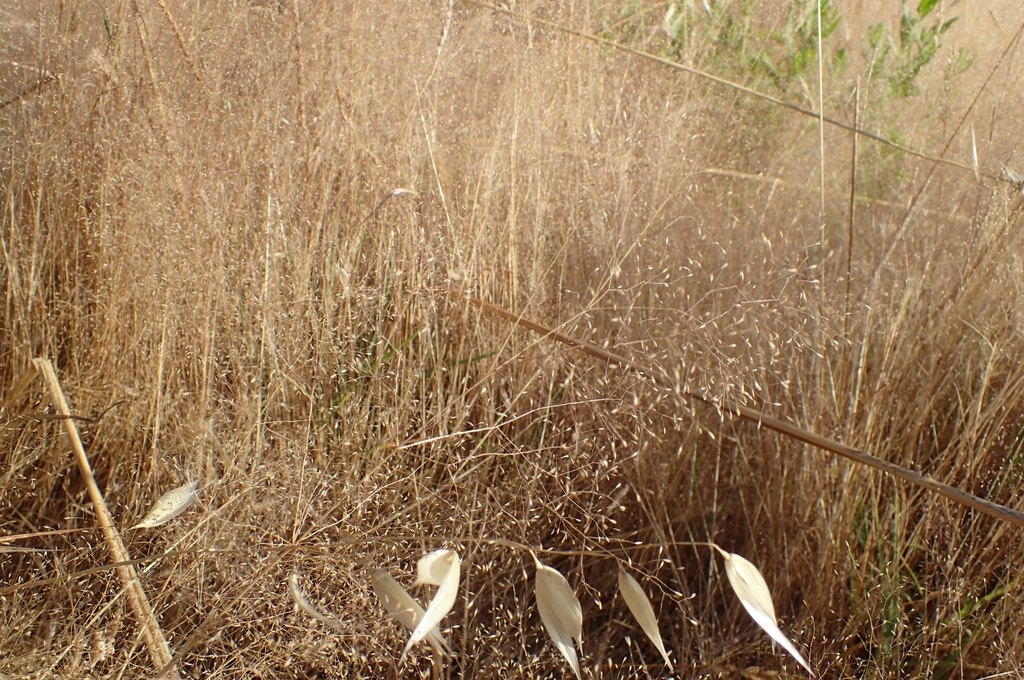
It grows 30 to 50 cm tall with narrow flat leaves and a profusion of hair-like branches carrying tiny spikelets. The overall effect is a mist. Each panicle is a diffuse pyramid of purple-tinged green, and a patch of the grass moves in the slightest wind, so it is planted where air movement can be seen.
As the seed ripens the colour shifts through grey-green to a pale straw, and that is the stage at which it is cut for drying. The whole plant is light enough to be translucent, and a row of it in front of a dark hedge looks like smoke rather than vegetation.
Science & Biotechnology
Agrostis is a genus of about two hundred species, nearly all of them perennial, and it includes the creeping bentgrass of golf greens and the browntop of old pastures. This is the one annual in general cultivation, and it is grown for the panicle rather than for the plant. The habit is why it can be sown and cut in a single season.
The fineness of the panicle is a matter of branch length and thickness: the branches are long, thin and whorled, and each carries spikelets so small that they are barely visible without a lens. That structure is what produces the mist effect, and it is also what makes the grass fragile, since the branches break easily when handled.
The name nebulosa means cloudy, and the cloud is made of branches rather than flowers. Each branch is a few cells thick and carries spikelets too small to see at a distance, so the effect is a haze that holds its shape when cut. That structure is why the plant dries so well and why it shatters if left too long. It sits among Agrostis matsumurae, Koeleria and Lagurus ovatus, all Poaceae.
Uses & Benefits
It is used at the front or middle of a border to soften the edges of bolder flowers, and it ranks among the best annual grasses for cutting. Cut stems just as the panicles emerge, before the seed ripens and shatters, hang them upside down in a dark, dry room, and they hold their shape for a year or more.
In a meadow-style planting it adds movement and a vertical accent without weight, and it combines well with annual poppies, cornflowers and nigella, all of which share its schedule and its tolerance of poor ground. In a container it is a good filler between upright plants, where its fine texture contrasts with broad leaves, and it seeds itself into gravel without any help.
It is not eaten and not used as a medicine. Its value is entirely ornamental, and it ranks among the few annual grasses that is worth growing for dried arrangements as well as for the garden, which makes it a useful plant for anyone who cuts and dries flowers.
Growing from Seed
Sow direct in early spring, or indoors four to six weeks before the last frost, at 15 to 20 °C. The seed needs light, so press it into the surface and do not cover it. Ten to fourteen days, and evenly.
Thin to 15 to 20 cm apart; crowded sowings produce weak stems that fall over before the panicles are worth cutting. The plant tolerates poor, dry soil and needs no feeding, which is unusual among ornamental grasses and makes it a good choice for a gravel bed.
For drying, cut the stems when the panicles are fully emerged but before the seed turns brown, and hang them in small bunches in a dark, airy room. For the border, leave the plants standing into autumn; they will self-sow if a few heads are left, and in a mild climate the seedlings will appear in the gravel the following spring.
Our Take
Cloud grass is a plant for people who notice texture. It has no colour to speak of, no scent, and no flower in the conventional sense, but it makes a border look alive and it makes a dried arrangement look expensive. A row of it in front of a dark hedge is worth more than a bed of annuals. Sow it thickly, cut it early, and dry it in the dark. It ranks among the easiest grasses to grow and one of the most useful to have on hand.
Related Reading
If Cloud Grass appeals to you, these related plants are worth a look: