


Hypoestes phyllostachya Seeds | Polka Dot Plant
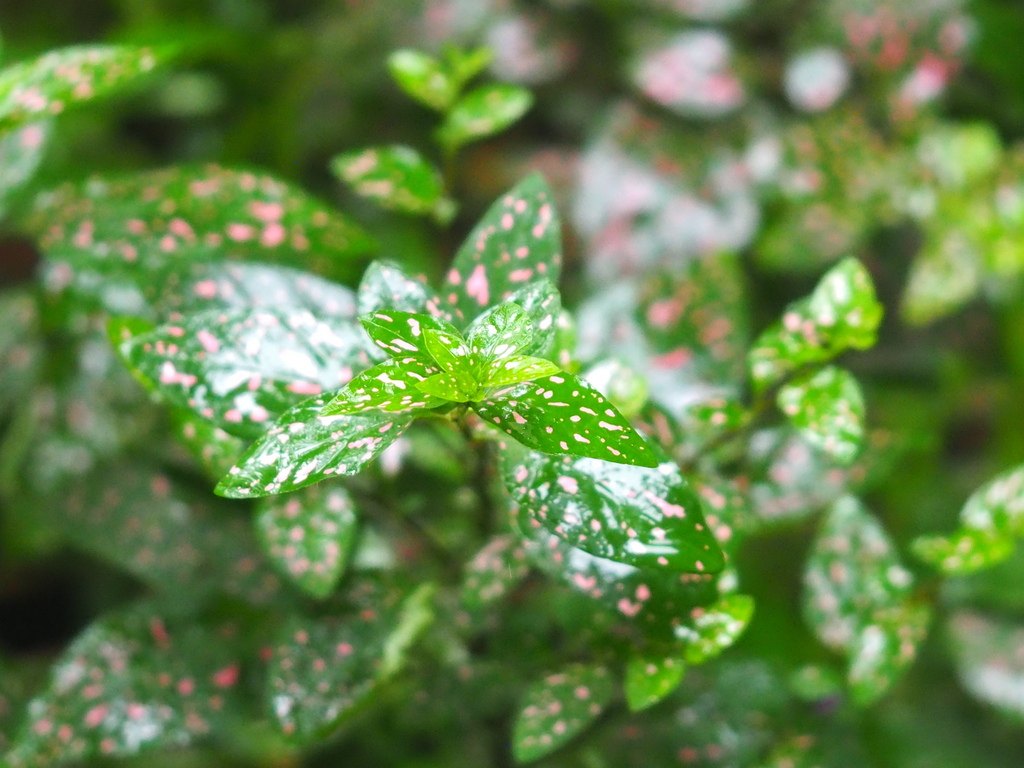
LATIN NAME: Hypoestes phyllostachya
COMMON NAME: Polka Dot Plant
Plant Profile
Hypoestes phyllostachya is a small evergreen subshrub of the Acanthaceae, native to South Africa, Madagascar and southeast Asia, and widely naturalised in the tropics. It grows 30 to 60 cm tall with opposite, ovate leaves 5 to 8 cm long, and it is grown for the leaves rather than the flowers.
The leaves are green and covered with irregular spots of pink, white or red, which often merge into larger patches of colour. The pattern is unstable, and a single plant can produce shoots with different amounts of spotting, so cuttings from a heavily spotted shoot give a more colourful plant than seed.
The flowers are small, lilac and insignificant, produced in spikes at the ends of the stems, and most growers pinch them off because flowering makes the plant leggy and stops leaf production. The plant is a house plant in temperate climates and a bedding plant in the tropics, and it ranks among the few foliage plants that will grow in shade.
In Madagascar and South Africa it grows on forest edges and in disturbed shady ground, so it tolerates low light but not cold. In the tropics it has escaped from gardens and become a minor weed of shaded waste ground.
Science & Biotechnology
The spots are produced by a genetic mechanism called transposon activity: a jumping gene inserts itself into the anthocyanin pathway and switches it on in patches, producing the spotted pattern. The same mechanism produces the variegation in maize and in snapdragons, and it ranks among the classic examples of how mobile DNA can create visible variation.
Hypoestes is a genus of about 100 species in the Acanthaceae, a family characterised by opposite leaves and by flowers with bracts and a two-lipped corolla. The family includes many ornamental plants, including Justicia, Ruellia and Acanthus, as well as the medicinal plant Andrographis.
The instability of the spotting is a consequence of the transposon: a shoot that arises from a cell in which the transposon has moved will have a different pattern, so a plant can produce a plain green shoot or a heavily spotted one from the same root. Growers select the best shoots and propagate them by cutting. The Acanthaceae list also carries Thunbergia alata, Crossandra and Ruellia.
Uses & Benefits
It is used as a foliage plant in shade, in containers, in terrariums and as a bedding plant in tropical gardens. Its colour is useful in the darkest corner of a border, where flowering plants become leggy and pale, and it combines well with ferns, calatheas and other shade lovers.
It is also one of the easiest plants to propagate: a cutting in water roots in ten days, and a single plant can supply a dozen in a season. That ease is why it is a standard plant for schools and for anyone learning to grow house plants.
It is not edible, and it is listed as toxic to cats and dogs, though the toxicity is mild and the plant is unlikely to be eaten in quantity. It is not scented and has no medicinal use in Western practice. The named forms include Pink Splash, White Splash and Red Splash, which differ in the colour and density of the spots, and a pink form with almost entirely pink leaves is sold as Pink Brocade.
Growing from Seed
Sow indoors at 21 to 24 °C, on the surface and only just covered, since the seed needs light. Expect seedlings within two weeks. Seed strains are variable in the amount of spotting, so if you want a particular pattern, buy a cutting-raised plant.
Prick out into small pots and grow on at 18 to 20 °C in bright, indirect light. Pinch out the growing tips regularly to keep the plant bushy; without pinching it becomes a single leggy stem with a few leaves at the top.
Keep the compost moist but not wet, and mist the leaves in dry air. Feed every two weeks in summer. In a cold climate the plant is a house plant and needs a minimum of 10 °C; in a mild one it can be planted out in shade, where it will grow into a small bush and may self-sow.
Our Take
The polka dot plant is the cheapest way to put colour in a dark corner, and it ranks among the easiest house plants to keep. Its only fault is that it gets leggy, which is easily fixed with a pair of scissors. Pinch it regularly, keep it out of direct sun, and take cuttings every year to replace the old plant. It will reward you with a plant that looks like it has been painted by hand.
Related Reading
If Polka Dot Plant appeals to you, these related plants are worth a look: