


Bacopa monnieri Seeds | Water Hyssop
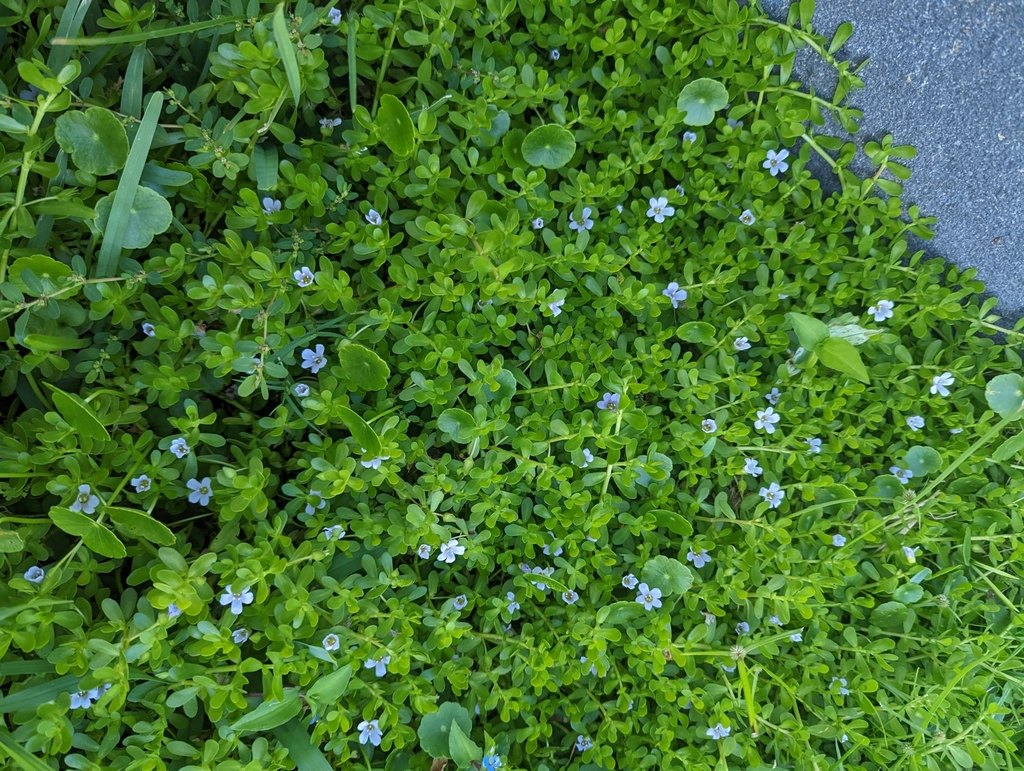
LATIN NAME: Bacopa monnieri
COMMON NAME: Water Hyssop
Plant Profile
Bacopa monnieri is a creeping perennial herb of the Plantaginaceae, native to wetlands throughout the tropics and subtropics, from the southern United States through Mexico, India and Southeast Asia to Australia. It grows in mud and shallow water, rooting at every node, and it forms dense mats 5 to 10 cm high.
The leaves are opposite, succulent, spoon-shaped and 1 to 2 cm long, and the flowers are small, white to pale blue, five-lobed and 1 cm across, produced in the leaf axils through the warm season. The whole plant is edible and slightly bitter, and it is used as a leaf vegetable in parts of Asia.
It is the plant known in Ayurvedic medicine as brahmi, one of the most important herbs in the Indian tradition, used for memory, anxiety and epilepsy. That use has made it the subject of a large body of research, some of it supportive and some of it inconclusive.
Science & Biotechnology
The active compounds are bacosides, a group of triterpenoid saponins that are found in the whole plant and concentrated in the leaves. They are thought to work by promoting the growth of nerve endings and by protecting neurons from oxidative damage, though the mechanism is not fully established.
Bacopa is a genus of about 100 species in the Plantaginaceae, and it was formerly placed in the Scrophulariaceae. The genus includes several aquatic and wetland plants, some of which are used in aquariums, and the family placement was changed after molecular work in the 1990s.
The plant is a hyperaccumulator of some metals, including copper and cadmium, which is a concern for supplements made from plants grown in contaminated water. That is one reason why the source of a supplement matters, and why wild-harvested bacopa from polluted wetlands is a risk. In India it is cultivated in shallow ponds and harvested two or three times a year, and the dried herb is sold in markets as brahmi, often mixed with other plants under the same name. Elsewhere in Plantaginaceae, the list holds Maurandya barclayana, Penstemon hartwegii and Veronica spicata.
Uses & Benefits
In the garden it is grown as a trailing plant for damp ground, the edge of a pond, a bog garden or a container that is kept wet. It also works well in a hanging basket, where its succulent leaves and small flowers cascade over the edge, and it ranks among the few trailing plants that tolerates wet feet.
In medicine it is used as a cognitive enhancer, an anxiolytic and an anticonvulsant, and it is sold as a supplement in Europe and North America. The evidence is mixed: several small trials have shown improvements in memory and attention, but the studies are heterogeneous and the effect sizes are modest.
The plant is eaten as a vegetable in Vietnam, Sri Lanka and parts of India, where the leaves are cooked in soups and curries. It is also used as a salad green, and it has a slightly bitter, peppery flavour that is improved by cooking. It is also sold as an aquarium plant, where it grows submerged for a while before reaching the surface, and it ranks among the few terrestrial plants that will survive completely underwater.
Growing from Seed
Sow on the surface of wet compost at 20 to 24 °C, and keep the compost saturated; the seed needs light and constant moisture. Germination takes 10 to 21 days. Prick out into a pot that can be kept in a saucer of water, and grow on at 18 to 20 °C in full sun or light shade. The plant spreads by rooting at the nodes, so a single plant will fill a pot within a season.
Keep the compost permanently wet and feed every two weeks with a dilute liquid fertiliser. In a cold climate the plant is grown as an annual or overwintered indoors at 15 °C; in a mild one it can be planted at the edge of a pond, where it will spread and may become invasive. Seed is the easiest route for a home grower, since cuttings root readily but need constant moisture to establish.
Our Take
Bacopa is a useful trailing plant for a wet spot and a well-known medicinal herb, and it is worth growing for either reason. It is not showy, but it is reliable, and it ranks among the few plants that will grow where the ground is permanently wet.
Grow it in a pot by a pond or in a basket that is kept watered, and use the leaves in soup if you like the bitter taste. Do not expect it to change your memory, but do not be surprised if it grows on you.
Related Reading
If Water Hyssop appeals to you, these related plants are worth a look: