


Penstemon hartwegii Seeds | Hartweg’s Beardtongue
LATIN NAME: Penstemon hartwegii
COMMON NAME: Hartweg’s Beardtongue
Plant Profile
Penstemon hartwegii is a Mexican perennial that has never quite become common, despite being handsome, hardy in mild gardens and available from seed. It carries the name of Karl Theodor Hartweg, the German collector who sent plants and seed to London from Mexico and California in the late 1830s and early 1840s.
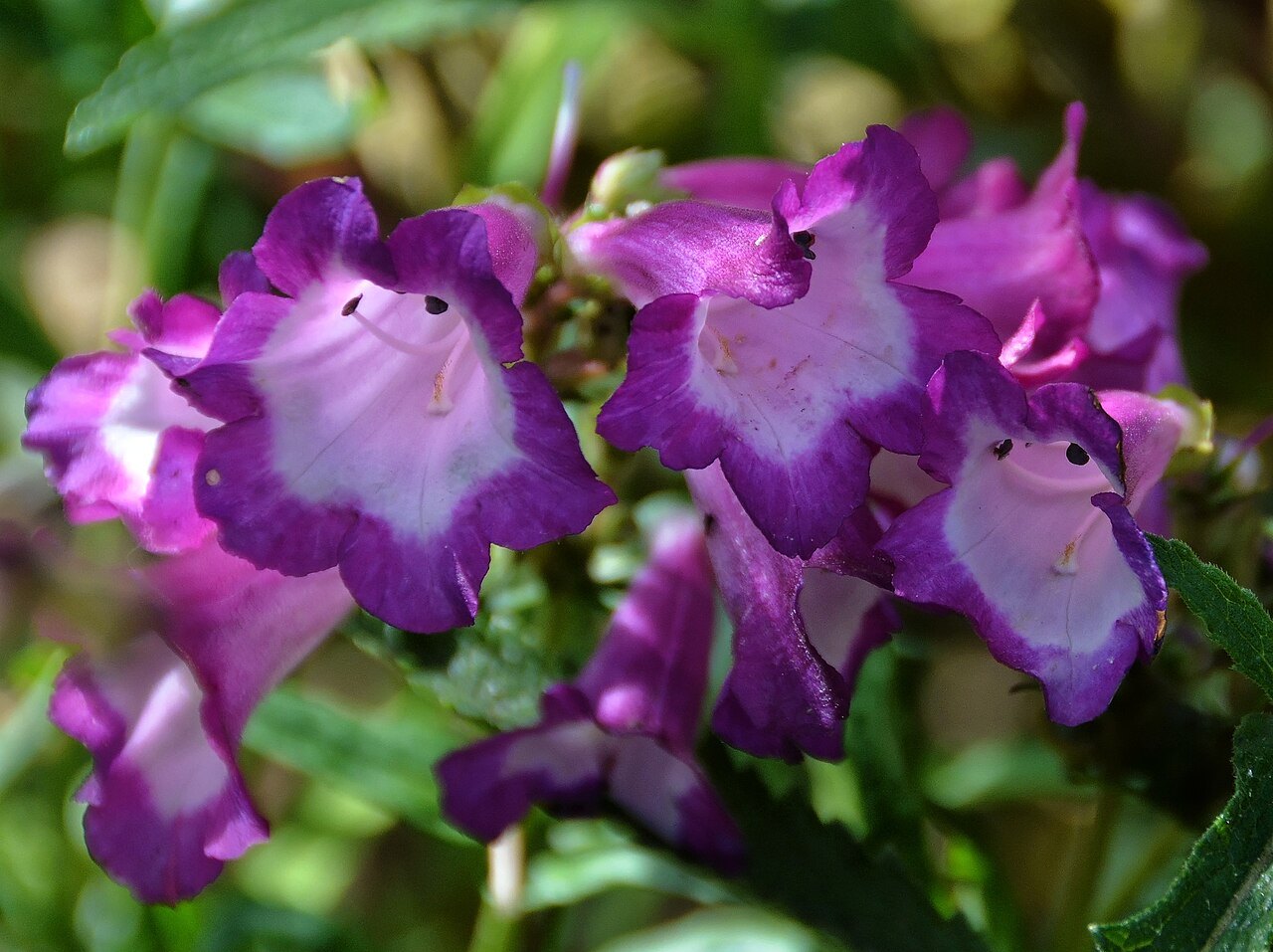
Plants reach thirty to seventy centimetres, bushy and semi-evergreen, with simple, narrow, slightly fleshy mid-green leaves. The flowering stems carry racemes of bell-shaped flowers up to four centimetres long, bright red, purple or crimson, each with white markings across a wide open throat.
George Bentham described the species in 1840. John Lindley had published it two years earlier under the name Penstemon gentianoides, a name already occupied by another species, so the plant spent its first appearance under a misidentification that has never entirely left the literature.
In the wild it is a plant of Mexican uplands, recorded from Hidalgo, Mexico State, Queretaro, San Luis Potosi, Veracruz and Oaxaca. That list describes volcanic soils at moderate altitude, with summer rain and a dry cool winter, which is a combination most of Europe can imitate only in a frame. The Plantaginaceae list also carries Penstemon eatonii, Penstemon strictus and Linaria vulgaris.
Science & Biotechnology
The beardtongue name refers to the staminode, a sterile fifth stamen that lies along the floor of the corolla tube and is bearded with hairs in most of the genus. It is not a vestige: the staminode guides a bee or a bird to the nectary and brushes pollen onto it in passing.
Flower shape in Penstemon tracks pollinator. Species with narrow tubes and small landing lips are bee flowers; species with wide throats and long red tubes, like this one, belong to the hummingbird syndrome, and in Mexico the resident hummingbirds are the expected visitors rather than an occasional bonus.
The genus sits in Plantaginaceae, a family reassembled on molecular evidence from parts of the old Scrophulariaceae, and it holds around two hundred and fifty species, almost all North American. Penstemon hartwegii has no accepted varieties and four heterotypic synonyms, which by the standards of the genus is unusually tidy.
Uses & Benefits
For a mild garden the plant offers late summer colour in a border that has run out of ideas: the bells open in July and continue into early autumn, and the red forms hold their colour in low light better than most scarlet perennials, which tend to go muddy by August.
It is a useful hummingbird plant where those birds occur, and a useful bee plant where they do not, since the wide throat is accessible to short tongues as well as long ones. The Royal Horticultural Society has given it an Award of Garden Merit on the strength of that performance.
Public records are sparse, fewer than a hundred observations in total, clustered between July and September. That scarcity is worth noting: this is a plant known mostly from gardens and herbaria rather than from a well-photographed wild population, and its horticultural obscurity is not explained by any difficulty in growing it.
Growing from Seed
Sow on the surface in late winter, because penstemon seed needs light and a period of cold to break dormancy properly. Mix the seed with a little silver sand to spread it thinly, press it onto the compost, and leave the tray in a cold frame or a refrigerator for four weeks before bringing it into warmth.
Germination follows within a fortnight at around eighteen degrees. The seedlings are small and slow for the first month, and they resent being pricked out wet, so water from below and handle them by a leaf rather than the stem. Pot on into a gritty loam, and ventilate the frame hard, because a closed case of damp seedlings collapses overnight.
Plant out in spring once the risk of hard frost has passed, in full sun and soil that drains. Water through the first summer, then leave the plants to find their own level. Cuttings taken from non-flowering shoots in late summer are the reliable way to keep a particularly good colour.
Our Take
Hartweg’s beardtongue is a good plant that nobody grows, which is the most interesting thing about it. Seed is listed by the specialist societies and by a handful of nurseries, the germination is straightforward once you accept the cold, and the reward is a scarlet bell in August that most visitors will not recognise.
Give it drainage and sun, keep the crown clear of winter wet, and take cuttings every second year so that you are not dependent on a single plant surviving. In a cold garden it is a gamble; in a mild one it is a quiet certainty.
Related Reading
Continue exploring with these related plants: