


Aquilegia flabellata Seeds | Fan Columbine
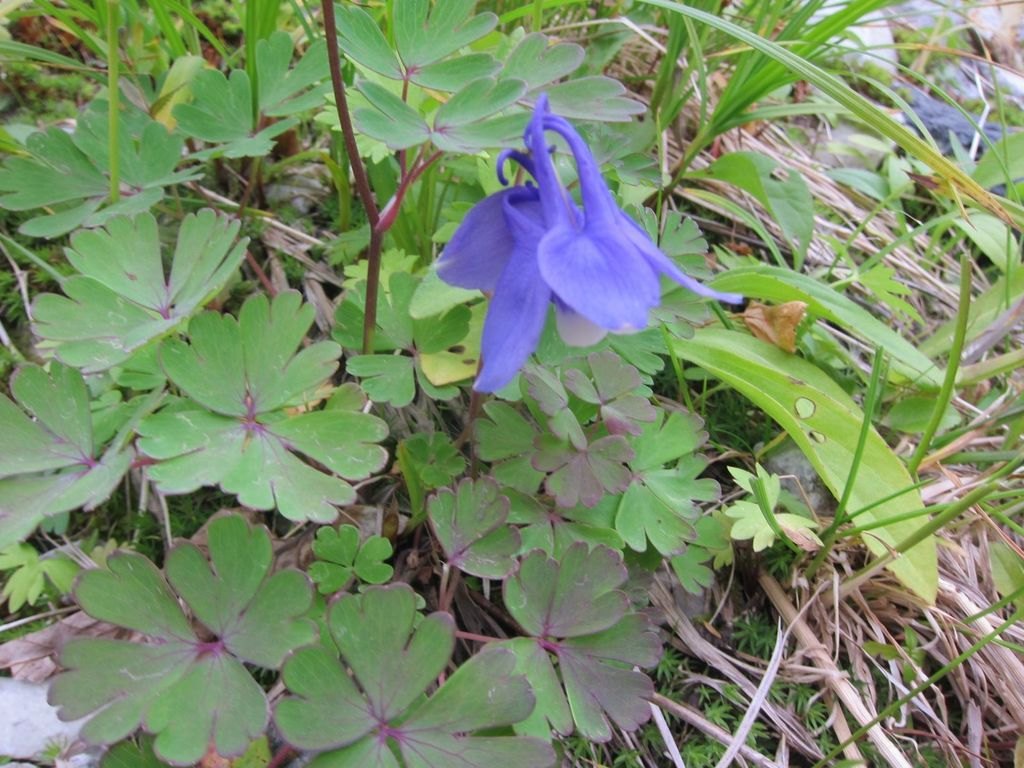
LATIN NAME: Aquilegia flabellata
COMMON NAME: Fan Columbine
Plant Profile
Aquilegia flabellata comes from Japan, Sakhalin and the Kuril Islands, where it grows in mountain meadows and on rocky slopes. It is a compact columbine, 20 to 30 cm high, with blue-green leaves divided into fan-shaped leaflets, which is where both the species name and the common name come from.
The flowers are 3 to 4 cm across, with five blue-purple sepals, five cream or white petals and short, hooked spurs that curve inward rather than backward. That short spur is the feature that separates it from the European columbines, which have long, straight spurs, and it gives the flower a rounded, nodding look rather than a starry one.
The cultivar Nana Alba is a white form 15 to 20 cm high, and it ranks among the best small columbines for a rock garden or a container. Other selections include forms with deeper blue, with pink and with double flowers, but the species itself is the most graceful, and it is the one that looks best in a woodland garden.
It ranks among the few columbines that is genuinely compact, and it does not sprawl in the way that the taller garden hybrids do. That makes it useful at the front of a border, in a trough and between rocks, where a taller plant would be out of scale.
Science & Biotechnology
Aquilegia is a genus of about 70 species, and it ranks among the classic examples of adaptive radiation in plants. The genus has diversified in Europe, Asia and North America, and the shape of the spur is matched to the tongue length of the local pollinators, which in North America are hawkmoths and hummingbirds.
A. flabellata belongs to the Asian group, which has short spurs and is pollinated mainly by bumblebees. The short spur means the nectar is accessible to a wider range of insects than in the long-spurred American species, and it is one reason the plant is more adaptable in cultivation.
The genus has a base chromosome number of x = 7, and the species vary in ploidy, which is one reason they hybridise so readily. In a garden, columbines of different species will cross freely, and the seedlings will be a mixture of forms, which is charming in a wild garden and annoying in a named collection.
The blue colour is produced by delphinidin anthocyanins, and it is sensitive to soil pH, so the same plant can look more purple in acid soil and more blue in alkaline soil. The cream centre is a region without pigment, and it functions as a nectar guide.
Uses & Benefits
It is used in rock gardens, woodland gardens, containers and at the front of a border, where its early flowers fill the gap between the spring bulbs and the summer perennials. It combines well with small ferns, with hepatica and with primulas, and it ranks among the best plants for a shady rock garden.
The flowers are visited by bees and by hawk moths, which reach the nectar in the short spurs. The plant is not a long-lived perennial, and it is best treated as a short-lived plant that is replaced by its own seedlings, which is how it behaves in the wild. The plant contains cyanogenic glycosides, like most columbines, and it is toxic if eaten in quantity. It is not used medicinally in modern practice, though other Aquilegia species have been used in folk medicine as a diuretic and a tonic, with uncertain results.
Its garden value is in its scale and its timing. A plant 20 cm high that flowers in May, in a colour that is hard to find among small perennials, is worth a place in any garden, and it will seed itself into the gaps between rocks without any help.
Growing from Seed
Sow at the end of winter or the start of spring, 15 to 18 °C, on the surface and only just covered, because the seed wants light. Germination takes 21 to 30 days and is improved by cold stratification; a period of three to four weeks in the refrigerator is the usual treatment.
Transfer them to small pots and hold them at 12 to 15 °C. Plant out in spring or early autumn, 20 cm apart, in partial shade and well-drained soil. The plant tolerates sun in cool climates but needs shade in hot ones. Water regularly in the first season, and mulch in spring to keep the roots cool. The plant is short-lived, and it is best allowed to self-sow, which it does freely if a few flowers are left to set seed. Seedlings can be moved while they are small, but older plants resent disturbance.
Cut the flowered stems back after flowering if you do not want seed, or leave them for the seed heads, which are attractive in their own right. In a container, use a gritty compost and water sparingly in winter, since the crown rots in wet soil.
Our Take
Fan columbine is the best small columbine for a rock garden or a shady corner, and one of the easiest to grow from seed. It is short-lived, but it self-sows, and a colony will persist for years if it is left alone. Grow it at the front of a border or between rocks, let it seed, and enjoy the blue-and-cream flowers in May. It is a plant that asks for nothing and gives a great deal.
Related Reading
More species in the same orbit as Fan Columbine: