


Clematis chinensis Seeds | Chinese Clematis
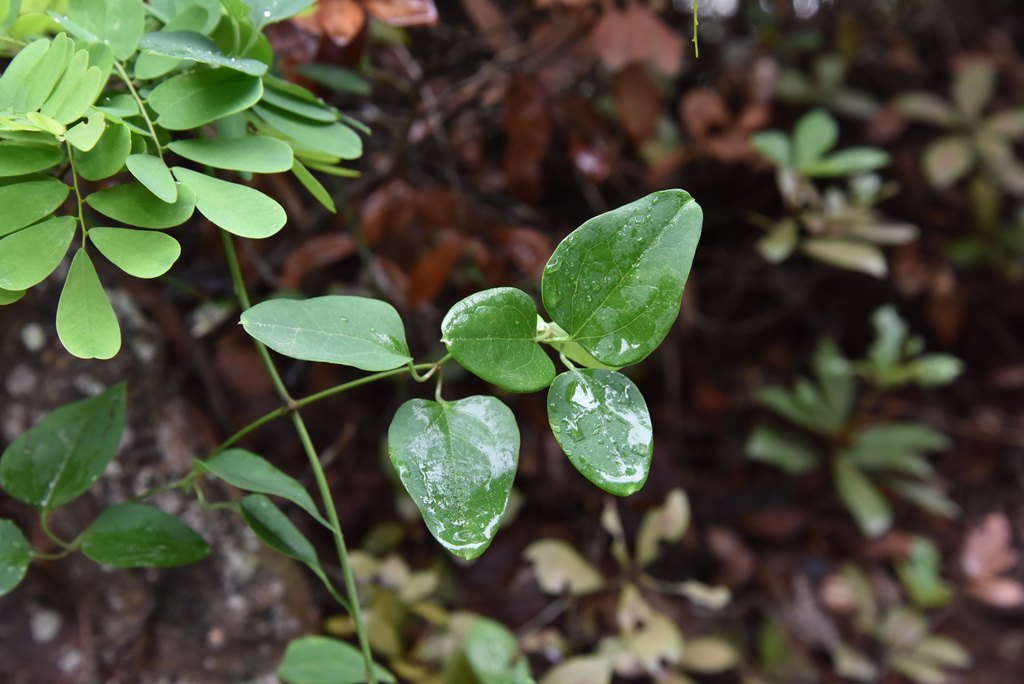
LATIN NAME: Clematis chinensis
COMMON NAME: Chinese Clematis
Plant Profile
Clematis chinensis was described in 1757 by Pehr Osbeck, the Swedish chaplain who collected near Canton in the early 1750s while serving on an East Indiaman, and whose China journal fed dozens of species into Linnaeus’s system. In China it is far better known by its drug name, wei ling xian, than by any common epithet.
In growth it is a woody climber reaching three to five metres, with pinnate leaves of five leaflets whose petioles twist around any support within reach. From early summer into August the vine carries loose panicles of white, four-sepalled flowers three to five centimetres across, followed by heads of achenes with silky feathery tails up to three centimetres long.
Its natural range runs from Anhui and Zhejiang south through Fujian, Guangdong and Guangxi to Hainan and Yunnan, and out to Taiwan, the Ryukyus and northern Vietnam. It grows along streams, in hedges and at woodland edges, climbing through shrubs rather than reaching the forest canopy.
The drug name carries a folk rhyme every Chinese herbalist learns: iron-footed wei ling xian, and a fish bone goes down soft as cotton. The name itself translates roughly as the mighty, efficacious immortal herb, an enthusiastic endorsement for a root that pharmacy records stretch back to the Song dynasty.
Science & Biotechnology
Fresh tissue of the plant is genuinely harmful to eat. The irritant principle is protoanemonin, the same lactone that makes buttercups blister, and it is destroyed by heat and by drying. That single fact explains why a plant used raw as a poultice poison becomes, once the root is dried and decocted, one of the most prescribed herbs in the Chinese dispensary.
Modern pharmacology has concentrated on the root’s triterpene saponins, notably the clematichinenosides, which show anti-inflammatory and analgesic activity in experimental models. The extracts modulate inflammatory mediators rather than acting as a numbing agent, which fits the classical use for deep-seated aching rather than acute injury.
Reproduction is unspecialised. The feathery styles carry achenes on the wind for a few metres or a few hundred, pollination is by generalist flies and small bees visiting the open-faced flowers, and the species seeds itself readily where scrub is disturbed. Nothing in its biology demands the nursery techniques that the large-flowered garden hybrids require. The family connection runs to Clematis tangutica, Clematis intricata and Aquilegia canadensis.
Uses & Benefits
The dried root and rhizome, listed in the Chinese Pharmacopoeia as wei ling xian, is a standard drug for wind-damp patterns, the classical term covering rheumatic and arthritic pain, numbness and aching joints that shift around the body. It is also the traditional remedy for a fish bone lodged in the throat, by gargle, the rhyme being the instruction.
In the garden the plant earns its place more plainly. It is vigorous, tolerant of heat and humidity that wilt the fancy hybrids, blooms through the worst weeks of summer, and covers old fences, banks and shrubs with white flowers and long-lasting silken seedheads that carry the display into autumn.
Handle the foliage with respect: the fresh stems can raise a rash on sensitive skin, the same protoanemonin chemistry that makes the root need drying. Livestock generally avoid it, and the plant presents no problem once cut material is dried or composted, the lactone breaking down quickly in the heap.
Growing from Seed
Seed sets generously and behaves as many clematis seeds do, germinating irregularly over a long stretch. Sow in autumn in a cold frame, or give two to three months of cold stratification before a warm sowing, and expect the first seedlings within weeks but stragglers for months afterwards, so keep the tray going a full season.
Young vines put on a root first and shoots after. Grow them on in pots through their first year, plant out the following spring at the base of the support they are to climb, and count on flowering from the second or third season, once the woody framework is established.
Prune hard each spring, cutting the previous year’s growth back to low buds, because flowers come on new shoots. This is the group-three habit, and a vine cut hard and fed modestly will carry more bloom on stronger stems than one left to tangle at the top of its support.
Our Take
Few plants carry a heavier load of history per metre of stem. A Swedish chaplain’s journal entry, a Song-dynasty pharmacy list and a folk rhyme about fish bones all converge on the same twining white-flowered vine from the south Chinese hedgerows.
Sow in autumn, keep the tray going a full year, and prune hard every spring. The species wants heat and a rough shrub to climb, gives summer bloom and silken seedheads in return, and asks nothing fussy of the soil.
Related Reading
Continue exploring with these related plants: