


Penstemon campanulatus Seeds | Bellflower Beardtongue
LATIN NAME: Penstemon campanulatus
COMMON NAME: Bellflower Beardtongue
Plant Profile
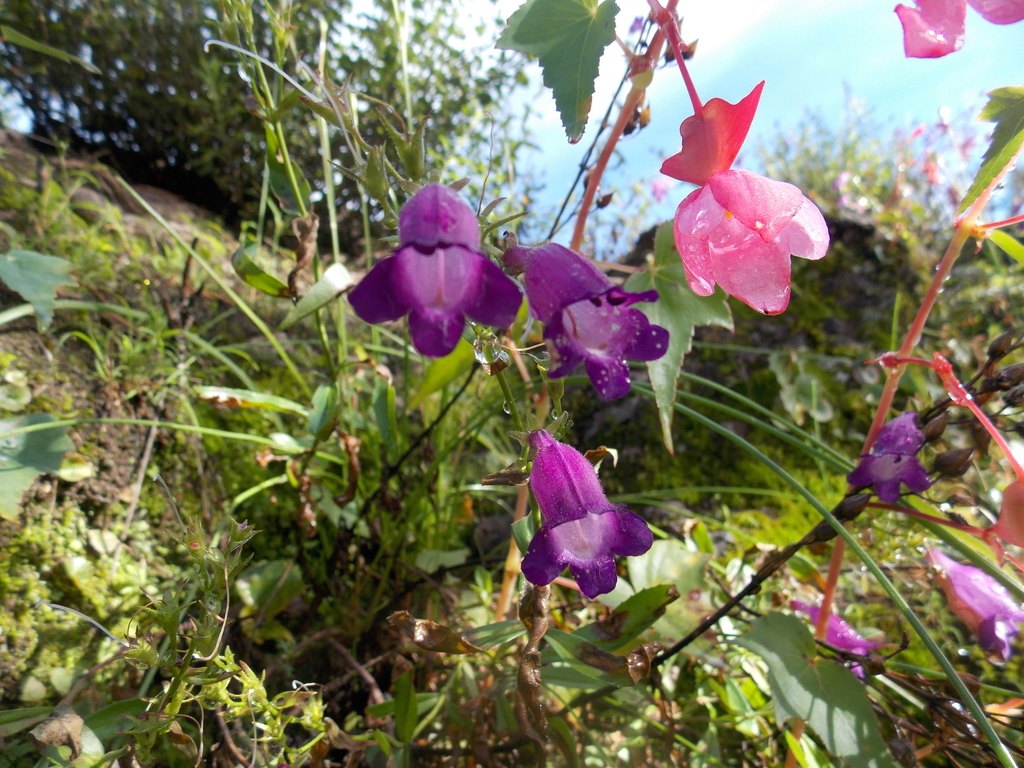
Penstemon campanulatus is a soft, short-lived perennial of the Mexican mountains, sending up slender stems of nodding, bell-shaped flowers in late summer, when most of the flora around it has already finished for the year. The colour runs from clear rose-pink to a duller purple, the throat is pale and faintly lined, and the whole plant has a lightness that the bigger garden penstemons lack.
The leaves are opposite, narrow and grey-green, with a faint bloom that rubs off on the fingers, and they clasp the stem at the base. Lower leaves form a loose rosette that persists through the mild winter of its homeland but disappears in a cold one, and the plant regrows from a woody crown rather than from the root.
It was described by Cavanilles in 1791 from material collected in Mexico by Luis Nee, the botanist on the Malaspina expedition, and it has been in European cultivation on and off since the early nineteenth century. Its range runs through the central and southern mountains of Mexico, with a few records from New Mexico.
In the garden it is often mistaken for a small hybrid penstemon, and the differences are worth knowing. The flowers are broader at the mouth and shorter in the tube than those of the big border hybrids, they are carried in looser, fewer-flowered spikes, and the plant as a whole is smaller, softer and much more transient.
Science & Biotechnology
The fifth stamen of the genus is sterile and modified into a staminode, a flattened, often bearded structure that sits in the mouth of the flower. In this species it is lightly haired and modest, but its function is the same across the genus: it blocks the centre of the tube so that a visitor must brush past the anthers and the stigma.
The bell shape suits medium-sized bumblebees, which force their way in and pick up pollen on the thorax; smaller insects can reach the nectar only by biting a hole at the base of the corolla, and such robbery is common in gardens where the flowers are watched. Seed set is usually good either way.
The genus has a base chromosome number of eight and a long history of hybridisation and polyploidy in North America, where it radiated into hundreds of species. Mexico holds a smaller, older assemblage, and this species belongs to that southern group rather than to the big Rocky Mountain radiation that supplies most garden cultivars.
Uses & Benefits
It is a plant for the gravel garden and the front of a dry border, where its loose habit and late season are assets rather than faults. It mixes well with subshrubs and dry grasses, and it flowers through the gap between the high summer peak and the first autumn bulbs, which is a gap most gardens feel.
Hummingbirds visit it in its native range, and in gardens it draws bumblebees and the occasional hummingbird hawk-moth. It is not a nectar factory on the scale of a buddleia, but it keeps working for six or eight weeks and it never needs staking, which is more than can be said for most late perennials.
The plant has no medicinal or commercial history worth reporting, which is part of its appeal; it is grown because it is pretty and undemanding, not because it cures anything or fills a niche in the pharmacopoeia. The genus name, from the Greek for almost a stamen, is a small joke at the expense of that fifth, sterile filament. The rest of the Plantaginaceae here runs to Penstemon eatonii, Penstemon digitalis and Penstemon strictus.
Growing from Seed
Sow fresh seed on the surface in late winter, because the seed is small and needs light, and give it three weeks at fifteen to eighteen degrees. Germination is uneven, and a proportion of the seed will sit for a second season, so do not throw the tray away in the first spring.
The critical requirement is drainage. In wet, heavy soil the crown rots in the first winter, and no amount of grit on the surface will save a plant whose roots stand in water. Plant on a slope or a raised bed, mulch with gravel rather than compost, and keep the crown clear of the winter wet.
Plants are short-lived, three or four years at best, so keep a few in reserve from cuttings taken in early summer, or let the plant self-sow in gravel. A light trim after the first flush often produces a second, smaller crop of flowers before the frost. Old plants go woody at the base and flower less; replace them rather than coax them.
Our Take
This is one of the Mexican penstemons that deserve more attention than they get, and it is a better plant for a dry, hot garden than the flouncy hybrids bred for cool English borders. It asks for drainage, sun and a spare plant in a pot, and gives a month and a half of quiet colour.
Grow it where you can see it close, because the bell is small and the detail is in the throat. From six feet away it is a pink smudge; from two feet it is a small, precise machine for making bumblebees do its work. That is the scale at which this plant should be judged, and at that scale it is excellent.
Related Reading
If Bellflower Beardtongue appeals to you, these related plants are worth a look: