


Penstemon barbatus Seeds | Beardtongue
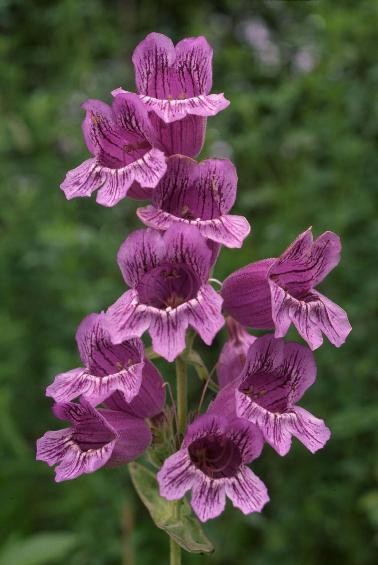
LATIN NAME: Penstemon barbatus
COMMON NAME: Beardtongue
Plant Profile
The plant is a clump-forming perennial with narrow, lance-shaped leaves and upright terminal spikes of tubular, two-lipped flowers in scarlet, sometimes orange-red. Each corolla is 2.5 to 4 cm long, with a lower lip that gives the bee and the bird a landing pad. After flowering, rounded capsules split to release the fine, dust-like seed that the wind scatters only a short distance from the parent.
Penstemon barbatus keeps a smooth, glaucous leaf and a hairless stem, while many eastern relatives carry toothed or hairy foliage. The Firecracker penstemon and the Eaton penstemon share the red-tube habit but differ in leaf shape and cold tolerance. The beardtongue’s claimed hardiness across a wide elevation range makes it the most widely grown red species in the genus, and the one most often recommended to newcomers who want a hummingbird plant that survives the winter.
The genus sits in the plantain family alongside the speedwells and the foxgloves, a placement confirmed by DNA work that moved Penstemon out of the old figwort group. That relationship explains why the beardtongue shares a tube-and-tongue floral plan with its cousins even though the growth habits differ. Garden selections have also produced white and pink forms of the red species, broadening its use beyond the strictly scarlet border and giving breeders a wider palette to work from.
After the first spikes fade, cut the stems to the basal rosette to encourage a shorter second show and to keep the clump from opening at the centre. Divide every few seasons in spring once the crown shows a ring of new shoots around a dead centre. The divided pieces establish quickly and flower in their first full season without any special care.
Science & Biotechnology
Foliar extracts of Penstemon species are studied for iridoid glucosides and for phenolic compounds with antioxidant activity, though the genus is far less documented than the mints it sits near. The interest is mostly taxonomic and ecological, since the bitter compounds help the plant resist grazing. No commercial oil or drug is drawn from the species at present, and the garden value rests on the flower rather than on any harvested product.
Breeders select for longer spikes, brighter scarlet, and improved heat tolerance, often starting from open-pollinated seed collected at high altitude. Tissue-culture lines have been used in research to hold particular colour forms, but most garden stock is raised from seed or from basal cuttings taken in the cool season. The selected strains keep their colour better in heat than the wild form, which can fade toward orange as the summer deepens.
Uses & Benefits
The name beardtongue comes from a detail you only see up close: the plant’s sterile fifth stamen is a flattened, yellow-bearded filament that lies across the throat like a tiny tongue. Hummingbirds are the natural pollinator, and the long scarlet tubes of Penstemon barbatus are shaped almost exactly to a bird’s reach rather than a bee’s. This is a western American wild flower that became a cottage-garden favourite the moment plant hunters sent seed east in the 1800s, and the species remains the standard by which red penstemons are judged in dry-climate gardens.
In the border the beardtongue is grown as a vertical accent and as a hummingbird magnet, set among low perennials where its spikes read against grey foliage. It also dries to a skeletal seed head that holds shape in winter arrangements. The flower pairs well with monarda and with other western natives in a dry, sunny bed, and the successive side shoots extend the show well past the first central spike.
Growing from Seed
Sow the fine seed across the top of a gritty mix and keep it warm and bright; thin or set out seedlings once they reach 6 to 8 cm so plants stand 30 to 40 cm apart. The crown hates winter wet, so a raised, free-draining bed outperforms heavy ground in cold districts, and a gravel mulch over the crown is the surest defence against rot during a damp spell.
Our Take
Beardtongue rewards a dry foot and a sunny shoulder, and the hummingbirds treat it like a feeder. For more red-tube species try the Firecracker Penstemon and the Eaton Penstemon, and add the Bergamot for a longer nectar season.
Related Reading
If Beardtongue appeals to you, these related plants are worth a look: