


Platycodon grandiflorus Seeds | Balloon Flower
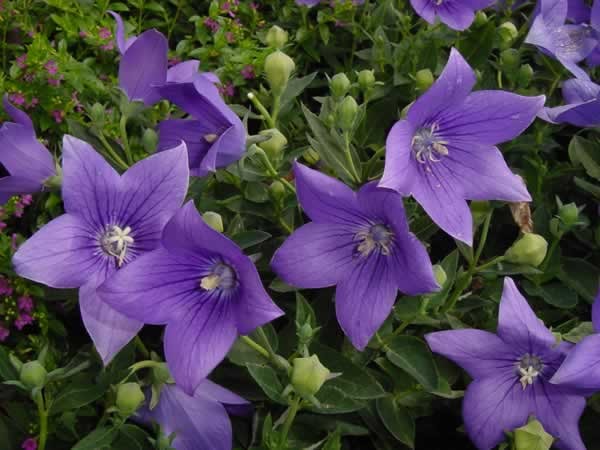
LATIN NAME: Platycodon grandiflorus
COMMON NAME: Balloon Flower
Plant Profile
Before it opens, the balloon flower does exactly what its name promises: each bud swells into a rounded, translucent bladder that looks ready to pop. Children in Korea and Japan have pinched them for generations to make a soft report, which is why the root crop is as much a plaything as a vegetable. Platycodon is the only species in its genus, a singleton among the bellflowers, and its unopened buds are eaten as a side dish across East Asia while the open star flowers close at night and reopen with the morning light.
The plant is a clump-forming perennial with blue-green, toothed leaves and wide, star-shaped flowers in blue, white, or pink, each corolla split into five pointed lobes. A milky latex runs through the stems and root, and the capsule opens by slits at the base to shed flat, winged seed. The whole plant stays neat and upright, rarely above 60 cm, which makes it a tidy front-of-border subject where taller bellflowers would flop.
Cultivated forms selected in Korea and China produce a fat, fleshy taproot that is peeled, salted, and pounded before cooking; this is the platycodon root crop, a recognised item in banchan and in herbal cookery. The wild plant runs thinner and more bitter, but the same platycodin chemistry is present in both, and the prepared root keeps a crisp bite even after long simmering in soup.
Science & Biotechnology
The root is rich in platycodin D and related triterpene saponins, compounds that produce the soapy froth when the sliced root is washed and that are studied for effects on airway mucus and on immune markers. The dried transverse slice, pale and ringed, is the jiegeng of Chinese Materia Medica and is traded as a standardised botanical. The saponin content is what gives the prepared root its characteristic numbing tingle on the tongue.
Because the active saponins vary with origin and harvest, research lines measure platycodin content by chromatography to set a quality bar. Tissue-culture and hairy-root systems have been explored to raise consistent platycodin yields away from the field, though most supply still comes from cultivated root. Selected Korean and Chinese strains now reach the market with labelled saponin percentages for the herbal trade.
Uses & Benefits
The unopened buds are blanched and stir-fried or pickled, while the prepared root is simmered in soups and stews for a crisp, slightly bitter bite. In the garden the plant is valued as a long-lived blue perennial for the front of the border and for rock-garden pockets, pairing with other East Asian natives. The inflated buds also make an unusual fresh garnish once the bitter edge is blanched away.
In Korea the root is a celebrated ingredient, sold fresh in markets and prepared as a seasoned side dish with sesame and chilli, while in China it is added to soups believed to ease the chest. The flower form has also been selected for doubled and extra-blue petals, though the species type with its five pointed lobes remains the most reliable for the kitchen. A row of balloon flower reads well against silver foliage, where the blue stars seem to lift off the bed.
Growing from Seed
Sow the fine seed on a gritty, free-draining mix and thin to one plant every 20 to 30 cm once seedlings show four to six true leaves. The taproot is brittle, so set out young plants early and avoid disturbing them later; a deep pot or a raised bed gives the root space to swell. Plants raised in small cells transplant poorly, so sow where they will grow or use a deep module.
Feed lightly through the growing season and keep the crown dry in winter, cutting the dead stems to the ground after frost. The plant returns from the root each spring and flowers from mid-summer into early autumn, and a light mulch over the crown helps it through a hard freeze without loss of the standing buds.
Our Take
I grow balloon flower for the bud alone, but the root crop is the deeper story. The Platycodon root slice is the form sold for the kitchen, and the Yellow Coneflower and the Gaillardia share its prairie-border feel.
Related Reading
If Balloon Flower appeals to you, these related plants are worth a look: