


Thunbergia alata Seeds | Black-eyed Susan Vine
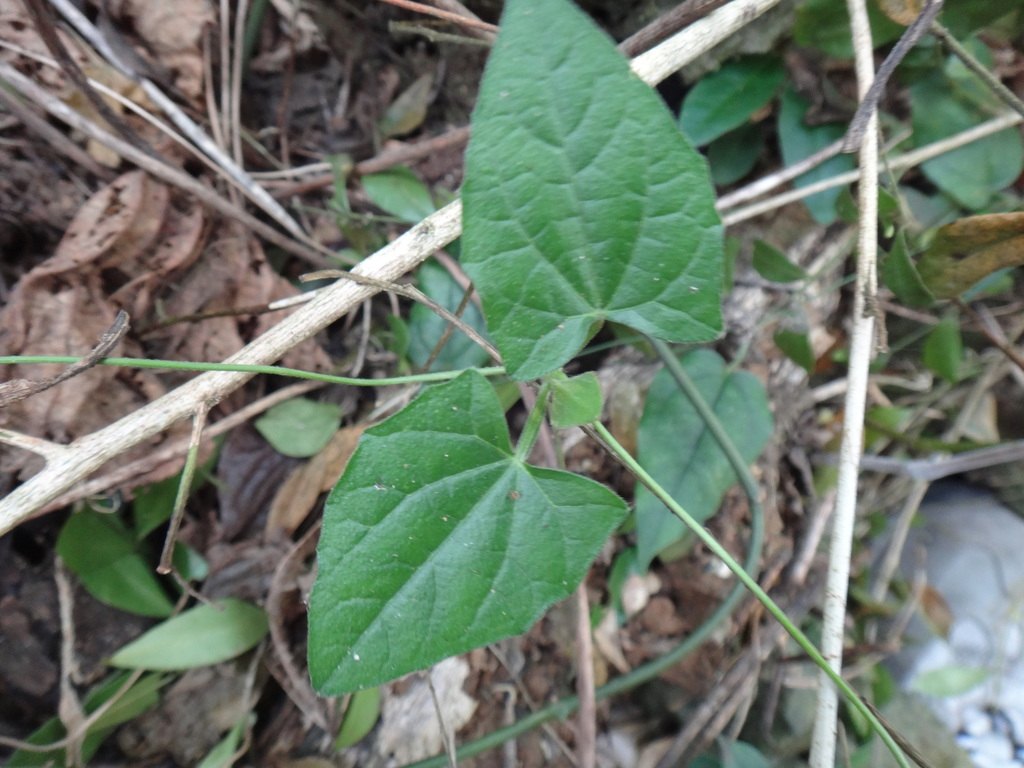
LATIN NAME: Thunbergia alata
COMMON NAME: Black-eyed Susan Vine
Plant Profile
Black-eyed Susan vine is a twining perennial from eastern Africa, grown everywhere as an annual, and it ranks among the fastest climbers you can raise from seed. The stems reach 5 m in a warm season, and the leaves are triangular to heart-shaped, 3.5 to 7.5 cm long, wavy at the edge and hairy on both surfaces.
The flower is the reason it is grown. Five orange-yellow lobes, each about 2 cm across, surround a tube that is black-violet in the throat and about 2 cm long. The dark centre is the black eye, and it belongs to the tube rather than to the petals, so it cannot be bred out of the flower entirely.
Two hairy bracts, 18 to 20 mm long, sit under each flower, and the calyx is a ring about 2 mm long carrying fifteen to seventeen awl-shaped lobes. The fruit is a hairy capsule 16 to 18 mm long, holding four seeds of 3.5 mm. Everything about the plant is slightly smaller than photographs suggest.
Science & Biotechnology
The buds are twisted in the right-hand direction, each lobe overlapping the next the same way, which is a reliable character for the genus and a quick way to tell it from a morning glory. Pollination is done by bees, and the anthers and stigma are arranged so that a visitor entering the throat is struck on the back, first with pollen and then with the stigma.
It is a plant of forest edges rather than deep shade, and it grows in flushes: a burst of stem, then a week of flowers, then another burst. Cutting it back after a flush produces side shoots and more flowers, so the vines in nursery pots are pinched and the ones in gardens are not.
Outside its native range it has naturalised across the tropics and subtropics, from the Caribbean to Brazil to Japan, and it is listed as invasive in several of them. The combination of fast growth, heavy seed set and a dislike of nothing in particular is the usual recipe, and this plant has all three.
Uses & Benefits
It is grown on tripods, obelisks, netting and in hanging baskets, where the stems hang and the flowers face outward. In a cold climate it is an annual and never reaches its full height; in a frost-free one it becomes a woody nuisance that has to be cut back twice a year to keep it in bounds.
The common name is a piece of confusion. Black-eyed Susan is a character in a John Gay ballad, and the name was transferred to this African vine by gardeners who thought the dark eye looked familiar. The real Black-eyed Susan is a Rudbeckia, a prairie plant with no connection to it at all.
It has no medicinal reputation worth repeating and no edible use. Its value is entirely ornamental and, in the tropics, entirely suspect. Where it is not native it should be deadheaded and kept in a container, and in some countries it should not be planted at all. The other Acanthaceae in the catalogue are Ruellia, Hypoestes phyllostachya and Crossandra.
Growing from Seed
Sow in late winter at 21 to 24 °C. Soak the seed overnight in warm water first; the coat is hard and germination is much more even after soaking. Sow 6 mm deep, keep the compost damp but not wet, and expect seven to fourteen days. The seedlings are vigorous and grow away fast once they are up.
Pot on before the roots fill the tray, and pinch the growing tip once to make a bushier plant. Plant out after the last frost, in sun or light shade, with a support already in place. The vine finds it by circling, and a plant that has nothing to climb will tie itself into a knot on the ground.
Water regularly and feed every fortnight once flowering starts, because a plant in full growth and full flower is hungry. Dry soil stops the flush and the leaves yellow from the bottom. In a cold climate, take cuttings in late summer and overwinter them on a bright windowsill.
Our Take
It is the most obliging climber in the annual catalogues and the least demanding. Give it warmth, water and something to climb and it will cover a frame by August and flower until the frost. The only thing it will not forgive is cold soil in spring.
Where it is not native, treat it as an annual and deadhead it. A plant that is invasive across the tropics does not need help from a temperate garden, and the flowers are produced so freely that losing the seed costs nothing at all.
Related Reading
Continue exploring with these related plants: