


Lychnis × arkwrightii Seeds | Arkwright’s Campion
LATIN NAME: Lychnis × arkwrightii
COMMON NAME: Arkwright’s Campion
Plant Profile
Lychnis × arkwrightii is a garden hybrid that appeared in cultivation in the nineteenth century and is grown today for one cultivar above all, ‘Vesuvius’. The cross is between Lychnis chalcedonica, the scarlet Maltese cross, and L. × haageana, itself a hybrid of L. fulgens and L. sieboldii. Modern taxonomy puts the group in Silene, which changes the label and nothing else.
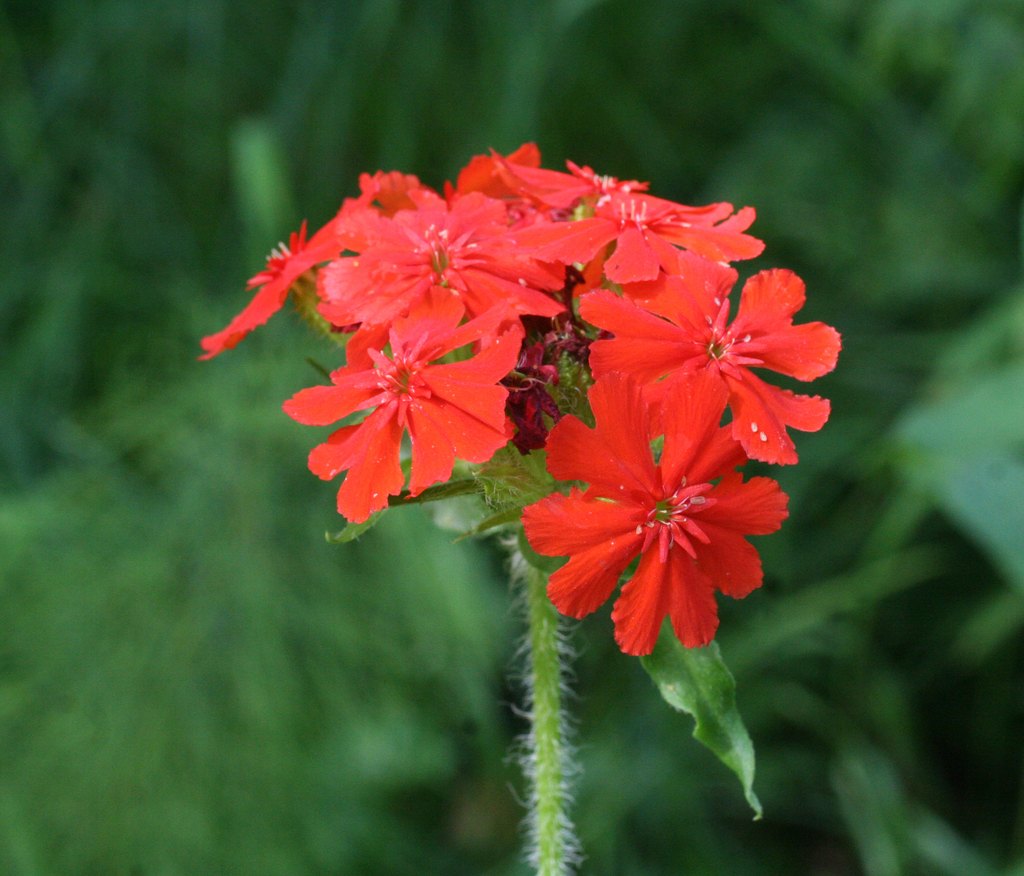
The plant makes a clump of lance-shaped leaves, thirty to forty centimetres of stem, and clusters of five-petalled flowers in early summer. In ‘Vesuvius’ the leaves are bronze-purple and the flowers are orange-scarlet, a combination that is hard to place and easy to remember. The petals are notched, as they are throughout the genus.
The parents are both Eurasian. Lychnis chalcedonica comes from Russian steppe and Siberian meadow and carries its scarlet flowers in a dense head; L. × haageana comes from the gardens of the nineteenth century and adds the dark foliage and the orange tone. Both want sun and drainage, and the hybrid inherited that.
The name Lychnis comes from the Greek for lamp, and it refers to the flame colour of the flowers of the type species. The genus has been merged into Silene on molecular evidence, and the campions and catchflies now sit together. Gardeners have not followed, and the seed trade still lists Lychnis. Both names find the plant.
Science & Biotechnology
The family is built for moths and butterflies. The flower has five petals with a notch, a long calyx tube, and ten stamens in two whorls, and the nectar sits at the base of the tube where only a long tongue reaches. The styles are five in this genus, which separates it from Silene proper, where there are three.
The capsule opens by teeth at the top, and the number of teeth follows the number of styles, which is a small piece of internal consistency that makes the family easy to read. Seed is small, kidney-shaped and rough, and it is produced in quantity where the flowers are visited. The plant self-sows modestly in gravel and at the edge of borders.
Dark foliage in this group comes from anthocyanin in the epidermis, and it is a liability as well as an ornament. The pigment absorbs light that would otherwise reach the chloroplasts, so bronze-leaved plants grow more slowly than green ones. That is why ‘Vesuvius’ is shorter and less persistent than the green species, and why it needs division. The Caryophyllaceae thread continues with Lychnis fulgens, Cerastium tomentosum and Gypsophila muralis.
Uses & Benefits
It is a plant for the front of a border, where the dark foliage makes a solid patch and the orange flowers read against it. It is difficult to combine, because orange-scarlet fights with most pinks and blues. It works with bronze grasses, with dark red heucheras and with silver foliage, and it works best given a block of its own.
The flowering period is short, three weeks in June, and for the rest of the year the plant is a quiet clump of bronze leaves. That is not a fault in a small garden, where something must fill the gap between the spring bulbs and the late perennials. Cut it back after flowering and it will make fresh foliage for autumn.
There is no food or medicinal use. The plant is not toxic in any way that matters, and it is ignored by deer and rabbits, which is one of its practical virtues. It is short-lived, three or four years from a cutting, and it should be renewed by division or by cuttings rather than left to decline.
Growing from Seed
Sow in late winter at fifteen to eighteen degrees on the surface of a moist mix, and cover lightly, because the seed needs some light but not full exposure. Germination takes two to three weeks. Named cultivars will not come true from seed and the seedlings will be variable, mostly green-leaved. Sow only if you want to select.
Prick out and grow on cool, then plant out in autumn or early spring into any well-drained soil in full sun. Space them thirty centimetres apart. Water until established. The plant tolerates poor soil and resents richness, which produces leaf at the expense of flower. A mulch of grit around the crown keeps it dry and prevents rot.
Propagate ‘Vesuvius’ by basal cuttings in spring, taken when the shoots are five centimetres long and rooted in a gritty mix in a cold frame, or by division in early spring. Lift and divide every third year, and replant the vigorous outer pieces. Without that the clump dies in the middle and the cultivar fades into green.
Our Take
This is a plant that earns its place on colour rather than on duration. Three weeks of orange against bronze, then a quiet clump for the rest of the year. If that sounds like a poor bargain, it is one that many gardens make for tulips, and this lasts longer and costs less. The foliage carries it when the flowers are gone.
Buy it as ‘Vesuvius’ and keep it by cuttings, because seed will give you a green plant with dull flowers. Give it sun, grit and a hard cut after flowering. The name on the label may be Lychnis or Silene, and the plant will be the same either way.
Related Reading
Readers interested in Arkwright’s Campion frequently explore these as well: