


Gypsophila muralis Seeds | Annual Baby’s-breath
LATIN NAME: Gypsophila muralis
COMMON NAME: Annual Baby’s-breath
Plant Profile
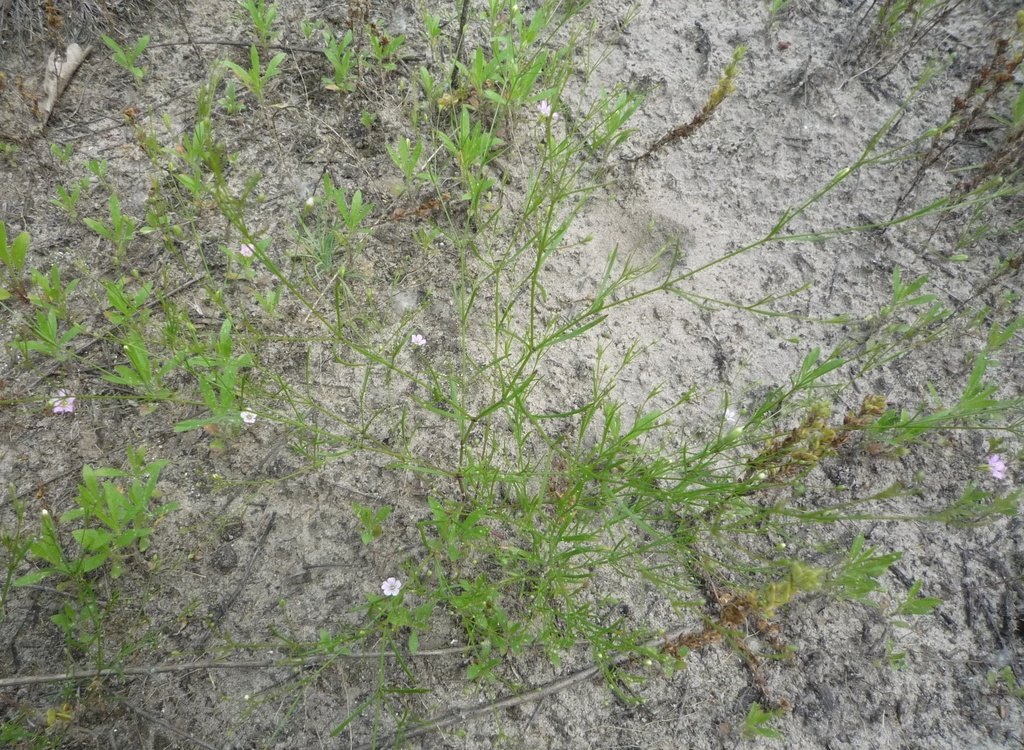
Annual gypsophila, cushion baby’s-breath, low baby’s-breath: the names distinguish it from the tall perennial Gypsophila paniculata that florists use, and the distinction is the whole point. This is a plant 30 to 40 cm tall, with erect hairless stems and linear leaves, and it flowers in summer and autumn with pink, very occasionally white, heads.
Linnaeus described it in 1753 as Gypsophila muralis, and the annual gypsophilas have since been separated as Psammophiliella, so the plant in the trade is properly Psammophiliella muralis. Both names are in use and the catalogues have agreed on neither. The change rests on habit and seed coat rather than on anything a gardener would notice.
It was once confused with Petrorhagia saxifraga, and the confusion is understandable. Both are small, both have pink flowers, both grow in dry stony places, and both have a habit of appearing where nothing was planted. The difference is in the calyx and the seed, which requires a hand lens. The Caryophyllaceae thread continues with Gypsophila paniculata, Cerastium tomentosum and Silene gallica.
Science & Biotechnology
The seeds are described as snail-shaped, and the description is literal: the embryo is coiled inside a curved seed coat, which is a feature of the family and a useful one for identification. A pinch of seed under a lens is enough to separate this species from its relatives without a flower in sight.
The plant is an annual that completes its cycle in a single season, and it behaves like a desert ephemeral: germinate, flower, set seed, die, and leave the seed bank to wait. In a wet summer it will produce a second generation before the frost, so a single plant can become a patch by September.
It grows on non-calcareous sand and in arable stubble across Europe, and it is naturalised in eastern North America. France alone holds nearly eight thousand records and Germany four thousand, which says how common it was in cultivated land and how much it has declined since seed cleaning improved. It is now scarce at the edge of its range.
Uses & Benefits
Its use is as a filler in pots and at the edge of a gravel path. The flowers are small, numerous and carried on a plant light enough that it moves in the slightest air, and a group of three in a low bowl is more effective than a row in a border. It also sows itself into paving, which is charming in a gravel garden and a nuisance in a lawn.
As a cut flower it is a substitute for the perennial gypsophila rather than a replacement. The stems are short and the heads are small, so it works in a posy and not in a bucket. For a wedding arrangement, the perennial is still the right plant.
It is also a useful annual for a dry, sunny bank where the soil is too thin for anything else. It establishes in a season, covers the ground at 20 cm, and dies leaving seed for the next year. That is a cheap way to hold a slope while slower perennials settle in.
Growing from Seed
Sow in early spring where the plants are to flower, or in modules for planting out. The seed is small; press it into the surface and cover very lightly. Germination takes ten to fourteen days at 18 to 20 °C, and it is usually even, which is a pleasure after the erratic species in the same family.
Thin to 15 cm if direct sown, or plant out modules at the same spacing once the roots have filled the cell. The plants resent disturbance after that, so do not plan to move them. A liquid feed is unnecessary and produces soft growth that falls over; the plant is adapted to starvation.
Leave a few plants to set seed and the colony will continue without help. The seed is ripe when the capsules turn from green to straw and the calyx opens; cut the stems and shake them over the ground where you want the next generation, which is more reliable than storing the seed in a packet.
Our Take
It is a small plant and it is easy to overlook next to its tall perennial cousin. In a pot, at eye level, on a bench, it is better than the florist’s gypsophila: the same effect of pink haze, at a scale that suits a table rather than a church.
Grow it in a sandy mix, water it when you remember, and let it seed. It will not last more than a season, and that is the arrangement. A plant that gives a summer, a hundred seedlings and no maintenance is a fair bargain.
Related Reading
Continue exploring with these related plants: