


Silene conoidea Seeds | Conoid Catchfly
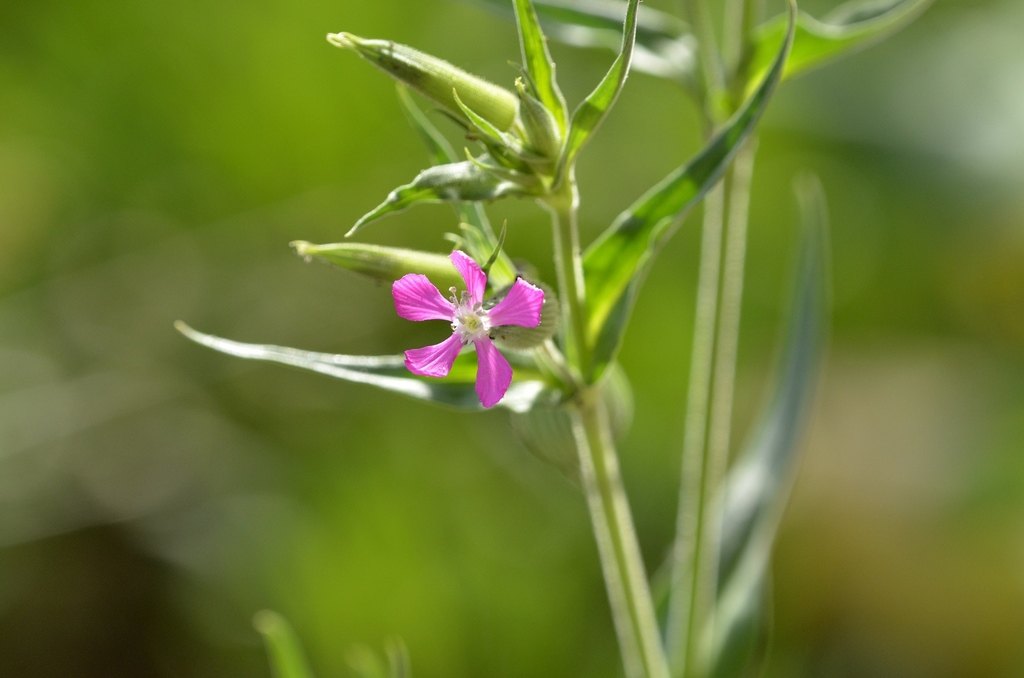
LATIN NAME: Silene conoidea
COMMON NAME: Conoid Catchfly
Plant Profile
Silene conoidea is a plant that most people meet as a weed and remember for one feature: the calyx. Each flower sits inside an inflated, hairy, glandular balloon ribbed with many veins, open at the top just enough to let five bright pink petals out. The balloon is pale green and ribbed like a paper lantern, and it stays on the plant long after the petals have dropped.
It is an annual reaching a metre in good ground, usually less, with a hairy and partly glandular stem and lance-shaped leaves up to twelve centimetres near the base, smaller higher up. The whole plant has a slightly sticky feel, which is the glandular hairs doing their work.
The specific epithet means cone-shaped, and refers to that calyx rather than to the flower. The common names are less kind: conoid Catchfly, and large sand catchfly, the second recalling the habit of catching small insects on the sticky stem.
It is native across Eurasia, from Spain and North Africa through the Middle East to central Asia, and it has travelled as a grain weed. In western North America it is now established from California to British Columbia and east into the prairies. It travelled with contaminated grain rather than deliberately, which is the usual route for a cornfield annual.
Science & Biotechnology
The inflated calyx is a protective structure, not a decorative one. It encloses the developing seed capsule and buffers it against desiccation while the seed ripens, and the glandular hairs on its surface deter small insects that would otherwise feed on the developing fruit.
The sticky stem gives the plant its other name. Catchflies trap small insects on the glandular hairs below the flowers, and while the plant gains nothing nutritionally from them in the way a carnivorous plant would, the trap may reduce the number of ants walking up to rob nectar. Whether it works is debated, and the honest answer is that nobody has tested it properly.
The family is the pinks, and it shares their chemistry: saponins in the foliage, present in many Caryophyllaceae and effectively non-toxic to humans because they are poorly absorbed. Cooking destroys them, so related species have a history as pot herbs.
Uses & Benefits
As a garden plant its appeal is narrow but real: the calyx is unlike anything else in a meadow mix, and the pink petals against the pale inflated balloon make a flower that rewards a close look. It belongs in a wildflower strip, not a border. It is also worth growing once simply to see a flower that no illustration quite prepares you for.
Records are few, around a hundred and twenty in total, peaking in May with April and March behind, which fits a winter annual or early-summer annual of disturbed ground. It is a plant of field margins and tracksides rather than of closed vegetation.
Its value to wildlife is modest but not zero. The flowers are visited by small bees and by day-flying moths, and the seed is taken by finches and sparrows in the autumn, which is more than most cornfield weeds can claim. Alongside it in Caryophyllaceae: Silene latifolia, Silene gallica and Cerastium tomentosum.
Growing from Seed
Sow in autumn or early spring, directly where the plants are to grow. The seed needs light and a period of cold to germinate well, so scatter it on the surface, press it down, and let the weather do the stratification. Germination is usually within three weeks of the soil warming.
Thin to fifteen centimetres apart if you want strong plants, though the species is tolerant of crowding and will flower even in a thick patch. Do not feed; rich soil produces a tall, soft plant that falls over before the seed sets. A crowded patch will still flower, but the plants are thin and the calyces small.
Leave a few plants to ripen and the colony will maintain itself, because the seed is produced in quantity and stays viable in the soil for several years. If it becomes a nuisance, deadhead before the capsules brown, and accept that you will be doing it for a season or two.
Our Take
This is not a plant for a tidy garden, and it would be silly to pretend otherwise. It is a weed with an extraordinary calyx, and its proper place is a rough meadow, a wildflower strip or the edge of a track where nobody minds a plant that sows itself.
Grow it once to see the balloon, which is genuinely strange, and then decide. If you like it, let it seed; if you do not, pull it before the capsules open, and it will be gone in a season. Either outcome is honest, though the seed survives in the soil for years, so one season of flowering can become a decade of hand-weeding.
Related Reading
Continue exploring with these related plants: