


Cerastium tomentosum Seeds | Snow-in-Summer
LATIN NAME: Cerastium tomentosum
COMMON NAME: Snow-in-Summer
Plant Profile
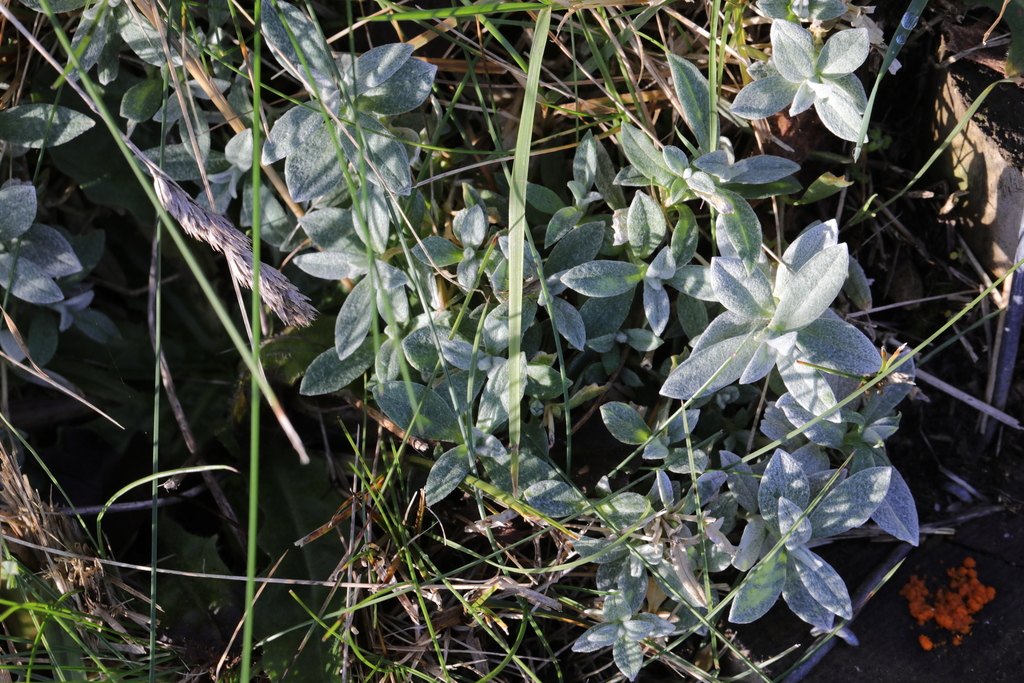
Cerastium tomentosum comes from the mountains of Italy and Sicily, where it grows on rocky slopes and in dry, stony ground. It is a low, mat-forming perennial 15 cm high and up to 60 cm across, with narrow, silver-grey leaves covered in dense hairs.
The flowers are white, five-petalled and 1.5 cm across, produced in such numbers in early summer that the plant looks like a patch of snow, which is where the common name comes from. The flowering lasts three or four weeks, and then the plant returns to being a silver mat for the rest of the year.
It spreads by rooting runners, and in a garden it will travel further than you expect, appearing in the lawn, in the gravel and in the cracks of a wall. That habit makes it useful for stabilising a bank and a nuisance in a tight border, and it is the main thing to know before planting it.
The silver foliage is the plant’s second virtue, after the flowers, and it ranks among the best silver ground covers for a dry, sunny site. It holds its colour through winter in all but the wettest climates, and it combines well with lavender, thyme and other Mediterranean plants.
Science & Biotechnology
Cerastium is a genus of about 100 species in the Caryophyllaceae, the pink family, and it is characterised by the five white petals, which are often deeply notched, and by the capsule fruit that opens by teeth. The family includes carnations, gypsophila and soapwort.
The silver colour is structural rather than pigmentary: the hairs on the leaf surface reflect light across the spectrum, which produces a metallic sheen and reduces water loss. The same mechanism gives the leaves of lavender and santolina their colour, and it is more pronounced in dry, bright conditions.
The species is a tetraploid, with 2n = 36, and it is one of several polyploid species in the genus. That extra set of chromosomes may explain its vigour and its tolerance of poor, dry ground, where a diploid species would struggle.
The flowers are pollinated by small bees and by flies, and they are self-incompatible, which means that two different plants are needed for a good seed set. That is why a single clone in a garden sets little seed, and why the plant spreads mainly by runners rather than by seed. Closest relatives on the list are Cerastium snow, Cerastium arvense and Silene gallica.
Uses & Benefits
It is used on banks, on walls, in rock gardens and at the front of a border, where its silver foliage and its early flowers are valuable. It is also one of the best plants for a hot, dry slope where nothing else will hold the soil, since its roots bind the surface and its mat excludes weeds.
The flowers are visited by small bees and by hoverflies, and the plant is a useful source of early nectar. It is not edible, and the foliage is unpalatable to livestock, which is one reason it survives in rough pasture. Its weakness is its enthusiasm. In a rich, moist border it will overwhelm smaller plants, and in a lawn it will spread into the grass and be impossible to remove. It is a plant for a dry, poor site where its running habit is an asset rather than a fault.
It is also short-lived in the centre of the mat, which dies out after a few years. The remedy is to lift and replant the outer pieces every three or four years, which keeps the plant young and stops it becoming a patch of bare stems.
Growing from Seed
Late winter or early spring, at 15 to 18 °C, with a light covering of compost. The first green shows at ten days and the rest by three weeks. The seed is small and the seedlings are slow at first, but they grow quickly once they are established.
Prick out into small pots and grow on at 15 °C. Plant out in spring or early autumn, 30 cm apart, in full sun and well-drained soil. The plant tolerates poor, stony ground and needs no feeding. The first summer needs watering; after that it looks after itself. Shear the plant back after flowering to keep the mat tight and to stop it spreading into its neighbours, and lift and replant the outer pieces every three or four years to rejuvenate the centre.
In a container, use a gritty compost and water sparingly, since the plant rots in wet soil. In a border, give it a dry, sunny spot at the front, and be prepared to pull out the runners that escape. Shear the clumps after flowering to stop them opening in the middle.
Our Take
Snow-in-summer is one of the best plants for a hot, dry bank, and one of the worst for a small, rich border. It is silver, white and useful, but it runs, and a gardener who does not want to spend the summer pulling it out should plant something else. Give it a slope, a wall or a gravel bed, shear it after flowering, and it will do a job that few plants can do. Just keep it away from the lawn.
Related Reading
More species in the same orbit as Snow-in-Summer: