


Centaurea americana Seeds | American Basketflower
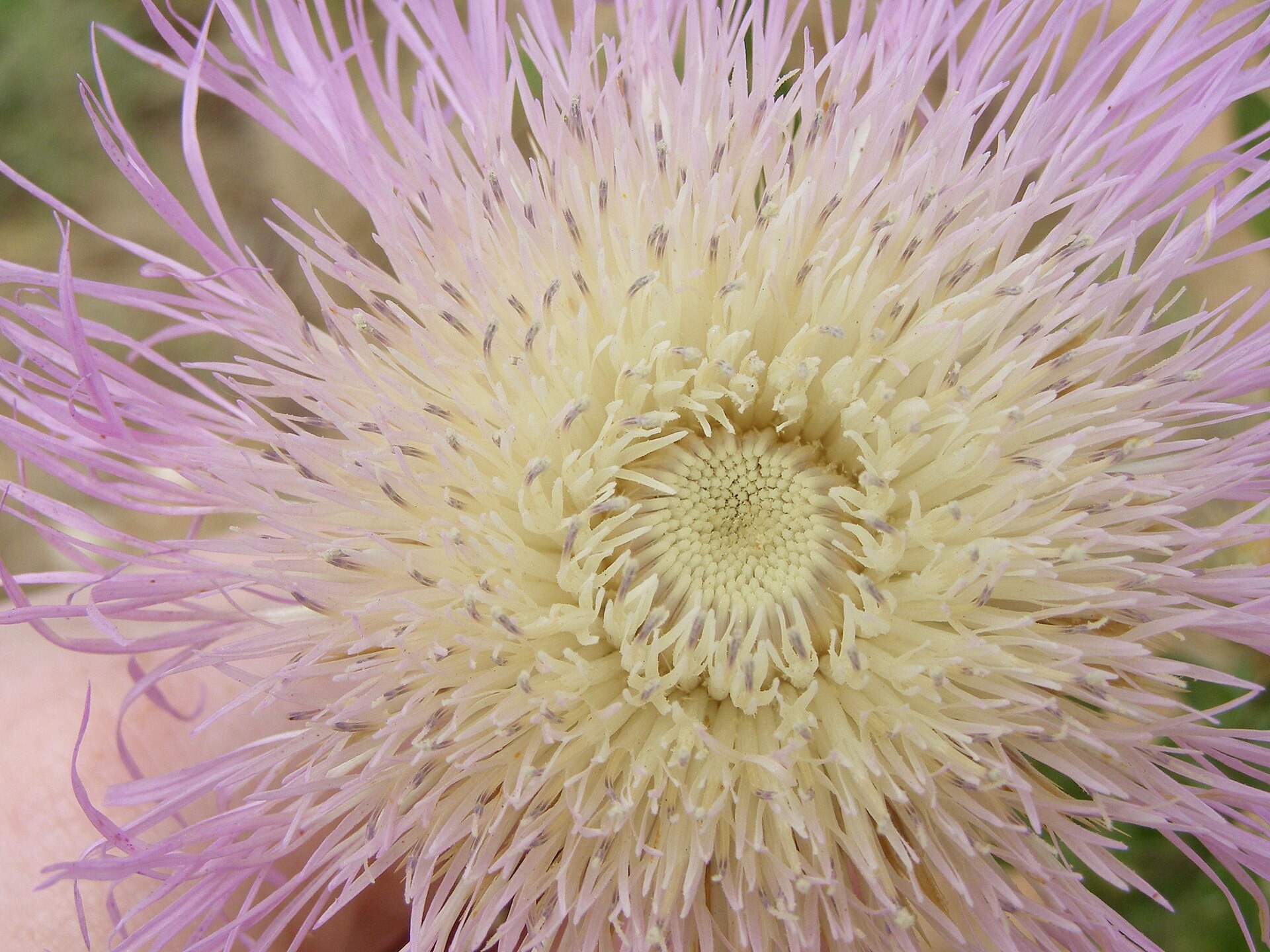
LATIN NAME: Centaurea americana
COMMON NAME: American Basketflower
Plant Profile
Centaurea americana comes from the southern United States and northeastern Mexico, where it grows in prairie, open woodland and roadside ground. It is an annual 60 to 90 cm tall, with grey-green, lobed leaves and a large flower head 6 to 8 cm across.
The head is the plant’s signature: a bowl of pink or purple florets sitting in a basket of overlapping, fringed bracts, which is where the common name comes from. The bracts are green with a dark tip, and they give the head a woven look that is unlike any other daisy.
The flowers are fragrant, with a scent that is sweet and slightly spicy, and they are produced over several weeks in summer. The plant is one of the tallest annual knapweeds, and it ranks among the few that is grown for cutting rather than for the border.
The species is sometimes confused with the garden cornflower, C. cyanus, but the two are very different: the cornflower is smaller, blue and annual, while the basketflower is taller, pink and has the distinctive basket head. Both are members of the same genus, and both are grown from seed.
Science & Biotechnology
Centaurea is a genus of about 700 species, and it includes cornflower, knapweed and a number of serious agricultural weeds. The genus is characterised by the involucre of overlapping bracts, which in this species are fringed and basket-like. The pink colour is produced by anthocyanins, and it ranks among the few pinks in the genus, which is mostly blue, yellow or purple. The scent is produced by volatile oils in the florets, and it is strongest in the morning.
The genus has a base chromosome number of x = 9, and the species vary widely in ploidy. Some are diploid, some are tetraploid, and a few are hexaploid, which is one reason the genus is so diverse and so difficult to classify.
The flowers are pollinated by bees and by butterflies, and they are self-compatible, so the plant sets seed freely and why it can establish a colony from a single plant. The seed is an achene with a pappus, and it is dispersed by wind. Near kin on the list are Centaurea stoebe, Centaurea macrocephala and Tithonia rotundifolia, all Asteraceae.
Uses & Benefits
It is grown for cutting, and it ranks among the best annuals for a mixed bunch, since the heads are large, the stems are long and the flowers last a week in water. It is also grown in borders and meadows, where its height and its unusual heads make it a focal point.
The flowers are visited by bees and by butterflies, and the plant is a good source of nectar in midsummer. The seed is eaten by birds, and the plant self-sows where it is happy, which is how it persists in old gardens.
The plant is not edible, and the foliage is bitter. It is grown for ornament and for cutting, and its value in a garden is in its height and its unusual flower shape rather than in its usefulness. In a meadow it is a useful annual, since it establishes quickly and flowers in the first year, and it can be used to fill the gap while perennials establish. In a border it needs staking in a windy site, since the heads are heavy.
Growing from Seed
Sow indoors in late winter, six to eight weeks ahead of the last frost, at 18 to 21 °C, covered lightly. Two weeks is typical, three is not unusual. Large seed, reliable germination, quick seedlings. Lift them into 9 cm pots, 15 °C from then on. Plant out at 30 cm spacing after the last frost, in sun and soil that drains. The plant tolerates poor ground and needs no feeding.
Give it water for one season, and after that only when it is desperate. Stake the stems in a windy site, or plant it at the back of a border where the heads can lean. For cutting, pick when half the florets are open, and sear the stem ends in hot water to stop the sap bleeding.
Let a few heads set seed if you want the plant to return, and shake the seed where you want it in autumn. In a mild climate it self-sows freely; in a cold one it must be resown each spring.
Our Take
Basketflower is a plant for the cutting garden and the meadow, not for the front of a border. It is tall, unusual and generous, and it ranks among the best annuals for a mixed bunch. Grow it in a row for cutting, stake it against wind, and pick it hard. It will reward you with armfuls of pink flowers and a garden full of bees.
Related Reading
If American Basketflower appeals to you, these related plants are worth a look: