


Zinnia angustifolia Seeds | Narrowleaf Zinnia
LATIN NAME: Zinnia angustifolia
COMMON NAME: Narrowleaf Zinnia
Plant Profile
Narrowleaf zinnia is a herbaceous annual, or short-lived perennial in frost-free ground, growing to about fifty centimetres with many branches and herbage rough with short hairs. The leaves are the diagnostic feature: linear to narrowly elliptic blades, two to seven centimetres long and only four to eight millimetres wide, which give the plant a fine, wiry texture quite unlike the broad-leaved border zinnias.
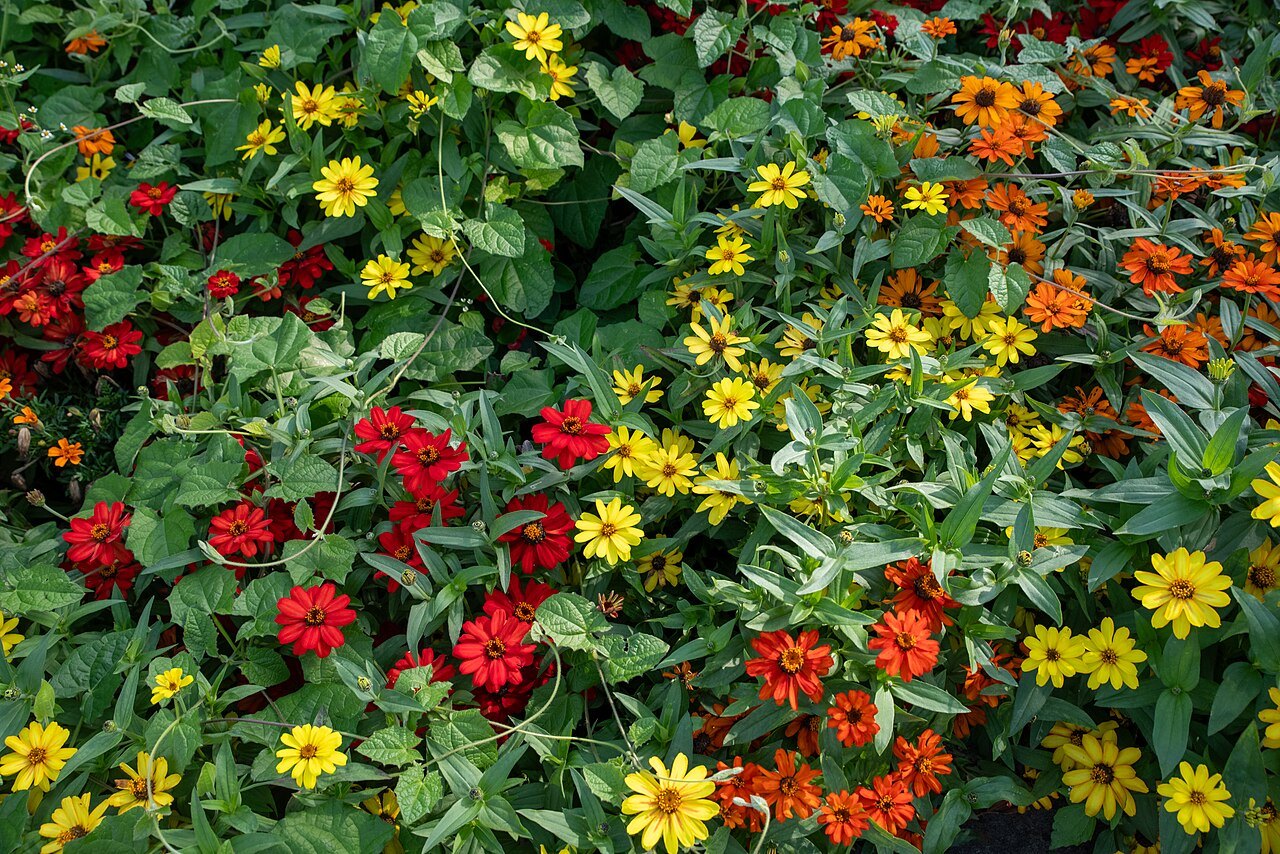
The flower heads sit in hemispherical involucres usually less than a centimetre high, and the ray corollas are bright orange, sometimes yellow. In cultivation the range widens to white and a dozen other shades, a legacy of selection rather than of wild variation, and the heads are small enough that a plant carries dozens at once.
Two wild varieties are recognised, the typical angustifolia and littoralis from coastal habitats, and the species is native to northern and western Mexico, naturalised in parts of the southwestern United States. Introductions are recorded from Java and southeastern Queensland, both traces of the ornamental trade rather than of natural spread.
The garden forms fall into recognisable camps: the Profusion series, which are hybrids with Zinnia elegans, and the Star series, alongside white-flowered selections such as ‘Crystal White’. These hybrids borrow the narrowleaf species’ heat tolerance and disease resistance while adding the flower size of its showier relative.
Science & Biotechnology
The hybrid history is the interesting part. Zinnia elegans gives large flowers and a colour range but suffers in humid heat from powdery mildew; Z. angustifolia gives small flowers and a constitution that shrugs off both. Crossing them produced the Profusion series, which garden breeders regard as one of the more useful achievements of late twentieth-century annual breeding.
The species’ own resistance is structural as much as chemical: narrow leaves dry quickly after rain, the rough hairiness discourages some insects, and the open branching habit keeps air moving through the canopy. In a wet season those small advantages decide whether a planting collapses into mildew or keeps flowering into October.
Its flowering phenology is unusual for a Mexican annual. Observation records peak in September and October rather than at midsummer, suggesting a species that responds to the shortening days and cooler nights of autumn with a final, heavy flush. For gardeners in hot climates that is a gift: the plant improves as the season ends. The Asteraceae thread continues with Zinnia snow, Euryops pectinatus and Ligularia fischeri.
Uses & Benefits
In the garden narrowleaf zinnia is the reliable edging plant for hot, exposed positions where petunias sulk and border zinnias mildew. Its low, spreading habit covers ground quickly, the fine foliage makes a good foil for broader leaves, and the small orange daisies read as a haze rather than as individual flowers.
It earns its keep in containers and hanging baskets too, where its tolerance of root restriction and its long season compensate for the modest size of each bloom. Mixed with silver foliage or blue flowers, the orange takes on a clarity that larger doubles cannot manage.
Pollinators use it steadily: the small heads are open to short-tongued bees, hoverflies and the smaller butterflies, and the long flowering window from midsummer to frost makes it a dependable late resource. It is not a native plant in most gardens, but it is a useful one.
Growing from Seed
Sow under cover six to eight weeks before the last frost, on the surface of a moist seed mix with a light covering, and germinate at twenty to twenty-four degrees. The seed is quick and reliable; seedlings appear within a week and grow on without fuss, so the species is a favourite of school gardens.
Prick out when the first true leaves show, because the seedlings resent crowding, and harden them off over a week before planting out once the soil has warmed. Space them twenty-five to thirty centimetres apart; the plants branch widely and reward the room with a denser cover of flowers.
Aftercare is minimal: water at the base rather than overhead, avoid rich feeding that produces leaf at the expense of flower, and deadhead occasionally if you want the display to continue cleanly. In mild climates a late-summer sowing will overwinter as a small plant and flower early the following year.
Our Take
Narrowleaf zinnia is the annual for gardeners who have given up on zinnias: small-flowered, tough, indifferent to heat and humidity, and still flowering when everything else has mildew. It is not a showstopper, and it does not need to be.
Sow it where the sun bakes and the soil drains, let it sprawl over a path edge, and judge it in October when the border has thinned. The species’ quiet trick is that it peaks at the end of the season, exactly when a garden needs a second opinion about autumn.
Related Reading
Gardeners who grow Narrowleaf Zinnia often pair it with these related subjects: