


Ligularia fischeri Seeds | Gomchwi
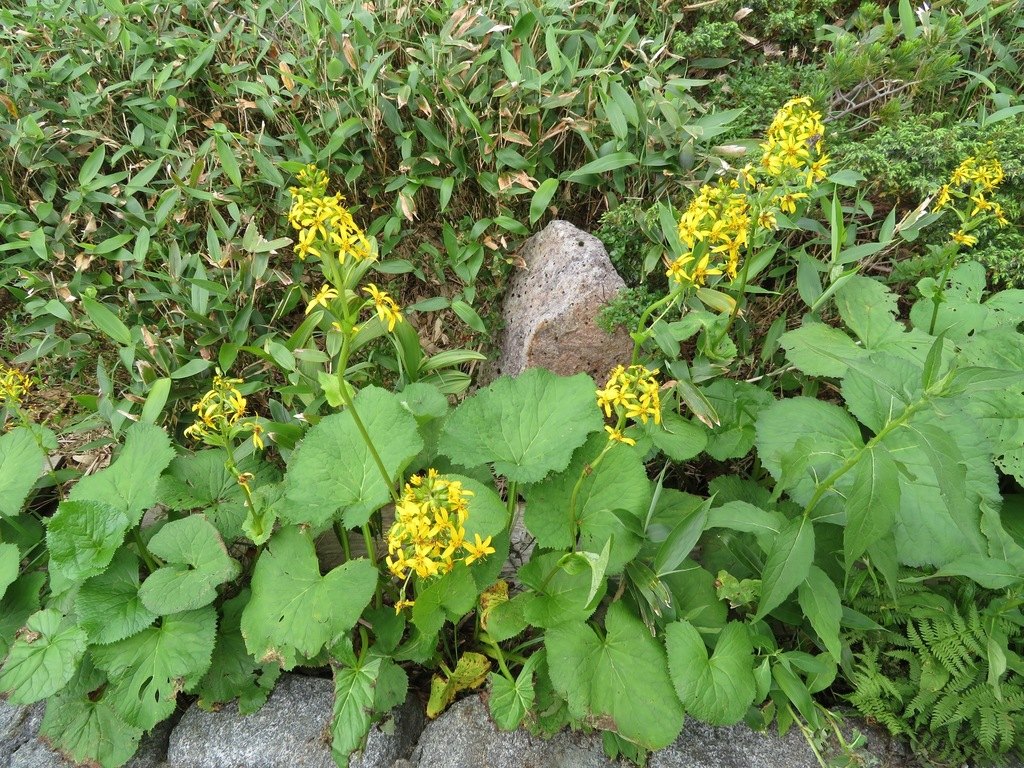
LATIN NAME: Ligularia fischeri
COMMON NAME: Gomchwi
Plant Profile
Ligularia fischeri carries two lives. In Korea it is gomchwi, a wild vegetable gathered in spring and sold in bunches at market; in Europe and North America it is Fischer’s ragwort, a large-leaved perennial for the wet end of the border. The same plant, judged by two entirely different standards.
It is a clump-forming herbaceous perennial reaching two metres in flower, with kidney-shaped, coarsely toothed basal leaves up to forty centimetres across on long stalks. Stem leaves are smaller and shorter-stalked, clasping the stem in the way that helps separate the ligularias from the senecios.
The specific epithet commemorates Gustav Fischer, a nineteenth-century German explorer of East Africa whose collections reached St Petersburg and whose name Linnaeus’s successors attached to plants from a continent he never visited. The genus name refers to the strap-shaped ray florets, and the combination used today is Turczaninow’s, built on a Ledebour basionym drawn from Siberian material.
In midsummer it sends up racemes up to seventy-five centimetres long, carrying yellow heads five centimetres across. Each head is followed by a capsule of seed with downy hairs tinged brown or purple, and a single well-grown plant can produce several thousand of them.
Science & Biotechnology
The big leaves are a water strategy rather than a decorative choice. Broad, thin, deeply lobed blades intercept little light but lose a great deal of water, and the plant compensates by growing where the soil never dries: stream edges, seepage slopes, the shaded gullies of hill forests.
It behaves as a moisture indicator in the field. A colony of ligularia in a Korean hillside tells you where the water table sits, and the same rule holds in a garden, where the plant collapses within a day of a missed watering and recovers within hours of one.
The chemistry is less studied than the taxonomy, but the genus is known for pyrrolizidine alkaloids and for benzofurans, and some Ligularia species have been used in Chinese medicine. Gomchwi is eaten widely as a vegetable, always cooked, and blanched or fermented rather than raw in quantity.
Uses & Benefits
In Korean cooking the leaves belong to the chwinamul group, the wild greens served as namul, blanched, seasoned and dressed with sesame. They are also pickled as jangajji, fermented into kimchi, or used raw as a ssam wrap for pork, which is where the firm, slightly bitter leaf earns its place. The harvest is a spring one: leaves are taken before the flower stems rise, when they are tender and least bitter, and the market trade is over by June.
In the garden it is a plant for the difficult wet shade where hostas sulk and ferns take over. The leaf canopy is architectural from May, and the August spires give height and a strong vertical line in a border that otherwise sits below a metre.
It is also a late bee plant. The yellow heads open when the summer flush is over and stay open for three or four weeks, and on a warm August afternoon the racemes are loud with insects. The seed heads that follow hold their form into winter if they are left standing. It shares the family with Centaurea macrocephala, Dimorphotheca sinuata and Helianthus angustifolius.
Growing from Seed
Sow in autumn or early spring onto moist compost, press the seed in and cover it thinly, then keep the tray cool and humid. Light helps germination, so do not bury it. Expect seedlings in three to five weeks at around fifteen degrees, and keep them shaded once they are up.
The seed is short-lived, so use it in the season it is collected. Cut the spikes as the down begins to show, dry them upside down over paper, and clean the seed with a sieve. A single spike can fill a paper bag with fluff. Stored in a sealed jar in the refrigerator it will hold for a year at most.
Plant out in the wettest corner you own, in half shade or sun that does not bake, and water through the first summer until the roots reach moisture. Space plants a metre apart, because a mature clump is wide. Slugs are the main enemy of young growth, and they are worse on wet ground.
Our Take
Gomchwi is one of the few plants that earns its space twice, as a vegetable and as an ornamental, and it does so without any special pleading. If you have a damp shaded corner that has defeated everything else, this is the plant that will make it look deliberate.
Grow several if you intend to eat them, since a harvest of leaves costs you the flowers on those stems. Cut the flower spikes after the seed sets if self-sowing becomes a nuisance, and divide the clumps every four or five years before the centres hollow out.
Related Reading
Gardeners who grow Gomchwi often pair it with these related subjects: