Wholesale Plant seeds,Alive roots,Medicinal herbs,medicinal materials.Mass production.

Eumachia forsteriana seed

Eumachia forsteriana: The Pacific’s Hidden Gem—Uses, Ecology, and Botanical Heritage
A few years ago, I spent a month traveling through Fiji, Samoa, and Vanuatu, exploring the lush, tropical landscapes that make the South Pacific so breathtaking. One afternoon, while hiking through a damp, shaded forest near a coastal village in Fiji, I noticed a bushy shrub tucked between ferns and palm trees, its glossy green leaves arranged in neat opposite pairs and clusters of tiny, cream-colored flowers peeking through the foliage. It wasn’t the most flashy plant I’d seen—no vibrant blooms or exotic fruits—but there was something quiet and striking about its resilience, thriving in the humid, dappled light of the forest understory. A local elder, who was accompanying me on the hike, noticed my curiosity and said, “That’s ‘vau levu’ to us—Eumachia forsteriana. It’s been part of our islands for as long as anyone can remember, useful in ways you might not expect.” That moment sparked my fascination with this underappreciated shrub, and over the weeks that followed, I learned about its tangled botanical history, its role in island life, and its quiet importance to the Pacific’s fragile ecosystems.
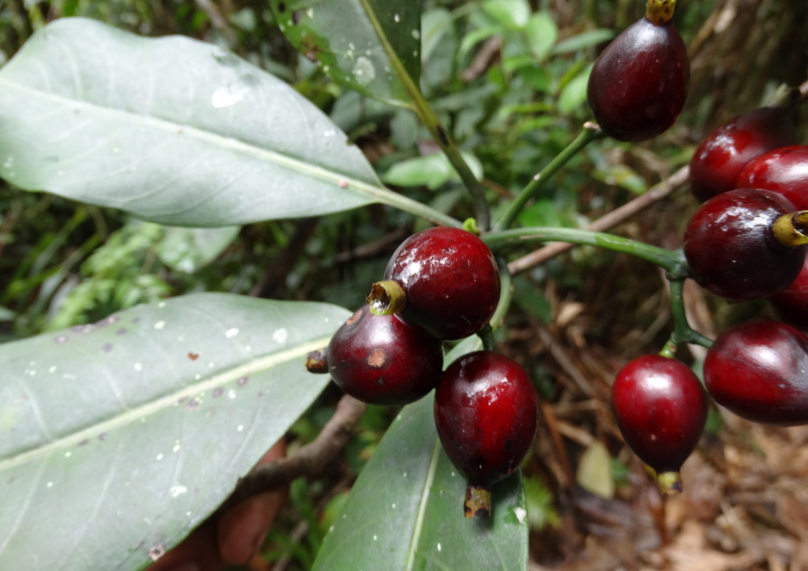
To start, let’s unpack its botanical identity—because Eumachia forsteriana hasn’t always gone by this name. Like many plants, it’s been reclassified over time: it was first named Psychotria forsteriana by botanist Asa Gray in the 1860s, and later also called Uragoga forsteriana before being formally moved to the Eumachia genus in 2017 by botanists Barrabé, C.M. Taylor, and Razafimandimbison. This reclassification happened because modern molecular and morphological studies showed it shared more key traits with other Eumachia species—like its flower structure, fruit characteristics, and growth habit—than with the Psychotria genus it was originally grouped with. A member of the Rubiaceae family (the same family as coffee and gardenias), Eumachia forsteriana is a small evergreen shrub or small tree, typically growing 1 to 3 meters tall, with a compact, bushy shape that makes it perfect for the forest understory. Its leaves are elliptical, thick, and leathery, adapted to retain moisture in the humid tropical climate, and its small, tubular flowers bloom in clusters, emitting a faint, sweet fragrance that attracts local pollinators. By late summer, the flowers give way to small, round, orange to red fruits—bright enough to catch the eye of birds, which help disperse its seeds across the islands.
For the indigenous communities of Fiji, Samoa, and Vanuatu—where Eumachia forsteriana is native—this plant is more than just part of the landscape; it’s a practical, everyday resource. During my time in a Fijian village, I watched women harvest the leaves and stems of the shrub, drying them in the shade to use as a natural remedy. “We steep the dried leaves in hot water to make a tea for stomach aches and fevers,” one woman told me, showing me a bundle of dried foliage she’d stored in her hut. “It’s gentle, but it works—especially for children who can’t take strong medicines.” While formal scientific research on its medicinal properties is limited, studies have identified bioactive compounds in Eumachia forsteriana, including chimonanthine, an alkaloid that has been linked to melanogenesis inhibitory properties (helping regulate skin pigmentation) in other plants. Local communities also use the flexible stems to weave small baskets and mats, and the leaves are sometimes crushed and applied topically to soothe minor skin irritations or insect bites—simple uses that have been passed down through generations, rooted in a deep understanding of the plant’s properties. Unlike some medicinal plants that require complex preparation, Eumachia forsteriana is accessible and easy to use, making it a staple in traditional island medicine.
Ecologically, Eumachia forsteriana plays a vital role in the wet tropical biomes of the South Pacific islands, where it grows primarily in forest understories, along stream banks, and in moist, shaded areas. As a native understory shrub, it contributes to the biodiversity of these fragile ecosystems, providing food and shelter for local wildlife. Its small, fragrant flowers are a valuable source of nectar for bees, butterflies, and small insects, which are essential for pollinating other native plants. The bright orange-red fruits are a favorite food source for birds, which eat the fruit and disperse the seeds across the forest, helping the shrub colonize new areas and maintain healthy populations. Its dense foliage also provides cover for small amphibians, reptiles, and insects, offering a safe haven from predators and the harsh midday sun. In this way, Eumachia forsteriana is a quiet contributor to the balance of the Pacific’s tropical forests, supporting the web of life that makes these ecosystems so unique and resilient.
Beyond its traditional uses and ecological role, Eumachia forsteriana has a subtle ornamental appeal, though it’s not widely cultivated outside its native range. Its glossy, evergreen leaves and neat growth habit make it a charming addition to tropical gardens, and its small, fragrant flowers add a touch of elegance without being overly showy. During my trip, I saw it planted in a few village gardens, where it was used as a low hedge or a border plant, adding greenery and texture to the landscape. It’s also a low-maintenance plant, thriving in moist, well-drained soil and partial shade—perfect for gardeners looking for a resilient, easy-to-grow tropical shrub. However, it’s important to note that it’s adapted to wet tropical climates, so it struggles in dry or cool regions; it requires consistent humidity and warm temperatures to thrive.
Growing Eumachia forsteriana is possible in tropical and subtropical regions that mimic its natural habitat, but it’s not a plant for casual gardeners. It prefers moist, humus-rich, well-drained soil and partial shade—too much direct sunlight can scorch its leaves, while too much shade can make it leggy and reduce flower production. It needs consistent humidity, so in drier climates, misting the leaves regularly or placing a tray of water near the plant can help keep it healthy. Propagation is typically done through seeds or stem cuttings; seeds should be sown in a warm, moist soil mix, while cuttings should be taken from healthy, mature stems and rooted in a well-draining medium. I tried growing a few cuttings in a small greenhouse during my trip, and I quickly learned that overwatering is its biggest enemy—soggy soil leads to root rot, which can kill the plant quickly. It’s also relatively resistant to pests and diseases, but aphids and scale insects can occasionally be a problem; a gentle spray of soapy water usually takes care of the issue without harming the plant or its pollinators.
One of the things that struck me most about Eumachia forsteriana is how little it’s known outside of the South Pacific. Unlike iconic Pacific plants like coconut palms or frangipani, it’s a quiet, understated shrub that flies under the radar—but its value is no less significant. It’s a plant that embodies the connection between island communities and their natural environment, a reminder of the wisdom of traditional knowledge and the importance of preserving native species. Like many tropical plants, its wild populations face threats from habitat destruction—deforestation for agriculture and development is shrinking its natural range, putting both the plant and the traditional knowledge associated with it at risk. Local communities and conservation groups are working to protect it, promoting sustainable harvesting practices and growing it in community gardens to reduce pressure on wild populations.
To me, Eumachia forsteriana is more than just a shrub—it’s a symbol of the South Pacific’s natural heritage and the resilience of island life. It’s a plant that doesn’t demand attention, but quietly provides for the communities and ecosystems that depend on it. Every time I think of its glossy leaves, faint fragrant flowers, and bright fruits, I remember the Fijian elder’s words, the way birds feasted on its berries, and the gentle hum of pollinators around its blooms. It’s a plant that teaches patience, respect, and the importance of valuing the small, unassuming treasures of the natural world. Whether you encounter it in a tropical forest in Fiji, a village garden in Samoa, or read about it in a botanical text, Eumachia forsteriana is a plant worth getting to know—for its practical uses, its ecological importance, and the stories it carries of the Pacific islands and their people.
Eumachia forsteriana seed
Prev:
Next: