


Euodia hupehensis Seeds | Hupeh Euodia
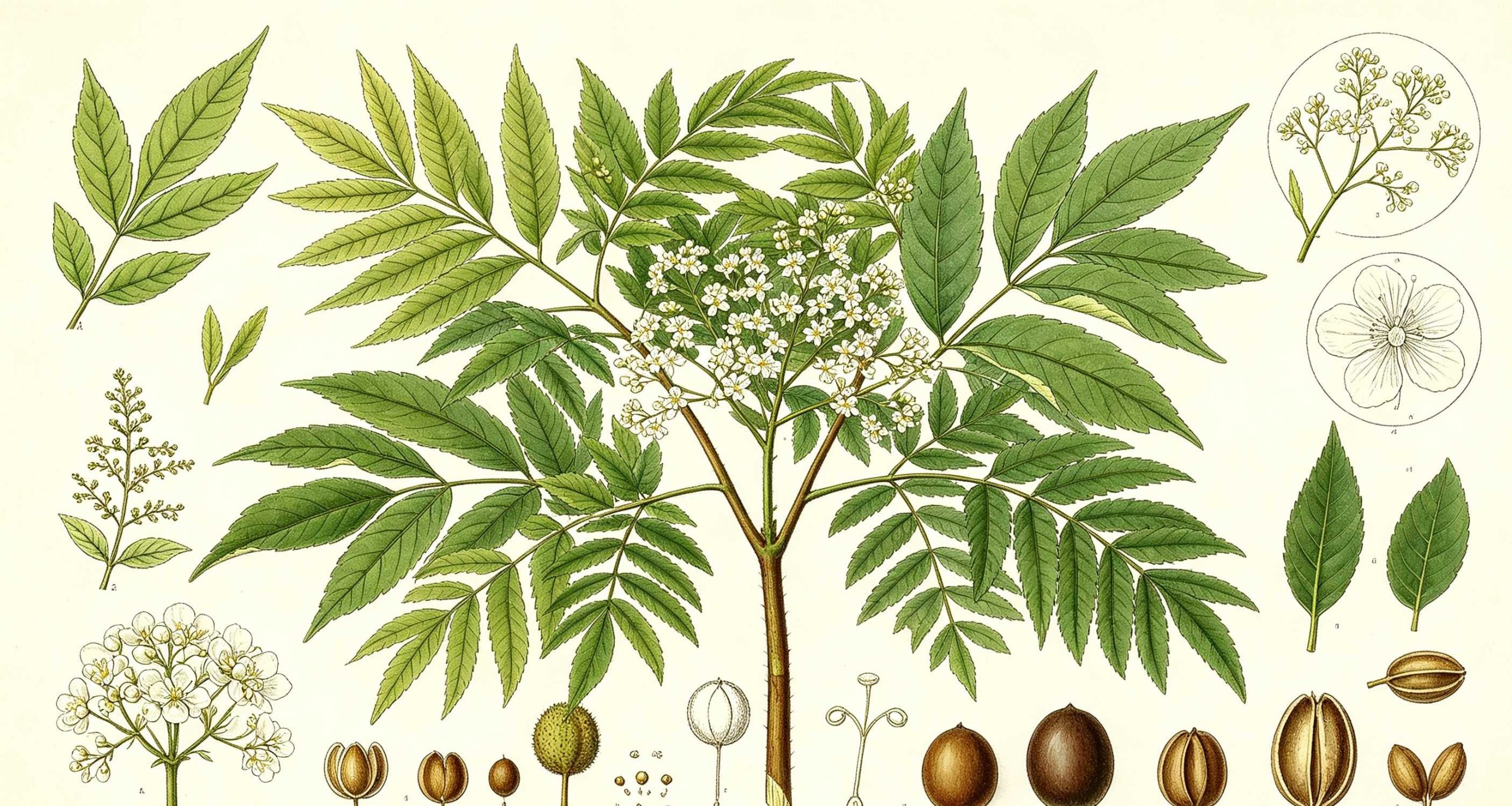
LATIN NAME: Euodia hupehensis
COMMON NAME: Hupeh Euodia
Plant Profile
Euodia hupehensis is a small Chinese tree of the rue family, grown for its frothy summer flowers and prized by beekeepers. It grows in the mountains of Hubei, Sichuan, Guizhou and Shaanxi, in thickets and forest edges between about 700 and 2,000 metres, where the summers are wet and the winters cold. The tree reaches ten to fifteen metres, with a broad crown and opposite, pinnate leaves of five to nine glossy leaflets that smell of resin when crushed. In July and August it covers itself with flat heads of small white flowers, and the whole tree hums with bees; the flowers are one of the main sources of summer honey in central China. The fruit is a small capsule that turns red or purple and splits to show shiny black seeds, which stay on the tree into winter. It is a tree of quiet beauty rather than a showpiece, and it is hardy well beyond its native range.
Science & Biotechnology
Euodia hupehensis belongs to the rue family, and like many of its relatives it is rich in aromatic compounds, with oil glands visible as translucent dots in the leaves. The genus has been reorganised more than once, and some authorities place this species in Tetradium, so a plant bought as Euodia may be labelled differently elsewhere. The flowers are small and numerous and produce abundant nectar, which is why the tree is important in Chinese beekeeping; a single mature tree can support a colony through the summer dearth. The fruit is a capsule with a hard, shiny seed, and the seed is dispersed by gravity and by birds after the capsule splits. The tree is dioecious or polygamous in some populations, so fruit set can be poor on a single plant, and seedlings may take several years to flower. Its wood is hard and pale and is used locally for tool handles.
Uses & Benefits
The tree is planted for its summer flowers, its scent and its value to bees, and it is one of the best honey plants of central China, where it is grown around apiaries. The bark and the fruit are used in Chinese medicine for stomach complaints and for pain, and the leaves are used as a poultice. The wood is hard and fine grained and is used for small turnery, tool handles and furniture, and the tree is planted for shelter and for fuel. In a garden it makes a good specimen for a large lawn or a woodland edge, with fragrant flowers in the quiet weeks of high summer and bright fruit in autumn. It is also a useful tree for a wildlife garden, since it attracts a wide range of insects. It needs space, since the crown is broad, and it is not a tree for a small plot.
Growing from Seed
Sow seed in autumn and leave the pots outside through winter, or stratify for three months at four degrees; germination is in spring and is usually reliable. Sow on the surface of a loamy mix and cover lightly. Grow the seedlings in a shaded frame for their first summer, then pot them on and plant out in autumn. Choose a site in full sun or light shade with deep, moist but drained soil, and water through the first two summers. The tree is hardy to about minus twenty and tolerates wind, but it dislikes waterlogging. Prune only to remove a competing leader and to take out dead wood in winter. It flowers best in full sun, and a second tree nearby improves fruit set. Mulch with compost in spring.
Our Take
A Chinese rue-family tree with frothy white flowers in July and a reputation among beekeepers. Hardy, generous, and quietly handsome.
Related Reading
Continue exploring with these related plants: