


Betula maximowicziana Seeds | Monarch Birch
LATIN NAME: Betula maximowicziana
COMMON NAME: Monarch Birch
Plant Profile
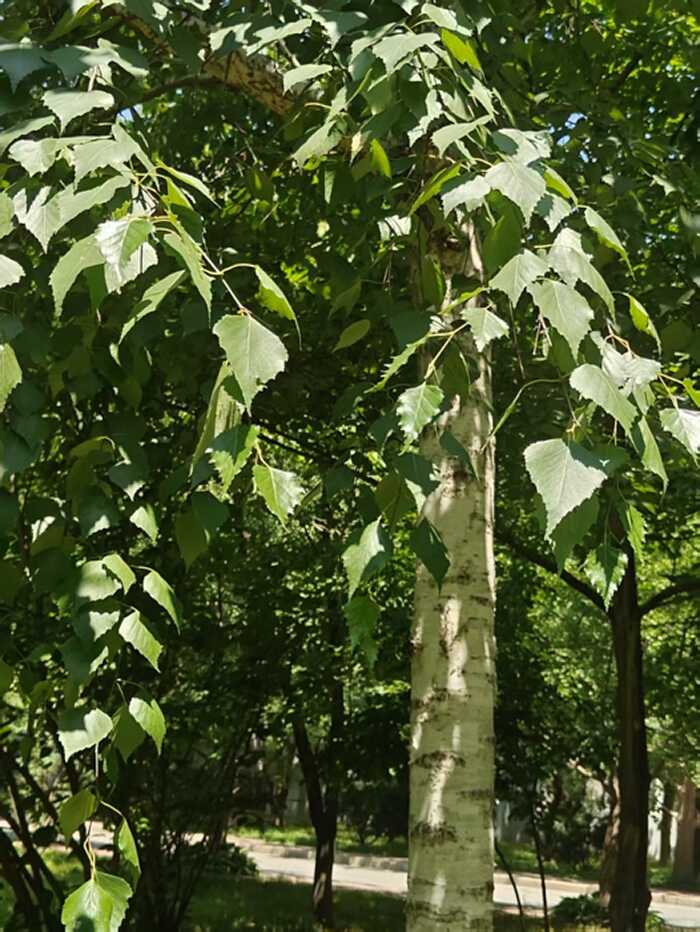
Monarch birch is the Japanese birch with the largest leaves in the genus, and a trunk that peels in ragged grey ribbons. It grows in the mountain forests of Honshu and Hokkaido, and south to Kyushu, usually in moist valleys and along streams at altitudes between about 500 and 2,000 metres, where the snow lies deep and the summer is wet. The tree reaches twenty-five to thirty metres, with a straight trunk and a broad crown, and its leaves can be fifteen centimetres long, twice the size of those of most birches, with a heart-shaped base and a long point. The bark is grey-white and peels in horizontal strips, and old trunks become rugged and dark at the base. The catkins are correspondingly large, and the seed is shed in autumn. It is one of the most important timber trees of northern Japan, and it is also a fine ornamental for a large garden.
Science & Biotechnology
Betula maximowicziana is a member of the section Betula, and it is distinguished from its relatives by leaf size and by the structure of the female catkin, which is longer and more cylindrical than in the common birches. The large leaves are an adaptation to the moist, fertile valley soils where it grows, and they allow the tree to put on height quickly in the short northern summer. Like other birches it is wind-pollinated and produces enormous quantities of seed, which germinates best on bare mineral soil after disturbance. It is a pioneer that gives way to beech and oak in the absence of logging, and it depends on ectomycorrhizal fungi, without which seedlings yellow and stall. The bark peels in horizontal strips rather than in the papery sheets of the white birches, and the strips were used in Japan for wrapping and for roofing. The timber is pale and fine grained, and it is used for furniture, interior work and plywood.
Uses & Benefits
The wood is one of the best of the Japanese birches, pale, strong and easily worked, and it is used for furniture, cabinets, flooring and interior panelling. The bark was used for wrapping, for roofing and for containers, and the sap is tapped in spring. In gardens the tree is planted as a specimen for its large leaves and its peeling bark, and it is used in parks and along avenues in northern Europe and North America, where it is hardy and fast. It is also planted in shelterbelts and in the reclamation of disturbed ground. For a small garden it is too big, since it makes a broad crown and a heavy trunk, but in a park or a large garden it is one of the most imposing of the birches. Its leaves turn a soft yellow in autumn, and the tree is at its best in winter, when the bark is visible.
Growing from Seed
Sow seed in early spring on the surface of a peaty mix and keep it at 15 to 18 degrees; light is needed, so do not cover it. Germination is quick, and the seedlings should be pricked out as soon as they are large enough to handle. Plant out in autumn in full sun, in deep, moist but drained acid soil, and keep the ground clear of grass for the first two years. Water through the first two summers, since the tree resents drought while it establishes. It is hardy to about minus thirty and tolerates wind, but not waterlogging or shade. Stake in exposed sites, and prune only in late summer if a branch must be removed. Mulch with leafmould to keep the roots cool.
Our Take
The birch with the biggest leaves and a trunk that peels in grey ribbons. A large, fast tree for a park rather than a small garden.
Related Reading
Readers interested in Monarch Birch frequently explore these as well: