


Betula ermanii Seeds | Erman’s Birch
LATIN NAME: Betula ermanii
COMMON NAME: Erman’s Birch, Gold Birch
Plant Profile
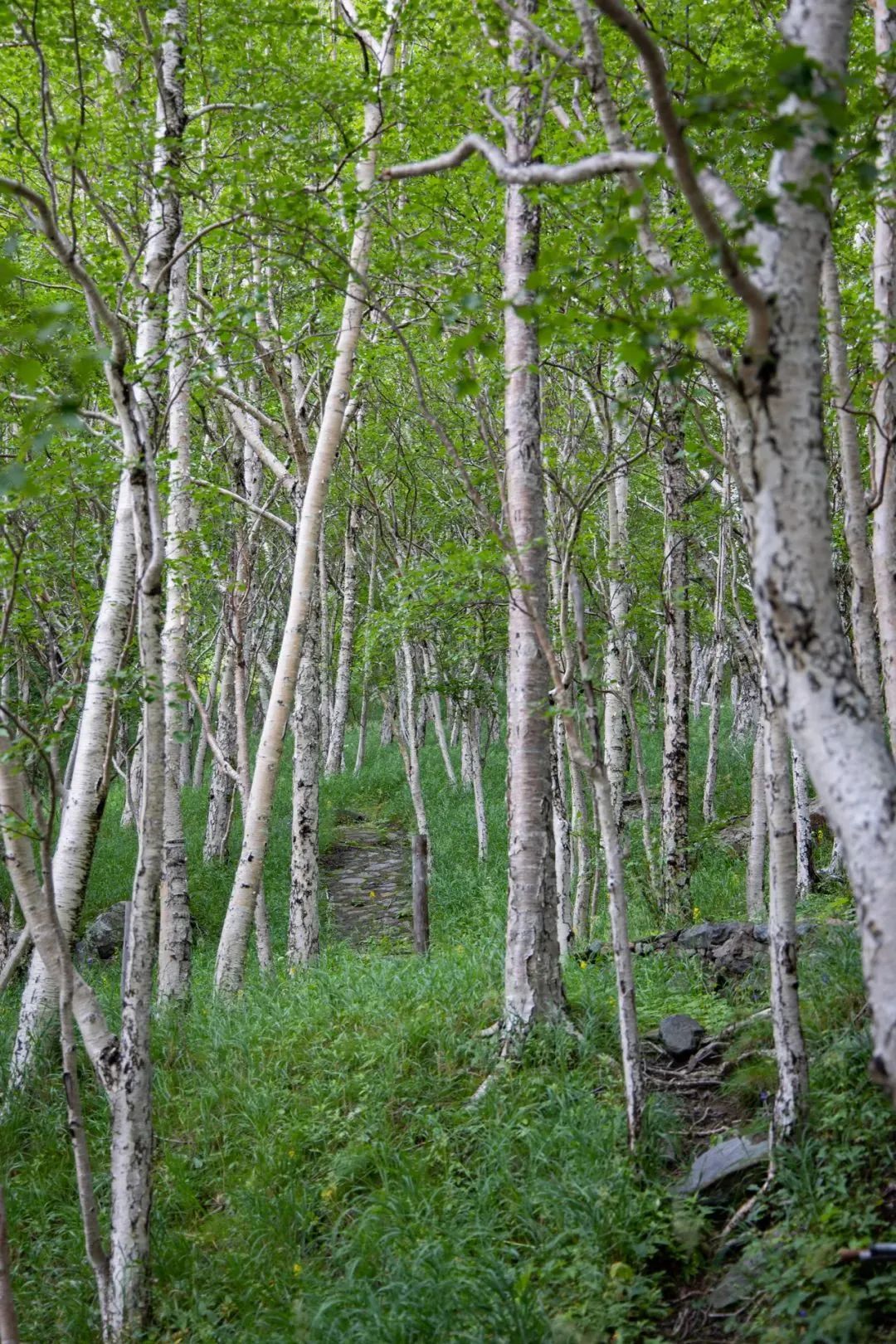
Erman’s birch is a northeastern Asian tree with creamy bark that peels in strips and turns pink where it has recently shed. It grows from Kamchatka and the Kuril Islands through Sakhalin and Hokkaido to the mountains of northeastern China and Korea, often on volcanic soils, lava flows and stony slopes up to the tree line. The tree reaches fifteen to twenty metres, with a narrow crown and a trunk that stays smooth and pale for most of its life, unlike the birches that develop heavy black fissures at the base. The leaves are broad, heart-shaped at the base and sharply toothed, and they turn a clear yellow in autumn. It is one of the first trees to colonise bare volcanic ground, and it grows fast enough to be useful in shelterbelts and on eroded slopes. In Japan it is planted around gardens and temples for the colour of its bark.
Science & Biotechnology
Betula ermanii is a pioneer species in the strict sense: it establishes on volcanic ash, lava and landslide scars where little else can grow, and it improves the ground enough for conifers to follow. Like other birches it is wind-pollinated and produces huge quantities of small winged seed, which travels far and germinates on bare mineral soil but not in grass. The bark contains betulin, a triterpene that gives it its white colour and its resistance to decay, and the peeling habit is thought to shed lichens and to remove damaged tissue. The tree forms ectomycorrhizal associations with a range of fungi, including species that fruit only under birch, and it is dependent on those fungi on poor soils. It is short lived for a tree, rarely reaching a century, and it regenerates in waves after fire or volcanic disturbance. In the mountains of Hokkaido and Sakhalin it forms the upper treeline, above the conifers.
Uses & Benefits
The wood is light, pale and easy to work, and it is used for turnery, plywood, furniture cores and pulp, though it is not durable out of doors. It is a good firewood and was traditionally used for charcoal. The bark has been used for roofing, for containers and for tanning, and the sap is tapped in spring as a drink in Japan and Russia. In gardens it is planted for its bark, which is at its best in winter, and for its fast growth on poor ground, and it is used in shelterbelts and in the reclamation of volcanic and eroded land. It is also one of the trees planted on the slopes of Mount Fuji and other volcanoes to hold ash. For a small garden it is too large and too short lived, but in a park or a woodland edge it earns its place.
Growing from Seed
Sow seed in autumn or early spring on the surface of a peaty mix, since it needs light, and give it four weeks of cold if sowing indoors. Germination is fast and the seedlings grow quickly, so prick them out early. Plant out in autumn in full sun, in acid or neutral soil that is not waterlogged, and keep the grass clear for the first two years. Water through the first summer only. The tree is extremely hardy, taking minus thirty and more, and it tolerates wind and poor soil, but it resents shade and compaction. Stake only if the site is exposed. Prune in late summer if at all, since birch bleeds from cuts made in spring, and remove only damaged or crossing branches.
Our Take
A hardy Asian birch with pink-flushed peeling bark and yellow autumn colour. Fast, tolerant of volcanic ground, and best planted in groups.
Related Reading
More species in the same orbit as Erman’s Birch: