


Hibiscus aculeatus Seeds | Pineland Hibiscus
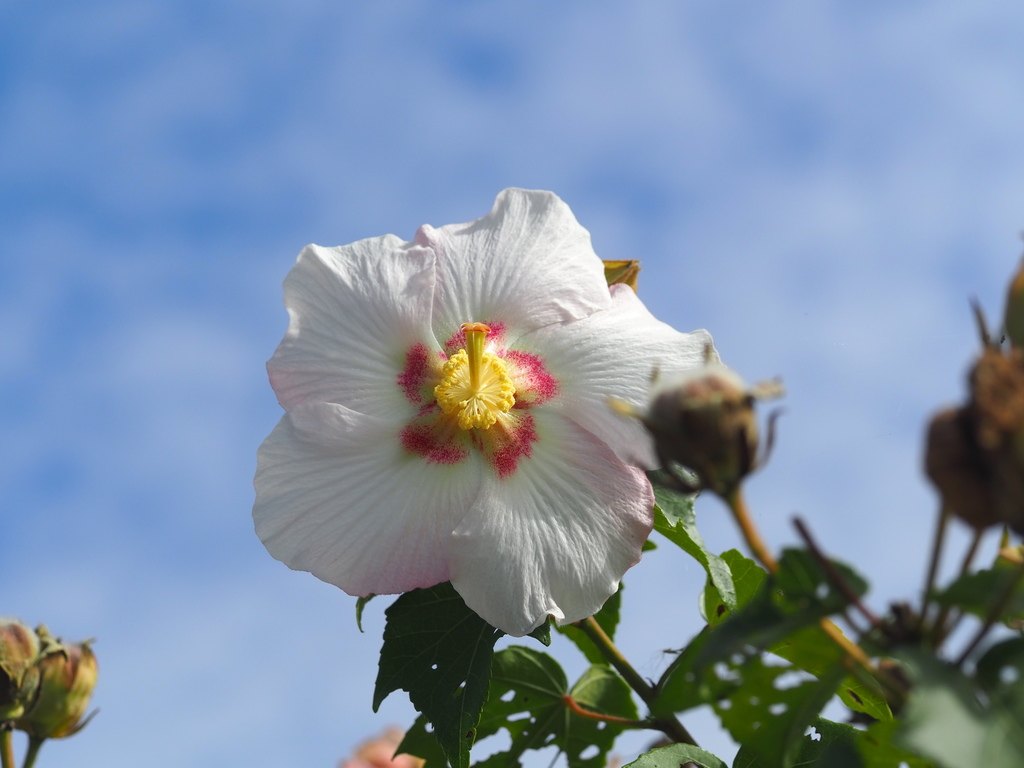
LATIN NAME: Hibiscus aculeatus
COMMON NAME: Pineland Hibiscus
Plant Profile
Comfortroot, or pineland hibiscus, is a perennial shrub of the mallow family that flowers at any point from late spring to early fall. Its stems and three-lobed leaves are harshly scabrous, rough enough to feel on the way past, and the flower announces itself in two rings: a dark red inner circle inside a cream to white outer circle on each petal.
It is a wetland plant, native to the southeastern United States from Texas to South Carolina, and introduced to Bangladesh. It grows in warm, tropical and subtropical climates in bogs, ditches, savannahs and hydric to mesic pine flatwoods, which is a precise way of saying it wants wet feet and open light.
Natural heritage records cluster in the coastal watersheds of the Carolinas: the Pamlico Sound, the White Oak River, the Lower Cape Fear and the Lumber basins. As of the 1988 assessment the species carried a NatureServe status of G4G5, secure to apparently secure, though wetland loss has narrowed the map since in places.
In the mallow manner the flowers are large and short-lived, successive rather than persistent, and the plant carries them over months. The combination of big pale petals, a dark eye and rough grey-green foliage gives it a distinctly wild look that no garden hybrid quite reproduces.
Science & Biotechnology
Pollination is by bees, especially bumblebees, and the visitor record from northern Florida is specific: Melitoma taurea, Ptilothrix bombiformis and Svastra atripes have all been recorded working the flowers. Ptilothrix bombiformis, the rose-mallow bee, is a specialist on hibiscus pollen, which makes this plant infrastructure for it rather than merely a nectar stop.
The two-ring petal pattern is a nectar guide in plain sight: the dark red circle marks the approach to the flower’s centre for insects that read contrast, while the pale outer ring advertises to anything passing at distance. The dark eye also warms faster in morning sun, a small physical favour to early visitors.
As a wetland species it sits in the same section of the genus as the familiar hardy hibiscus of swamps, and shares their tolerance of saturated soil and their habit of dying back completely each winter to rise late from the roots. That late waking is the most common cause of beginners digging up a perfectly alive plant. Other Malvaceae on the list: Hibiscus mutabilis, Hibiscus sabdariffa and Abutilon.
Uses & Benefits
In the garden its place is the pond margin, the rain garden, the drainage ditch turned feature: any consistently wet, sunny position. The cream flowers with the dark eye are cooler in tone than the red swamphibiscus hybrids, and the rough foliage holds up in heat that ruins softer things.
Its wildlife value is the real argument. A planting that supports the rose-mallow bee supports a specialist that feeds on almost nothing else in a suburban border, and the bumblebee traffic the flowers draw is heavy and steady through the warm months. Generalist plants fill beds; this one fills a role.
It is not a plant for dry borders or pots, and it will not forgive being placed as if it were ordinary bedding. Given its bog, ditch and flatwoods origin, the sensible test is simple: if the ground stays wet after rain, it will thrive; if it drains in an hour, grow something else.
Growing from Seed
Soak the seed overnight before sowing, then start it warm, in modules under cover in spring, sown about a centimetre deep in moist compost. Germination is uneven but not difficult, and the seedlings grow fast once the warmth settles, so pot on early rather than let them sit crowded.
Set out after frost into soil that never fully dries: pond edges, low ground, rain gardens. Full sun is required for the flower count. In the first year expect foliage and patience; flowering on seed-raised plants usually begins the second season, and the first hard growth is the woody base forming.
Thereafter the maintenance is winter housekeeping: cut the dead stems down in spring, after the new shoots show, so you do not slice the crown blind. It resents disturbance once rooted, so choose the wet spot first and let it stay there.
Our Take
Pineland hibiscus is the specialist’s plant: a wet-ground native with its own bee, its own watersheds and its own kind of beauty, pale and dark-eyed rather than loud. It rewards the gardener who has one genuinely wet corner and has run out of ideas for it.
Sow it, plant it at the wet spot, and then leave it alone to wake in its own time each May. The panic it causes in spring is part of its character, and the cream flowers with the dark eye are the answer by June. Nowhere else in the seed list does a specialist bee arrive with the plant.
Related Reading
Gardeners who grow Pineland Hibiscus often pair it with these related subjects: