


Hibiscus moscheutos Seeds | Rose Mallow
LATIN NAME: Hibiscus moscheutos
COMMON NAME: Rose Mallow
Plant Profile
Rose mallow is a wetland perennial from the eastern United States, and it is the biggest-flowered hardy plant most gardens can grow: individual blooms up to 20 cm across on stems 1.5 to 2.5 m tall. It dies to the ground each autumn and comes back from a large woody rootstock in May.
The leaves are variable, usually triangular with up to three lobes, grey-green above and white and hairy beneath. Flowers are borne at the tips rather than along the stem, which separates it from the related Hibiscus laevis. Petals run from white through pink to deep red, and most carry a maroon eye.
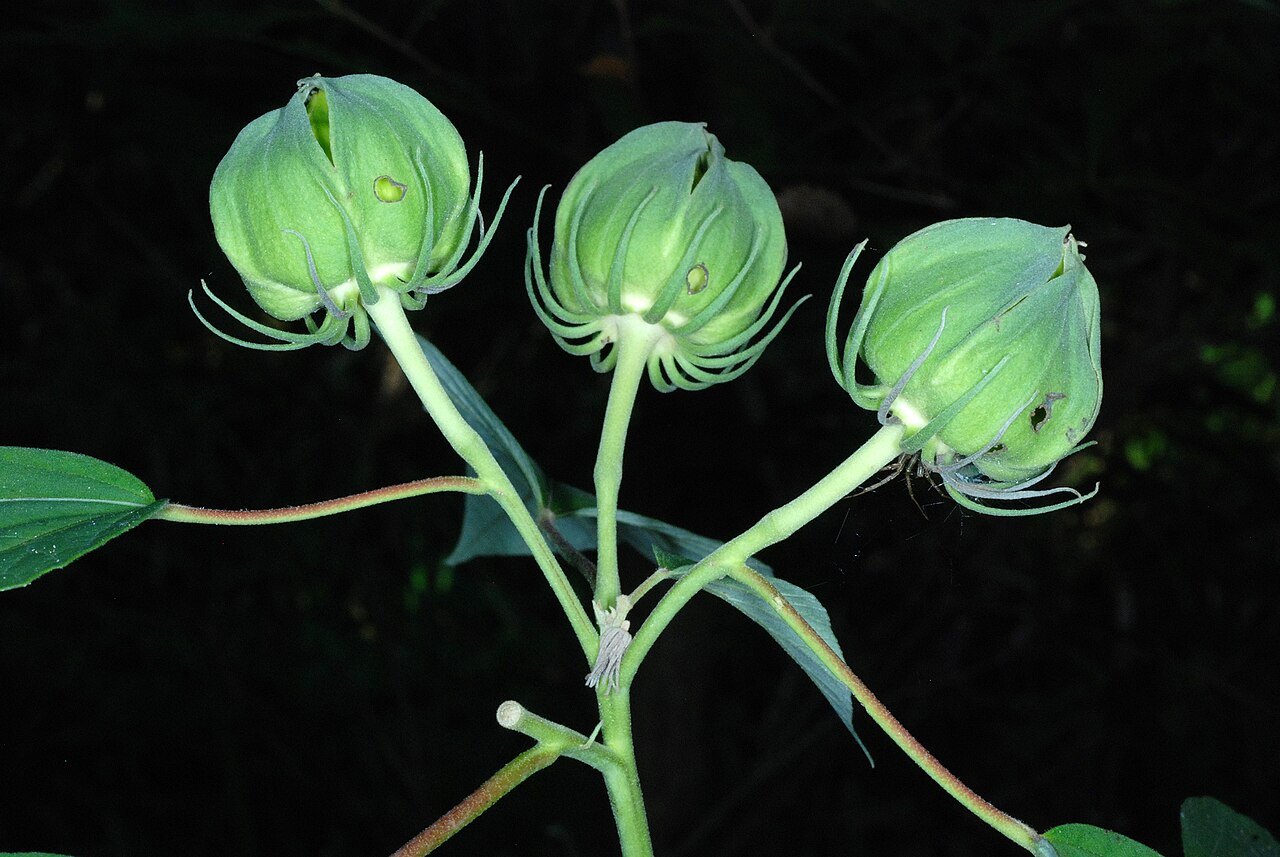
The centre is a cream to pale yellow staminal column, and it is the landing strip for the bees that do the pollination. The seed capsule is oval and short-beaked, 2.5 to 3 cm long, holding a ring of seeds. The species was moved to the genus Muenchhusia in 2025, and the trade has not noticed. Malvaceae is well covered here, with Hibiscus tiliaceus, Hibiscus aculeatus and Hibiscus grandiflorus alongside.
Science & Biotechnology
In Maryland studies, most of the pollination was done by one bee, Ptilothrix bombiformis, a solitary anthophorid that specialises in mallows. It is a ground-nester, and it needs bare, well-drained soil near the flowers, which is not something a gravel mulch provides and not something a lawn provides either.
The plant is self-compatible, so a single specimen will set seed, but the seed set is better with the bee. The flowers last a day each, and the plant produces them over about a month, so a clump looks spectacular for a fortnight and then stops dead without warning.
It grows in wetlands and along river systems, in soils that are wet, silty and acid. That is the opposite of what most herbaceous perennials want, and it explains why the plant is often disappointing in a dry border and enormous beside a pond or in a rain garden.
Uses & Benefits
It is a plant for the back of a wet border, a pond edge or a rain garden, where the height and the flower size can be seen against water or a dark hedge. In a dry border it survives but does not perform, and the flowers are half the size. Beside water the stems can reach 2.5 m and the clump will need no staking at all, which is not true of most plants this tall.
The leaf buds and young leaves are edible, cooked and eaten in some parts of its range, and the root has a medicinal history. The plant is not toxic, which is unusual for something this ornamental, and the shoots were reportedly eaten in the way asparagus is eaten.
It is a larval host for the common checkered skipper, the grey hairstreak, the Io moth and the pearly wood nymph, which is a better argument for growing it than the flower, good as the flower is. Moths and skippers are harder to please than bees.
Growing from Seed
Sow under cover in late winter, at 21 to 24 °C. The seed coat is hard; nick it with a knife or soak it overnight before sowing 5 mm deep. Most of the seeds come up within three weeks, and a few stragglers follow a fortnight later. The seedlings grow quickly and will flower in their second or third year, which is fast for a plant of this size.
Plant out in spring, in full sun, in soil that holds moisture. Unlike most perennials it will take wet feet, and it will take ordinary soil if it is watered in dry spells. Space the plants 60 cm apart; they make substantial clumps and the stems need room to stand.
Cut the stems to the ground in late autumn or leave them for the winter, since the seed capsules are handsome in frost. Feed once in spring and mulch to hold moisture. Watch for Japanese beetles, which will riddle the leaves in July in the eastern states.
Our Take
It is the most theatrical hardy plant for a wet corner, and it costs very little. The flowers are absurdly large, they open in succession for a month, and then the plant disappears underground and leaves the border to somebody else. That is a fair bargain.
The one requirement is water. Plant it where the ground stays damp, or be prepared to irrigate, and do not expect a prize specimen from a dry sunny bed. Given moisture, it will seed about gently and make a colony in three or four years, which is the way it grows in the wild, in stands rather than in solitary clumps.
Related Reading
More species in the same orbit as Rose Mallow: