


Tetrapanax papyriferus Seeds | Rice Paper Plant
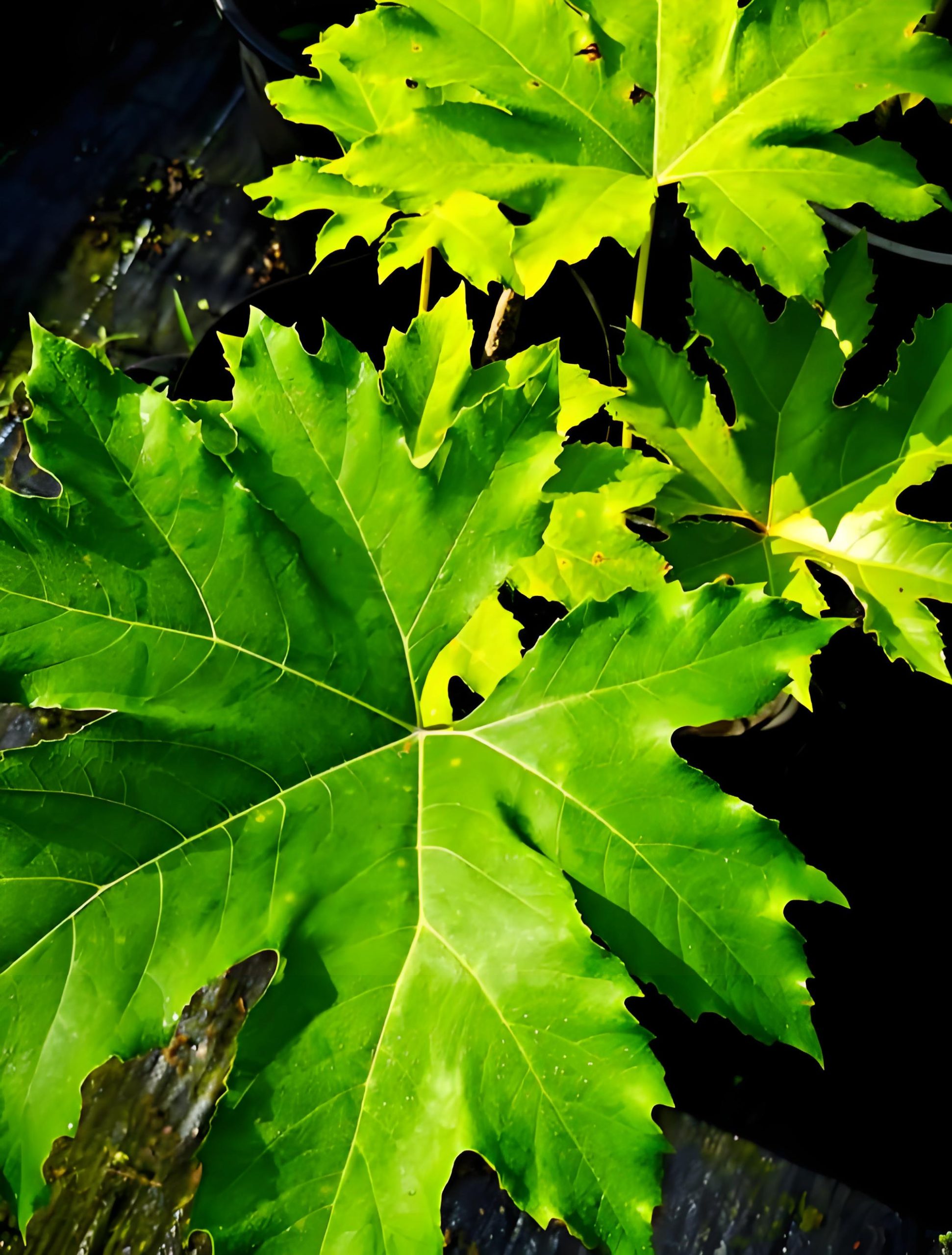
LATIN NAME: Tetrapanax papyriferus
COMMON NAME: Rice Paper Plant, Tetrapanax
Plant Profile
Tetrapanax is the rice paper plant, a Taiwanese shrub with leaves a metre across and a root system that will take over a garden. It grows in the hill forest of Taiwan and southern China, in clearings and forest edges on moist, fertile soil, and it has been cultivated for centuries for the white pith inside its stems. The plant makes a thick, upright stem two to four metres tall, topped by a cluster of enormous, deeply lobed leaves covered in a dense felt of white hairs, especially when young. In late autumn it produces a large, rounded head of small white flowers, followed by black berries. The whole plant dies back to the ground in a hard frost and resprouts from the root in spring. It is dramatic, fast and invasive by suckers, and it is one of those plants that a garden either accommodates or is consumed by.
Science & Biotechnology
Tetrapanax papyriferus is a member of the ivy family, and its most unusual feature is the pith: a white, spongy core of aerenchyma cells that fills the stem and can be cut into thin sheets. That pith is the original rice paper of China, used for paintings, artificial flowers and lanterns, and it is still produced in Taiwan by a craft process that involves cutting the stem into short sections and slicing the pith against a blade. The plant spreads by rhizomes that run several metres a year and throw up suckers, so a single specimen becomes a thicket. The dense hairs on the leaves and stems are an adaptation to high light and to cold, and they can irritate the skin and the throat when handled. The flowers are pollinated by insects, and the fruit is eaten by birds. The species is frost tender as top growth but hardy at the root, which is why it survives in gardens far colder than its native range.
Uses & Benefits
The pith is the source of rice paper, and the plant is still grown for that craft in Taiwan, where the paper is used for painting and for the flowers sold at temples. In Chinese medicine the pith, tong cao, is used as a diuretic and to promote lactation, and it appears in compound prescriptions. In gardens the plant is grown for its architectural foliage, as a dot plant in a large bed or as a tropical-looking screen in a sheltered corner, and it is one of the few plants that can supply a really large leaf in a temperate climate. It is also used in flower arranging. The drawbacks are its suckering habit, its irritating hairs and its vigour, and in warm climates it can become a weed. It should be planted where its spread can be mown or contained.
Growing from Seed
Sow seed in spring at 18 to 22 degrees on the surface of a moist compost, covering it lightly; germination is quick and usually good. Root cuttings are easy: a piece of root 5 cm long, laid in a pot of compost, will produce a plant in a few weeks. Plant out in a sheltered site in sun or light shade, in deep, moist soil, and give it plenty of room, since the leaves are large and the rhizomes travel. Water well in the first season. Cut the stems to the ground in late winter in cold districts, and the plant will resprout in spring. To contain it, sink a root barrier 40 cm deep, or grow it in a large pot. Wear gloves and long sleeves when handling it, since the hairs irritate skin.
Our Take
The rice paper plant: leaves a metre wide, a pith that becomes paper, and roots that will colonise the garden. Give it space or a barrier.
Related Reading
More species in the same orbit as Rice Paper Plant: