


Ligustrum japonicum Seeds | Japanese Privet
LATIN NAME: Ligustrum japonicum
COMMON NAME: Japanese Privet, Wax Leaf Privet
Plant Profile
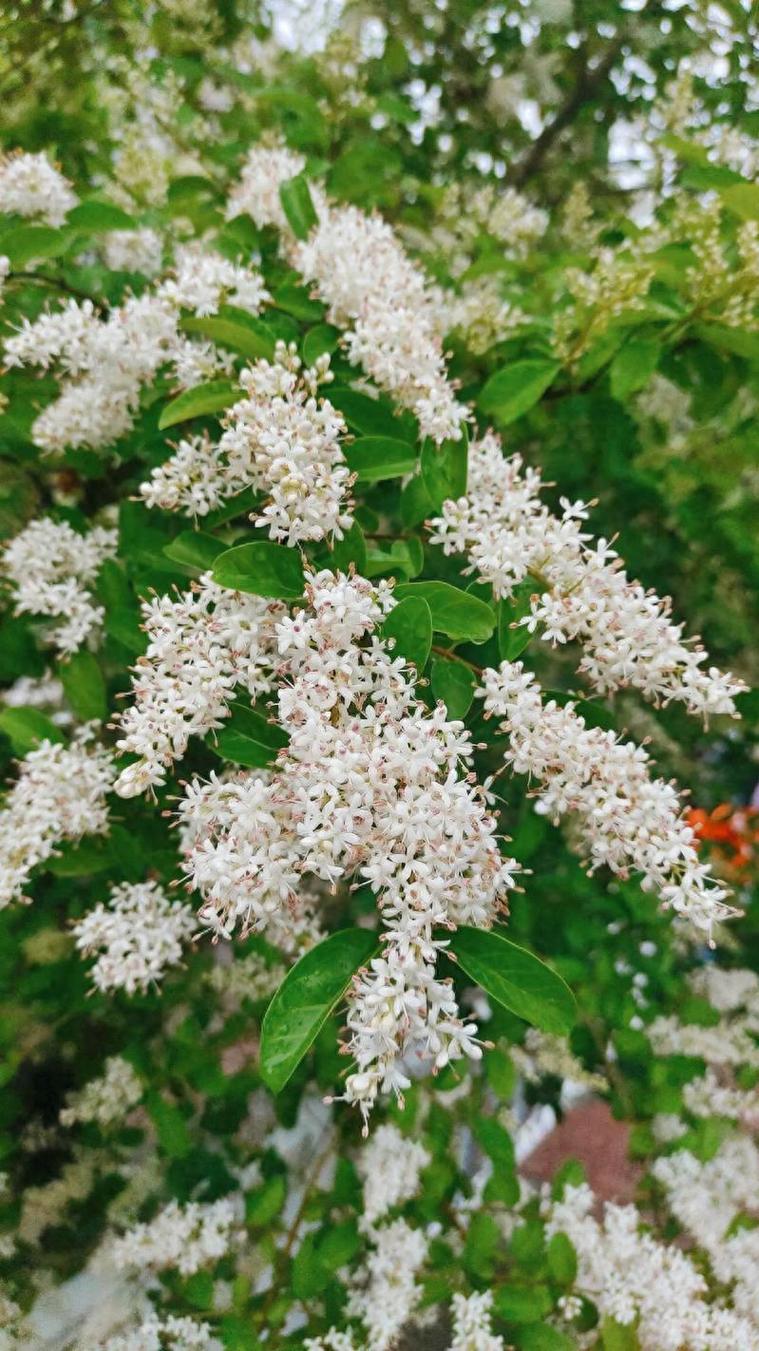
Japanese privet is the glossy evergreen shrub that makes the tightest hedge in the trade, and it has spread well beyond Japan. It is native to Japan, Korea and eastern China, where it grows in thickets, woodland edges and coastal scrub, and it has been planted in gardens from Europe to the southern United States for centuries. The plant reaches two to five metres, with opposite, oval, leathery leaves that are glossy above and pale beneath, and it clips into a dense, formal shape that few evergreens can match. In early summer it carries upright panicles of small white flowers, heavy with a sweet scent that some people find unpleasant, followed by black berries that persist through winter. It is one of the most useful hedge plants in the world and one of the most invasive, depending on where it is planted.
Science & Biotechnology
Ligustrum japonicum is a member of the olive family, and its black berries are eaten by birds, which spread the seed into woodland and hedgerows far from the garden. The species is shade tolerant and drought tolerant, and it resprouts from the base after cutting, which is why it survives clipping and why it escapes. In the southern United States it has become a serious invader of forests, where it forms a dense evergreen understorey that suppresses native seedlings; the related L. lucidum is even more aggressive. The flowers produce abundant pollen and are a significant cause of summer allergy in Japan and the southern states. The berries are poisonous to humans and to dogs and cats, causing vomiting and diarrhoea, though birds eat them without harm. The plant also exudes allelopathic compounds from its roots that inhibit the growth of other plants nearby.
Uses & Benefits
The plant is grown for hedges, screens, topiary and containers, and it is one of the few evergreens that will tolerate hard clipping, poor soil and urban pollution. It is also used as a rootstock for other ligustrums and as a framework plant in Japanese-style gardens. In China the fruit of the related L. lucidum is used as a medicine, nu zhen zi, for liver and eye complaints, and Japanese privet has similar uses locally. The wood is hard and fine grained and is used for small turnery and for tool handles. In a garden it is invaluable where a formal hedge is wanted, and it will grow in sun or shade, in any soil that drains. The drawback is its seeding and its invasiveness, and in many countries it is now on watch lists.
Growing from Seed
Sow seed in autumn and leave the pots outside for the winter, or stratify for three months at four degrees; germination is reliable in spring. Cuttings are easy at almost any time of year, and 15 cm lengths of semi-ripe wood will root in six weeks in a closed frame. Plant out in autumn or spring, 40 to 60 cm apart for a hedge, in any well-drained soil, in sun or shade. Water through the first summer and mulch to keep the weeds down. Clip hedges in late spring and again in late summer, and cut back hard if the plants become leggy, since they resprout from old wood. Remove flowers before they set seed if the garden is near woodland, and never dump prunings in a wild area, since the stems root readily.
Our Take
A glossy evergreen that clips into a perfect hedge and seeds itself into the woods. Useful, invasive, and poisonous in berry.
Related Reading
Gardeners who grow Japanese Privet often pair it with these related subjects: