


Sprengelia incarnata Seeds | Pink Swamp Heath
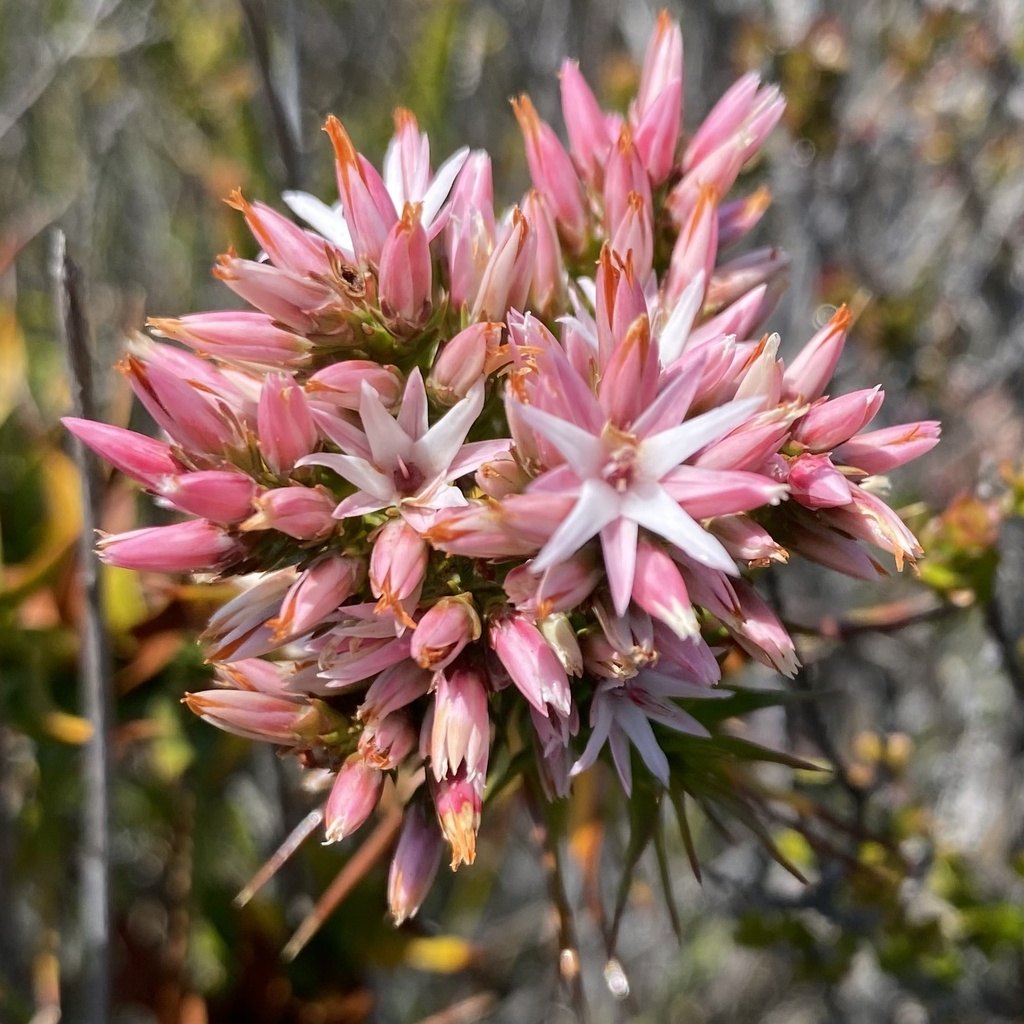
LATIN NAME: Sprengelia incarnata
COMMON NAME: Pink Swamp Heath
Plant Profile
Pink swamp-heath is an erect, hairless shrub of 0.5 to 2 m, with reddish-brown to red stems and leaves that clasp the stem at the base. Each leaf is egg-shaped to lance-shaped, 3 to 20 mm long and 2 to 6 mm wide, and finishes in a hard point 0.4 to 0.7 mm long. It is not a plant to brush past in shorts.
It was described in 1794 by James Edward Smith, in the proceedings of the Swedish academy, and the epithet incarnata means flesh-coloured, which is a fair description of the pink of the flowers and an optimistic one for the buds. The genus sits in Ericaceae, in the group that used to be called Epacridaceae and is now folded into the heath family.
The Tasmanian Richea species look similar and are regularly confused with it. The difference is on the stem: Richea leaves leave scars when they fall, and Sprengelia stems stay smooth. Once you have run a thumb up a stem, the two are easy to tell apart.
Science & Biotechnology
The flowers are carried in spikes of three to twenty near the ends of the stems, and the structure is unusual in its proportions. The petals are joined at the base into a tube only 0.5 to 1.3 mm long, while the free lobes are 3 to 5 mm. The tube is shorter than the lobes it produces, so the flower is effectively open rather than tubular, and any small insect can reach the nectar.
That is a different arrangement from the long-tubed heaths that restrict access to a few pollinators. An open flower in a wet, cold, insect-poor habitat is a sensible hedge: it does not depend on one visitor, and it sets seed even in a bad season. The capsule that follows is 2 to 3 mm long and holds a great many very small seeds.
The habitat explains the rest. It grows in swamps and heathland on peat, often with standing water in winter, and peat is a substrate with almost no available nitrogen or phosphorus. A plant that lives there has to be economical with nutrients and tolerant of waterlogged roots, so it survives conditions that kill ordinary shrubs. Its nearest neighbours on the list are Primula vialii, Cyclamen persicum and Primula obconica.
Uses & Benefits
Its place is the wet heath garden: a peat bed, a bog trough, or a lined pit filled with acid peat and sand, kept wet with rainwater. In that setting it is a good structural plant, upright and red-stemmed, with pink flowers from June to October and sometimes into December.
It is not a plant for a border. Tap water carries lime and dissolved salts, and a season of it will yellow the leaves and then kill the plant, usually in a way that looks like drought: the leaves dry at the tips while the compost is sodden. Rainwater or nothing is the rule.
In Australia it is common in the wet peaty landscapes of Tasmania, from sea level to the highest mountains, and in the far south-east of South Australia including Kangaroo Island, southern Victoria and the New South Wales coast south from Coffs Harbour. In New Zealand it is naturally uncommon and considered at high risk, which is a reminder that abundance in one country says nothing about another.
Growing from Seed
Sow on the surface of peat and sand, barely covered, and water from below with rainwater. The seed is fine and slow, and germination is best at cool temperatures, 15 to 18 °C, over four to eight weeks. Fresh seed is far better than stored, and a packet held over a summer may give nothing at all.
The seedlings are tiny and intolerant of disturbance. Prick them out when they are 1 cm high, using a dibber and handling them by a leaf, into a mix of two parts peat to one part sand. Keep them in a shaded frame for the first summer and never let the compost dry out completely.
Pot on gradually, and plant out only when the root ball is well formed. In cold climates grow it in a container and move it into a cold frame for winter; the plant is hardy to frost but not to frozen standing water in a pot with no drainage. Repot every second year into fresh acid peat.
Our Take
It is a specialist plant for a specialist bed, and there is no point pretending otherwise. If you have a bog garden, a peat trough, or a rainy climate and acid soil, it ranks among the best small shrubs available. If you have a chalky border and a hose, it will be dead by August.
The reward is a plant in flower when the heathers are over and the garden is winding down. Pink, upright, and tolerant of standing water, it fills a gap that almost nothing else fills, which is the best argument for growing difficult plants.
Related Reading
Readers interested in Pink Swamp Heath frequently explore these as well: