


Mentha pulegium Seeds | Pennyroyal
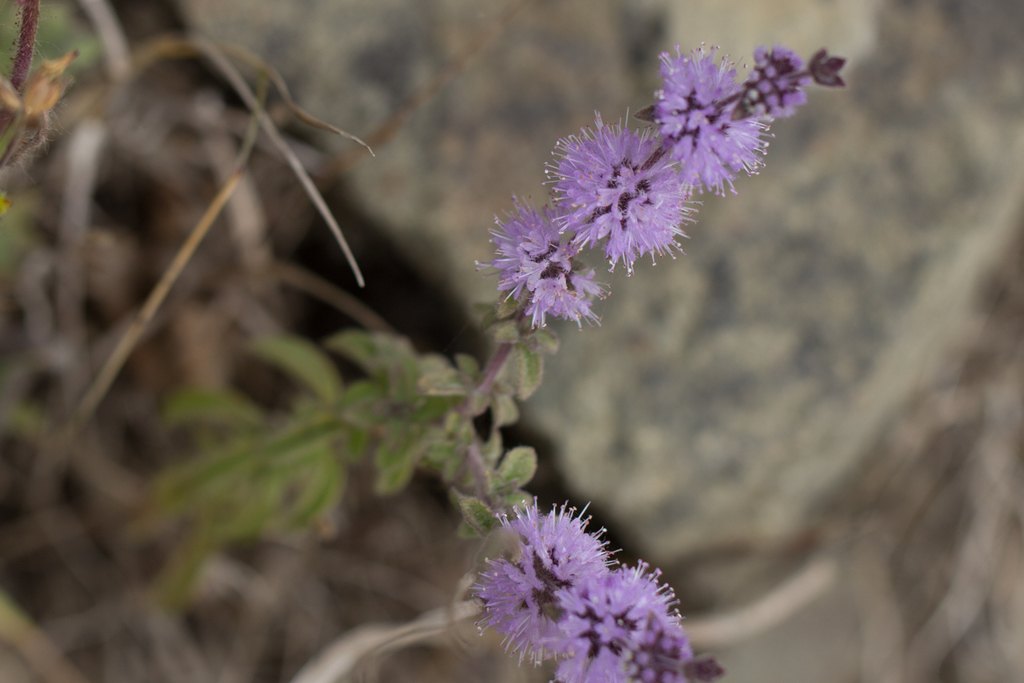
LATIN NAME: Mentha pulegium
COMMON NAME: Pennyroyal
Plant Profile
Mentha pulegium is a low, creeping mint of the Lamiaceae, native to Europe, the Mediterranean and western Asia, where it grows in damp meadows, by streams and in wet ground that dries out in summer. It spreads by stolons and forms a mat 10 to 30 cm high, with small, oval, opposite leaves and whorls of lilac flowers in late summer.
The leaves are strongly aromatic, sharper and more medicinal than spearmint, 8 to 30 mm long and 4 to 12 mm wide. The stems creep along the ground and root at the nodes, and the plant stands 10 to 40 cm. It is the smallest and least vigorous of the European mints, which suits a small garden.
The species name pulegium comes from pulex, the Latin for flea, and refers to the plant’s traditional use against fleas and lice. It was strewn on floors in the Middle Ages, burned in rooms and rubbed on animals, and the practice gave the plant its common name in several languages. The flowers are 6 mm across, and the calyx is a ribbed tube 3 mm long with five teeth.
The plant is smaller and more sprawling than the familiar garden mints, and it is less vigorous, which is an advantage in a garden where the larger mints become invasive. It is hardy to about -15 °C, and it dies back to the ground in winter, reappearing in spring from the stolons.
Science & Biotechnology
Mentha is a genus of about 25 species, and it is notorious for its hybrids, which are often fertile and which have confused the taxonomy for two centuries. M. pulegium is one of the few species that is not a hybrid, and it is placed in a separate section of the genus on the basis of its flower structure and its chromosome number.
The essential oil is dominated by pulegone, with smaller amounts of menthone, isomenthone and piperitone, and the ratio varies with population and season. A Tunisian sample ran 61 per cent pulegone and 17 per cent isomenthone. Distillation gives about 2 mL of oil per 100 g of leaf, and pulegone is both the smell and the hazard.
Pulegone is metabolised to menthofuran, which depletes glutathione in the liver, and the oil has caused deaths. It can trigger abortion, and it is unsafe for anyone pregnant, epileptic, or with liver or kidney disease; taken by mouth it causes cramps, fever and nausea. That is a longer list of cautions than most herbs carry.
Mentha is also a model for the study of polyploidy and hybridisation, since many of its species are allopolyploids that arose from crosses between other species. Peppermint, M. x piperita, is a sterile hybrid of watermint and spearmint, and it is propagated entirely by cuttings, so it does not come true from seed.
Uses & Benefits
It is used as a ground cover in damp, sunny places, as an edging for a pond, and as a companion plant in a vegetable garden, where its scent is said to deter pests. The leaves can be used sparingly as a flavouring, and the plant makes a strong, medicinal tea that is traditionally taken for colds and for digestive complaints.
The oil is distilled from the flowering tops and has been used as an abortifacient, an insect repellent and a flavouring in pennyroyal water. All three uses are old and all three are risky. Modern medicine treats the plant as a poison in concentrated form, and the difference between a leaf and a drop of oil is the whole argument.
In the garden it is safe to handle and to smell, and a leaf or two in a salad is harmless for most adults. It should not be given to children, and it should not be taken as a tea in quantity over weeks. Grow it for the scent and for the bees, and leave the medicine to people with a licence.
It is also used as a companion plant against ants and aphids, and it ranks among the species that is planted in permaculture gardens for that purpose. The evidence for the effect is largely anecdotal, but the plant is harmless in that role and it is pleasant to have in a damp corner. Its Lamiaceae company here includes Mentha longifolia, Mentha canadensis and Salvia pratensis.
Growing from Seed
Sow on the surface at 15 to 20 °C, and press the seed down without covering it, since it needs light. The seed comes up over ten days to three weeks, and never all at once. Named forms must be propagated by division or cuttings, since seed does not come true. Water regularly, and divide the clump every two or three years to keep it vigorous. Cut the stems back after flowering to encourage fresh growth, and harvest the leaves before the flowers open, when the oil content is highest.
Our Take
Pennyroyal is a plant with a long history and a sharp edge. In the garden it is a useful, low-growing mint for a damp corner, and it is safe to handle and to smell. In the medicine cabinet it is a different matter, and the oil should not be there at all. Grow it for the scent and for the ground cover, use a leaf or two in cooking if you like the flavour, and leave the oil alone. That is the whole of the advice, and it is worth taking.
Related Reading
If Pennyroyal appeals to you, these related plants are worth a look: