


Mentha arvensis Seeds | Field Mint
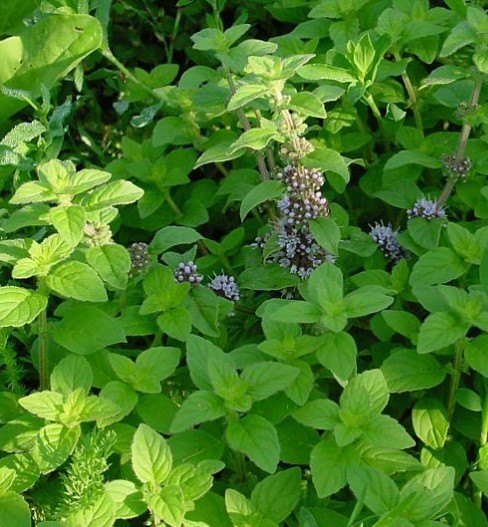
LATIN NAME: Mentha arvensis
COMMON NAME: Field Mint, Corn Mint, Wild Mint, Japanese Mint
Plant Profile
The field mark of M. arvensis is its verticillate flowers: small pale-violet or white corollas set in dense whorls stacked in the upper leaf axils, rather than in a terminal spike. Leaves are opposite, oval, toothed and fragrant, and the plant spreads by slender rhizomes to form broad patches in moist ground along ditches and field edges.
Peppermint, Mentha x piperita, carries menthol plus menthone and a trace of menthofuran, while spearmint, Mentha spicata, is built on carvone and smells of chewing gum. Cornmint is the menthol champion, with menthone, isomenthone, menthyl acetate and limonene as minor players and only a low share of pulegone, the compound breeders work to suppress for safety in the oil.
Across its huge range the species splits into many local forms that differ in oil yield and leaf size. That variation is why selected high-menthol clones, not open-pollinated seed, supply the commercial distilleries, since seedling offspring drift in both chemistry and vigour.
Science & Biotechnology
Mentha arvensis is the commercial source of cornmint oil, the feedstock from which most natural menthol is crystallised. The distilled oil is so rich in menthol that the compound freezes out as solid menthol crystals when the oil is chilled, a step that defines the global mint business. India, China and Brazil run large field areas of this species purely for that cooling molecule, harvested several times across a single warm season.
Uses & Benefits
Steam or hydro-distillation of the harvested herb yields cornmint oil, which is cooled so pure menthol precipitates as crystals, leaving dementholised oil for flavour work. The crystals are the raw cooling agent in balms, toothpastes, lozenges and inhalants sold worldwide.
Agronomists select clones with high menthol and minimal pulegone, and they trial spaced rows and frequent cuts to lift oil per hectare. Tissue culture keeps elite lines true, since seed offspring drift in chemistry and would scatter the field’s uniform profile.
Menthol and its esters feed fine-chemical lines, and the leftover oil fractions flavour confectionery and oral-care products. Research also probes the plant’s antifungal root exudates for crop protection in neighbouring rows.
The trailing rhizomes let cornmint cover ground fast, which is useful in a dedicated mint bed but a nuisance among slower herbs. A sunken edge or a bottomless pot sinks the spread, and a mid-season lift and reset keeps the clump from hollowing in the centre. In large fields the same trait supports mechanical harvest of the whole top.
After the menthol crystals are removed, the leftover dementholised oil still carries menthone and menthyl acetate, and it flavours chewing gum, toothpaste and confectionery where a softer mint is wanted. That split product is why a single distillation serves both the pharmacy and the sweet aisle.
In South Asia the leaves flavour chutneys, raitas and teas under names like pudina, and in Japan the oil seasons sweets. The taste is sharper and more medicinal than spearmint, so it suits savoury dishes and infused drinks rather than delicate desserts where a soft mint is wanted.
Dried leaf goes into herbal brews valued for a cooling feel, and the crushed herb repels some insects. The oil, diluted, is a common component of topical balms rubbed on the chest or temples for a clearing sensation.
Growing from Seed
Sow the fine seed on a moist surface and keep it bright; seedlings vary, so many growers instead plant runners from a known clone. Set plants 30 centimetres apart in soil that stays moist, and sink a barrier to check the rhizomes if space is tight in the bed.
Cut the top growth before flowering for the strongest oil, and water through dry spells since the herb thins in drought. A nitrogen feed after each cut sustains regrowth and keeps the leaves broad and deep green for the next harvest pass.
The crown survives frost and returns in spring across most cool-winter regions; lift and divide every few seasons to keep the stand young and productive, and compost the thin middle to renew the clump.
Our Take
For mint lovers, compare the cooling cousins side by side.
For a household planting, harvest only young shoots from clean, correctly identified plants and keep the bed separate from culinary mints with a different scent. In containers, renew the mix when roots circle the pot; the species responds better to fresh drainage than to constant saturation.
Related Reading
Readers interested in Field Mint frequently explore these as well: