


Mentha spicata Seeds | Spearmint
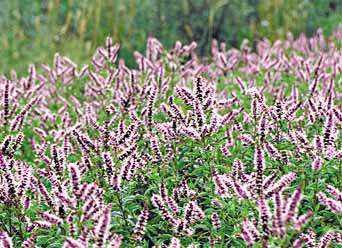
LATIN NAME: Mentha spicata
COMMON NAME: Spearmint, Garden Mint, Mentha spicata
Plant Profile
Like all mints, spearmint has a square stem and opposite, lance-shaped, sharply toothed leaves with a wrinkled, bright-green surface. The flowers are carried in dense whorls at the stem tips rather than in the loose spikes of its name, and the plant is almost entirely dependent on vegetative spread: cultivated spearmint is typically a sterile triploid at twice the base number, so it sets little viable seed and marches across a bed by stolons and rhizomes instead. The triangular nutlets it does form are seldom worth sowing, and most gardeners never see them at all.
Spearmint is one of the few herbs that earns its space by sheer usefulness: a few pots supply tea, tabbouleh, sauces and a bee-friendly flower through summer. It also makes a serviceable companion clump near brassicas and peas, where the scent is said to confuse some pests, though the effect is modest rather than a guaranteed control. The foliage dries well for winter use if cut just before flowering, and a tray of frozen chopped leaf keeps the kitchen supplied through the cold months.
Science & Biotechnology
Spearmint smells minty without the chilling bite of peppermint, and the reason is a single chiral molecule. The leaf oil is built around the R form of carvone, which can reach the majority of the volatile fraction, with limonene alongside. This is the same carvone found in caraway and dill, but in the opposite handedness: spearmint carries the R enantiomer while caraway carries the S form. The two compounds are mirror images, and the nose reads them as entirely distinct spices. Peppermint, by contrast, is defined by menthol and menthone, which spearmint barely contains, so the two mints occupy distinct culinary shelves and cannot stand in for one another in a recipe.
Uses & Benefits
The carvone-rich leaf is the backbone of Maghrebi mint tea, where a handful of fresh spearmint is steeped with gunpowder green tea and sugar, and it flavours chewing gum, toothpaste and a long list of lamb and yoghurt dishes across the eastern Mediterranean. The oil is recovered by steam distillation of the cut herb, and because the plant regrows after cutting it can be harvested more than once in a season. Dry regions of the world grow it as a field crop for the oil trade as well as for the fresh-leaf market, with the cut herb baled and shipped while still green.
Distillers judge a lot by carvone percentage and by how little menthone slips in; a clean, high-carvone oil is the aim for both flavour and fragrance use. Supercritical carbon dioxide and hydrodistillation are both documented routes, with steam still the workhorse for field scale. A low menthone reading sets a true spearmint oil apart from a peppermint-cut one on the analyst’s chromatogram, and buyers pay more for the cleaner profile.
Growing from Seed
That sterility is why spearmint in the garden is a clone managed by the gardener, not a seed crop. It is also why a single pot can become a permanent patch: the triploid cannot revert or cross freely, and what you plant is what you keep. Contain it, and you keep it; let it run, and it will. Growers who want a specific flavour profile therefore keep a named strain going by division rather than by trusting the seed packet, because any seedling that did appear would likely be a weak, off-type mint.
Because most garden stock is sterile, propagate from runners or rooted cuttings rather than seed: lift a section with roots and replant it. If you do sow, treat the seed as surface-sown on a moist, shaded mix and move seedlings once they show three to four true leaves. Grow in moisture-retentive soil in sun or light shade, and water regularly so the bed never bakes. The simplest control is to sink the root ball into a bottomless pot in the ground; renew the patch every two to three years by dividing the outer, vigorous shoots and composting the centre. Cut the tops often to keep the stems tender, and the plant will respond with fresh flushes of leaf all season long without ever flowering itself out.
Our Take
Spearmint’s running habit is best understood next to its relatives: the true peppermint hybrid and the menthol mint selection. For a distinct aromatic leaf, see common sage or Korean mint.
Related Reading
More species in the same orbit as Spearmint: