


Salvia officinalis Seeds | English Sage
LATIN NAME: Salvia officinalis
COMMON NAME: Common Sage
Plant Profile
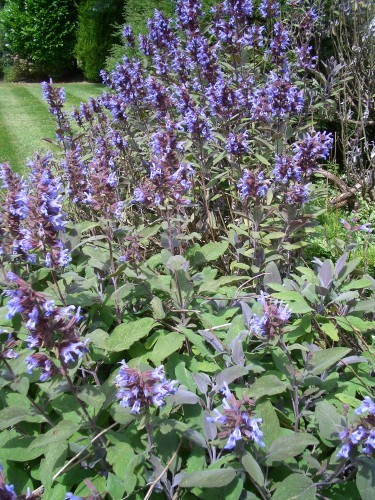
Common Sage (Salvia officinalis) grows as an evergreen perennial in the mint family. Common sage is one of those herbs that seems to have been in garden forever. Leaves have a very long record of use in kitchens, old practice and oils of herb garden, and plant is a fine, dependable presence of sunny border. It is a plant of open, sunny, sharply drained ground. The flowers pull in pollinating insects, which quietly widens its usefulness in the garden. Plants that offer this much while asking this little are rare enough to treasure.
Science & Biotechnology
As part of the mint family, Salvia officinalis contributes to research on plant classification and adaptation, while nurseries and gardeners continue to trial it for cultivation. Common sage is one of old friends of plant science, studied for soft, grey-green, pebbly leaves and fine, camphor-like scent. For practical purposes the message is encouraging: generations of cultivation have produced plants of predictable, well-mannered garden character.
Uses & Benefits
Beyond its ornamental appeal, Common Sage has the practical versatility that makes a plant worth growing from seed year after year. Common sage is a plant of many small duties, in garden and the kitchen. Soft, grey-green leaves have a very long record of use in kitchens of world, in stuffings, roasts, sausages and butters, and plant is a classic of old practice and essential oils. Low, shrubby, evergreen plant is also a fine, dependable presence of sunny border and herb garden, and violet-blue flowers draw bees of early summer. Beyond the establishment year, its needs are simple and few.
Garden sage is the classical European herb of memory, throat and menopause comfort: sage tea is a time-tested gargle for sore throats, and human studies have examined its effects on memory and menopausal flushing. Its name, from salvare, to save, says it all.
Growing from Seed
Starting Common Sage from seed is simple and satisfying. Use a fine, free-draining seed compost, scatter the seed evenly, cover it lightly and hold it just moist in good light. Move strong seedlings into individual pots, keep them in good light, and set them out when the weather and their size agree.
Our Take
Common Sage earns its space through character rather than fuss. Plant it in sun with drainage to its liking and the rest is easy.
Related Reading
Readers interested in Common Sage frequently explore these as well: