


Elsholtzia stauntoni Seeds | Mint Shrub
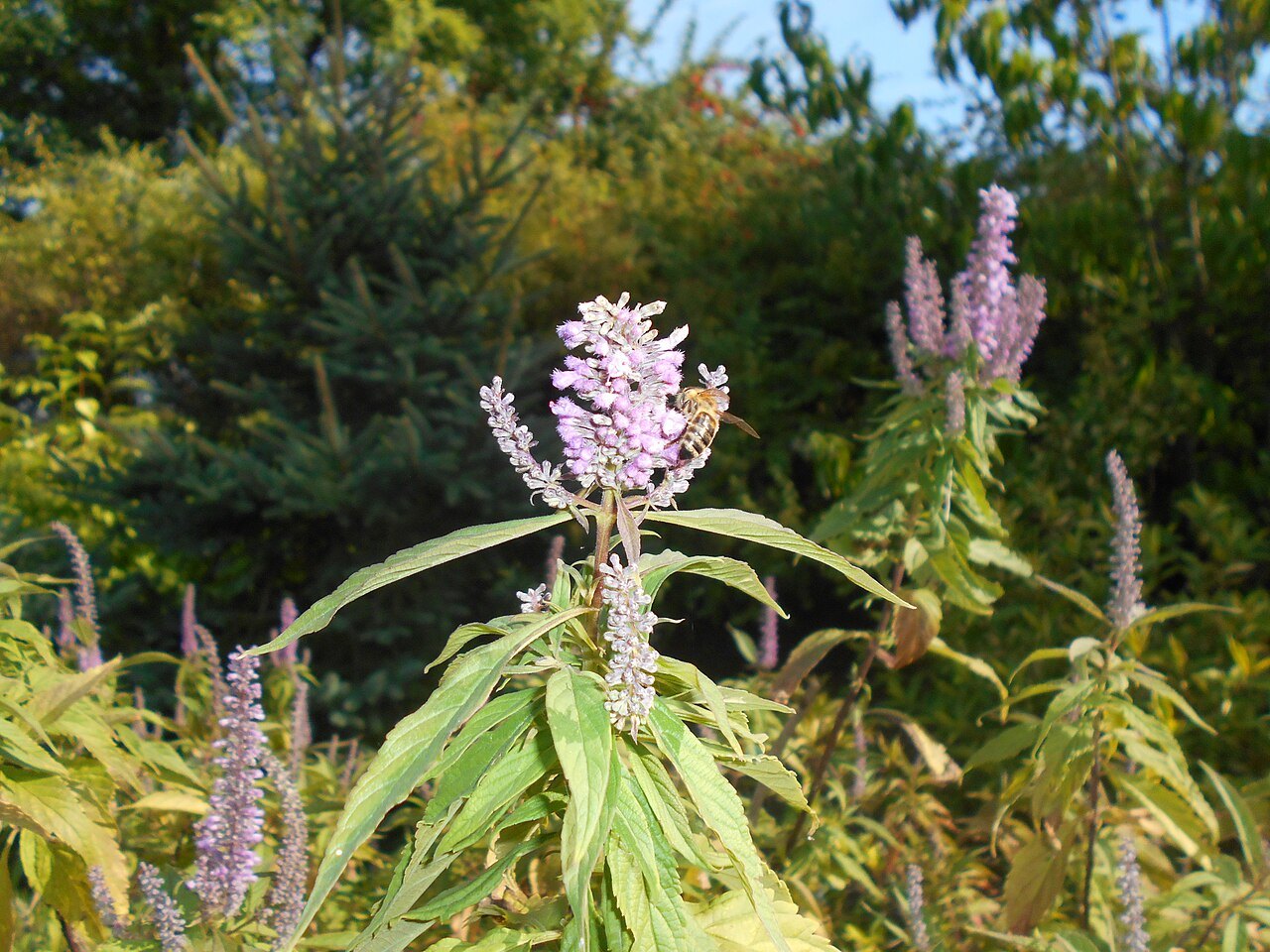
LATIN NAME: Elsholtzia stauntoni
COMMON NAME: Mint Shrub
Plant Profile
Elsholtzia stauntonii is a late-flowering subshrub from northern China, and the spelling on the label is often stauntoni with one i. It is a mint, with square stems and aromatic leaves, and it flowers in September and October, when most shrubs are finished. That alone gives it a place in a cold garden.
It grows one to one and a half metres in a season from a woody base, with opposite, lance-shaped leaves that smell of mint and camphor when crushed. The flowers are small, mauve-pink, and packed in dense one-sided spikes at the ends of the shoots. The spikes keep colour for a month, and bees work them until the frost.
It comes from Hebei, Shanxi and Shaanxi, on dry hillsides and among scrub, in a climate of cold winters and hot summers. That origin explains its hardiness and its need for sun. It ranks among the few late shrubs that will take a continental winter and still flower in a wet autumn. It is also drought-tolerant once established.
The genus honours Johann Sigismund Elsholtz, a seventeenth-century Prussian physician and botanist who wrote on garden design and on the making of medicines. The species honours George Staunton, who travelled with the Macartney embassy to China in 1793 and brought back plants and seed. Bentham described it from that material in the 1830s. Three other Lamiaceae are catalogued alongside it: Mentha canadensis, Moluccella laevis and Caryopteris incana.
Science & Biotechnology
The Lamiaceae are defined by the square stem, the opposite leaves, the two-lipped flower and the glands that make the essential oils. In Elsholtzia the oil is dominated by elsholtzia ketone, which gives the plant its smell, somewhere between mint and camphor. The same compound is why the plant is used in Chinese medicine and in Vietnamese cooking.
The flower is built for bees: a short tube, a lower lip as a landing platform, and four stamens that brush the insect’s back. The spikes open from the base upward, so a single spike is in flower for weeks. That is the same trick that makes some labiates good cut flowers, and it is why the plant is still worth cutting in October.
The plant is a subshrub rather than a herbaceous perennial: it keeps a woody framework above ground, and the new growth comes from buds on that framework. In a hard winter those buds can be killed, and the plant regenerates from the base. That is why it is cut back in spring rather than autumn, and why the old stems are left for protection.
Uses & Benefits
It is a plant for the back of a border, where the height and the late colour can be used without the shrub dominating. It associates with asters, with late grasses and with the last of the salvias. In a cold garden it ranks among the few things still flowering in the second week of October, and the bees find it before anything else does.
The dried leaves are used in Chinese medicine as a carminative and for colds, and the related Elsholtzia ciliata is a kitchen herb in Vietnam, where it is eaten raw with noodles. Neither use should be copied from a garden plant without advice. The oil is strong and the plant is not a substitute for the pharmacist’s version.
It is deer-resistant, drought-tolerant, and untroubled by most pests, though late frost can damage the new growth. It is not a plant for a small border, because it suckers mildly and the stems are leggy at the base. Prune it hard in spring and it will make a dense bush by July and flower from September.
Growing from Seed
Sow in late winter at eighteen to twenty degrees on the surface of a fine mix, and cover lightly, because the seed needs light. Germination takes two to three weeks. The seed is small and the seedlings are slow at first, so sow early and grow them on under glass until they are big enough to handle.
Plant out after the last frost in full sun and any well-drained soil, at sixty centimetres apart. Water through the first summer and then leave the plant alone. It will flower in its first autumn from an early sowing, which is unusual in a shrub. Cut it back to a low framework in March, when the buds are breaking.
Take softwood cuttings in June, or heel cuttings in September, and root them in a gritty mix under glass. They root in three weeks. Seed is the easier route for most gardeners and the plants come true enough. The plant is short-lived, five or six years, so keep a cutting going. It self-sows modestly in gravel in a good year.
Our Take
Anyone who gardens where October is grey should grow this. It is not beautiful in the way a peony is beautiful; it is a haze of mauve on a leggy bush, and it smells. But it flowers when the garden has given up, and the bees come to it in numbers, which is more than most late shrubs can claim.
Sow it early, plant it in sun, cut it back in March and take a cutting every few years. The spelling on the packet may be stauntoni or stauntonii and the plant will be the same. It is a shrub for the back of the border and the end of the season.
Related Reading
More species in the same orbit as Mint Shrub: