


Angelonia Seeds | Summer Snapdragon
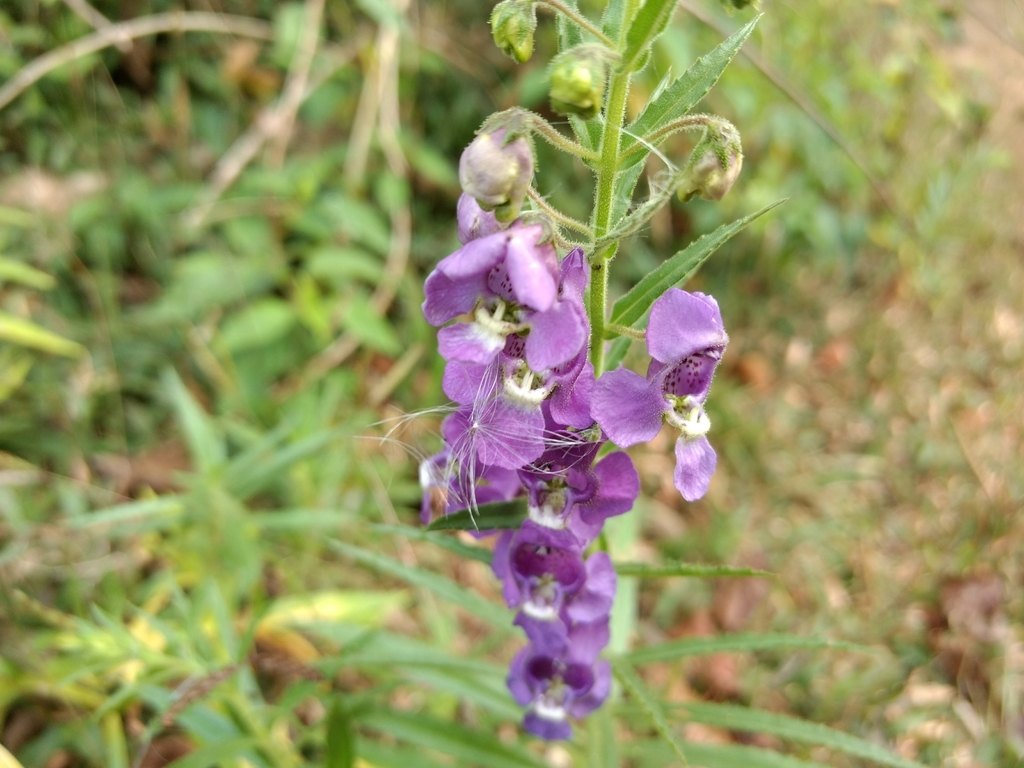
LATIN NAME: Angelonia
COMMON NAME: Summer Snapdragon
Plant Profile
Angelonia is a genus of about 30 species in the Plantaginaceae, native from Mexico to Argentina, with the greatest concentration in northeastern Brazil and in the seasonally dry forest of the Caatinga. The garden plant is usually Angelonia angustifolia, an upright herbaceous perennial 40 to 60 cm tall with narrow, aromatic leaves and spikes of flowers that resemble small snapdragons.
The flowers are 2 to 3 cm across, with a two-lipped corolla in violet, purple, pink, white or bicolour, and they are produced in spikes from early summer until frost. The plant is a half-hardy perennial in the tropics and a summer annual elsewhere, and it ranks among the few flowers that keeps producing in heat without any deadheading.
It is sold as summer snapdragon, a name that describes its appearance and its season, and it has become one of the standard summer bedding plants in the last twenty years, largely because of the Serena series, which is compact, uniform and early. In the Caatinga it grows in sandy soil along seasonal watercourses, flowering after rain and dying back in the dry season, so it tolerates heat and drought but not waterlogging.
Science & Biotechnology
Angelonia is one of the oil-reward plants, along with Calceolaria and Diascia, but its mechanism is different: the hairs inside the corolla secrete an oil that is collected by females of the bee genus Centris, which use it to provision their nests. The flowers have no nectar, so they are not visited by honeybees.
The genus is placed in the Plantaginaceae, the plantain family, which is a surprising placement for a plant that looks like a snapdragon. Molecular work in the 1990s moved the old Scrophulariaceae apart, and Angelonia, Antirrhinum and Veronica all ended up in the plantain family, while other former figworts went elsewhere.
The plant is a short-day plant in some species and day-neutral in the cultivated forms, so the modern cultivars flower continuously rather than on a photoperiod schedule. That change, achieved by breeding, is what made Angelonia a bedding plant rather than a curiosity. The genus is also unusual in the family for its dry-habitat origin, since most Plantaginaceae are plants of damp ground. Its Plantaginaceae company here includes Penstemon digitalis, Veronica polita and Maurandya barclayana.
Uses & Benefits
It is used in beds, borders and containers, where its upright habit gives vertical accents between lower plants, and its long season fills the gap between the spring bedding and the autumn chrysanthemums. It ranks among the best plants for a hot, humid summer, and it does not stop flowering in the way that snapdragons do.
The Serena series is the most widely grown, 35 to 45 cm high, in white, pink, violet and a deep purple that is almost blue. The AngelMist series is more compact and trailing, for baskets and the front of a border, and the Archangel series has larger flowers on taller stems. It is not scented, not edible and has no medicinal use. Its value is ornamental and, in its native range, ecological: the flowers are visited by oil-collecting bees, which are the plant’s natural pollinators, and by butterflies in gardens.
Growing from Seed
Sow indoors eight to ten weeks before the last frost at 21 to 24 °C, on the surface and only just covered, since the seed needs light. The seedlings take about two and a half weeks to show. The seed is fine and the seedlings are slow at first.
Prick out into 7 cm pots and grow on at 18 to 20 °C. Pinch once when the plants are 8 cm high to encourage branching, then plant out after the last frost, 25 to 30 cm apart, in full sun.
Once it is in flower, water it well and give a high-potash feed every fortnight. Deadheading is not necessary, but cutting back the spent spikes keeps the plant tidy. In a cold climate, take cuttings in late summer and overwinter the stock at 15 °C; in a mild one the plants may survive outdoors with a mulch. Do not crowd it: good air movement is the best defence against the powdery mildew that can affect plants grown in still, humid air.
Our Take
Angelonia is the best substitute for a snapdragon in a hot climate, and it ranks among the most reliable summer plants in the trade. It flowers for five months, it needs no deadheading, and it does not collapse in heat.
Grow it in the middle of a border or in a large pot, and combine it with grasses and with silver foliage. It is not a plant that will stop traffic, but it will keep flowering when everything else has given up.
Related Reading
More species in the same orbit as Summer Snapdragon: