


Diascia barberae Seeds | Barber’s Twinspur
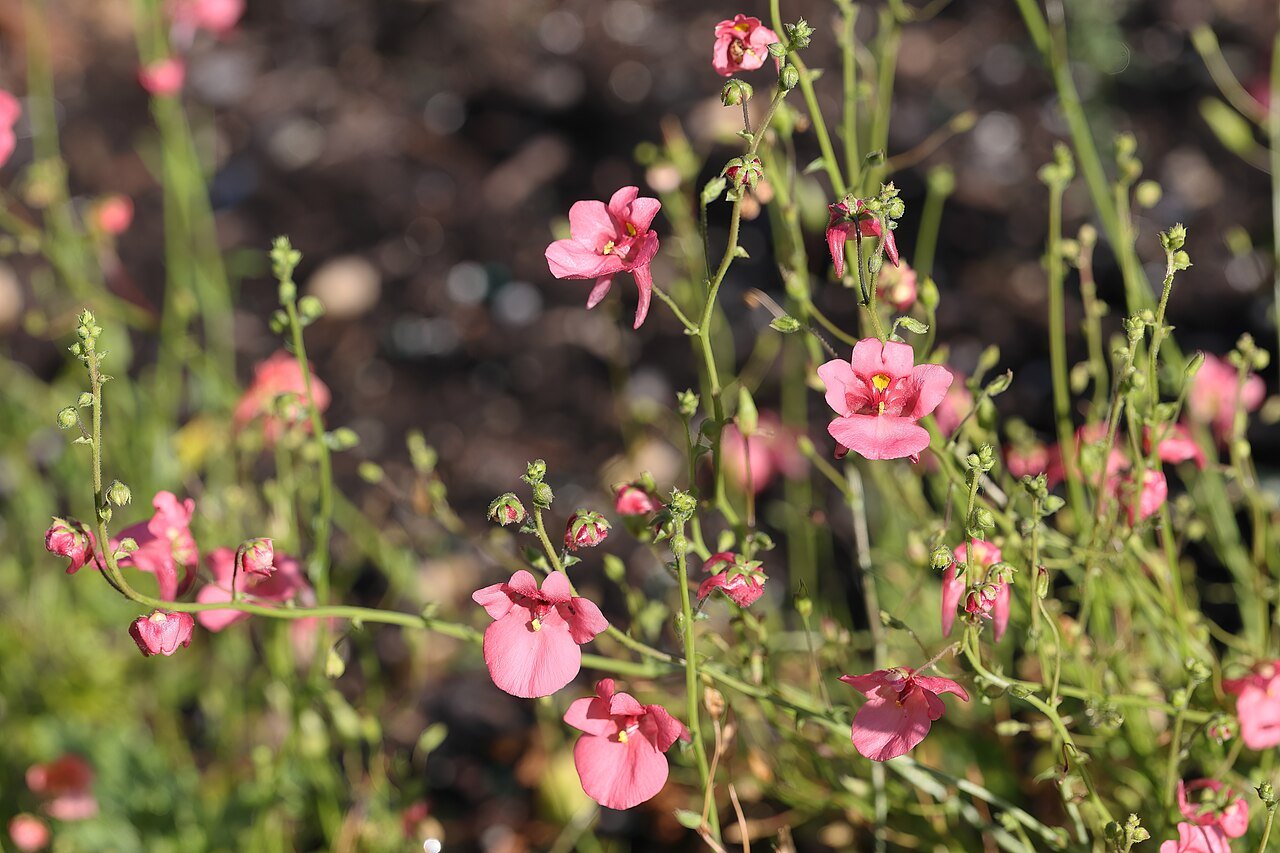
LATIN NAME: Diascia barberae
COMMON NAME: Barber’s Twinspur
Plant Profile
Diascia barberae comes from the Drakensberg and the high ground of Lesotho and the eastern Cape, where it grows in cool, damp grassland and on rock ledges at altitude. It is an annual or short-lived perennial 20 to 30 cm high, with small ovate leaves and a loose, spreading habit that fills space quickly.
The flowers are 1.5 cm across, cup-shaped with five lobes and two long spurs projecting backwards from the base, in shades of coral, salmon and soft pink. The spurs are the feature that gives the genus its common name, twinspur, and they are the reason the flower can only be pollinated by a bee with the right equipment.
It is carried in loose racemes over a very long season, from late spring until autumn, and the plant looks best when allowed to sprawl a little rather than being staked. In a hanging basket it makes a soft cascade, and it mixes well with nemesia and bacopa at the same scale.
Science & Biotechnology
Diascia is one of the classic oil-reward plants, along with Calceolaria. The two spurs at the back of the flower contain oil-secreting trichomes, and the oil is collected by females of the bee genus Rediviva, which have unusually long forelegs with specialised brushes for the purpose. The bee reaches into the spur, mops up the oil, and carries it back to line its nest cells.
The relationship is highly specific. Rediviva bees are confined to southern Africa, and the Diascia species they visit have co-evolved with them: the length of the spur matches the length of the bee’s foreleg, and in some species the match is so precise that only one bee species can reach the oil. Where the bees are absent, the plants set little seed.
The genus has about 70 species, all southern African, and it sits in the Scrophulariaceae, though some authorities place it in the Plantaginaceae following molecular work. The two families are close, and the placement of Diascia has moved between them more than once, which is a useful reminder that plant families are hypotheses rather than facts.
Uses & Benefits
It is a front-of-border plant, a container trailer and a good filler in the gap between spring bulbs and summer perennials. Because it flowers so early and so long, it is useful for keeping colour going while other plants establish, and it does so without needing to be deadheaded.
The named cultivars are the reason most people grow it. Blackthorn Apricot has soft apricot flowers and holds an Award of Garden Merit; Ruby Field is a deeper pink; Lilac Belle is pale mauve; Rupert Lambert is a strong coral. All of them are more compact and more floriferous than the wild species, at the cost of the looseness that makes the species charming.
It is not a good cut flower, since the stems are short and the flowers drop within a day, so leave it where it grows and enjoy it there. Its value is in the garden, where it fills space, covers ground and flowers for months with very little help. Alongside it in Scrophulariaceae: Nemesia versicolor, Nemesia strumosa and Verbascum phoeniceum.
Growing from Seed
Sow indoors eight to ten weeks before the last frost at 15 to 18 °C, on the surface and only just covered. Count on a fortnight for the earliest, three weeks for the rest. The seedlings are small and slow at first, so keep them cool and bright rather than warm and shaded.
Move the seedlings into small pots and keep them at 12 to 15 °C. Pinch once to encourage branching, then plant out after the last frost, 25 cm apart, in full sun or light shade. The plant tolerates poor soil but not drought, and it flowers best with regular water.
In heat it stops flowering and the foliage goes limp; cut it back by half and water, and it will usually come again in cooler weather. In a mild climate it self-sows and returns the following year, often in the cracks of paving. In a cold one, take cuttings in late summer and overwinter them under glass.
Our Take
Twinspur is one of the best plants for the front of a border in a cool summer, and one of the first to give up in a hot one. Its season is long, its colour is soft and useful, and it asks for nothing except water and a little shade in the afternoon.
Grow it with nemesia, bacopa and lobelia in a container, where you can control the water, or at the front of a border where it can sprawl. Cut it back in midsummer, keep it watered, and it will flower until the frost.
Related Reading
More species in the same orbit as Barber’s Twinspur: