


Nemesia versicolor Seeds | Variable Lionface
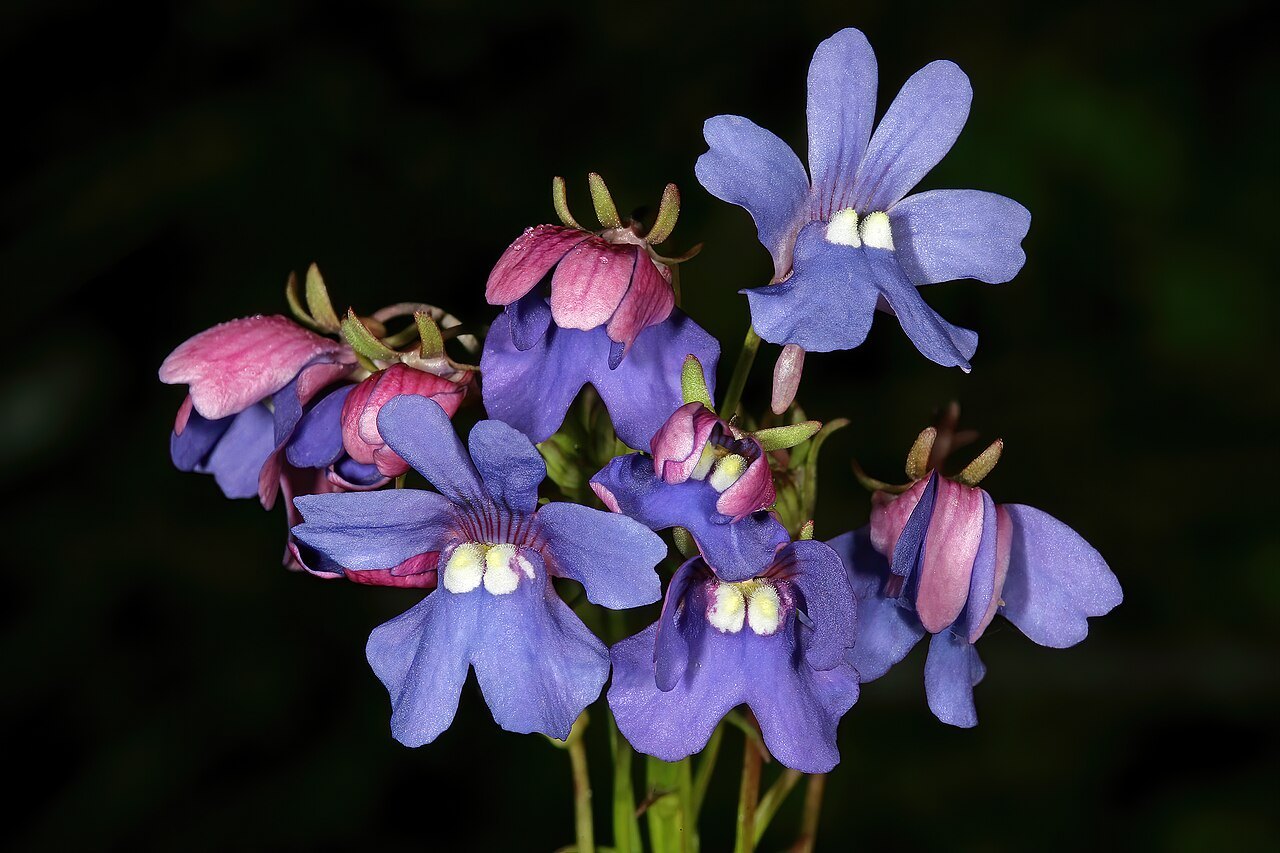
LATIN NAME: Nemesia versicolor
COMMON NAME: Variable Lionface
Plant Profile
The Afrikaans names are better than the English one. Nemesia versicolor is kappieblommetjie, the little bonnet flower, and weeskindertjies, the small orphans, both of which describe a flower that looks like a face peering out of a hood. Variable lionface is the botanical trade’s attempt, and it has never caught on with anyone.
It is a soft perennial, usually grown as an annual, with opposite leaves that run from ovate to oblong-lanceolate and are shallowly toothed along the margin. The stems are square in section and brittle, and a plant in full flower stands somewhere between twenty and forty centimetres before it begins to flop outward.
The corolla is the variable part, and versicolor is not a decorative epithet. Flowers on one plant can run from white through cream, yellow, pink and mauve, often with a yellow throat and a darker lower lip, and two plants from the same seed pod can look like different species. The spur behind the flower is short, blunt and full of nectar.
Two varieties are recognised, the nominate and var. oxyceras, separated on the shape of the spur and the division of the upper lip. Both occur across the Northern, Western and Eastern Cape, and the species grows in coastal subtropical scrub rather than in the dry interior that most people picture when they hear the word Karoo.
Science & Biotechnology
Nemesia sits in Scrophulariaceae, a family that once swallowed half the flowering plants and has since been cut down to something more honest. The snapdragon relatives stayed; the foxgloves and penstemons went to Plantaginaceae. Nemesia remains in the smaller family, and DNA work has been kinder to it than morphology ever was.
The spurred flower is a nectar economy. The spur holds a small volume of sugar solution, and only an insect with a tongue long enough to reach the bottom collects a profit; short-tongued visitors probe the lip, find nothing and leave. That is a filter, and it explains why the flowers are visited by a narrow set of bees rather than by everything with wings.
The genus holds around sixty-five species, the great majority in southern Africa and the Cape in particular, with a handful reaching tropical Africa. Many are narrow endemics on one mountain or one coastal strip, and the group is one of the clearest cases of rapid recent diversification in the South African flora. Near kin on the list are Nemesia strumosa, Verbascum phoeniceum and Diascia, all Scrophulariaceae.
Uses & Benefits
Its garden use is early colour in cool conditions: spring bedding, containers, and the front of a border where nothing else has started. It flowers in six to eight weeks from sowing, which makes it one of the fastest annuals available, and it keeps going as long as the nights stay below about fifteen degrees.
Some selections are scented, a soft honey smell strongest in the evening, and those are worth choosing deliberately because the scent is not consistent across a packet. The cut stems are short and last a few days in water, so it is a garden plant rather than a vase plant, and the trade sells it that way.
There is no edible or medicinal tradition attached to it in European sources, and the plant is not listed as toxic either. It occupies the ordinary middle ground of garden ornamentals: grown for appearance, discarded when finished, and carrying no particular hazard beyond the usual caution about unidentified plant material.
Growing from Seed
Sow in early autumn in a frost-free greenhouse, or in early spring where summers are cool, at eighteen to twenty degrees. The seed is fine and light-dependent, so press it into the surface and do not cover it. Expect seedlings in ten to fourteen days, with stragglers for a week after that.
The seedlings are small enough to be lost in a watering and should be pricked out in clumps rather than singly, because the roots resent disturbance. Once established, pinch out the growing tips once to force branching; a single-stemmed plant flowers early and then stops, while a pinched one keeps producing.
Grow on cool and bright. Heat is the enemy at every stage: warm nights stretch the stems, reduce the flower count and shorten the season to a few weeks. In a hot summer the plant is worth treating as a spring ephemeral and pulled once it sulks, rather than nursed through August.
Our Take
This is a plant for the gap between the last frost and the first real heat, and for the other gap at the end of winter under glass. Judged as a long-season bedding plant it disappoints; judged as six weeks of colour at a moment when nothing else is flowering, it is close to unbeatable.
Buy fresh seed every year, sow thinly, and resist the urge to grow it warm and fast. The orphans of the Afrikaans name are a fair warning: they do not want looking after so much as the right conditions, and no amount of feeding will substitute for a cool night.
Related Reading
More species in the same orbit as Variable Lionface: