


Euodia hupehensis seed
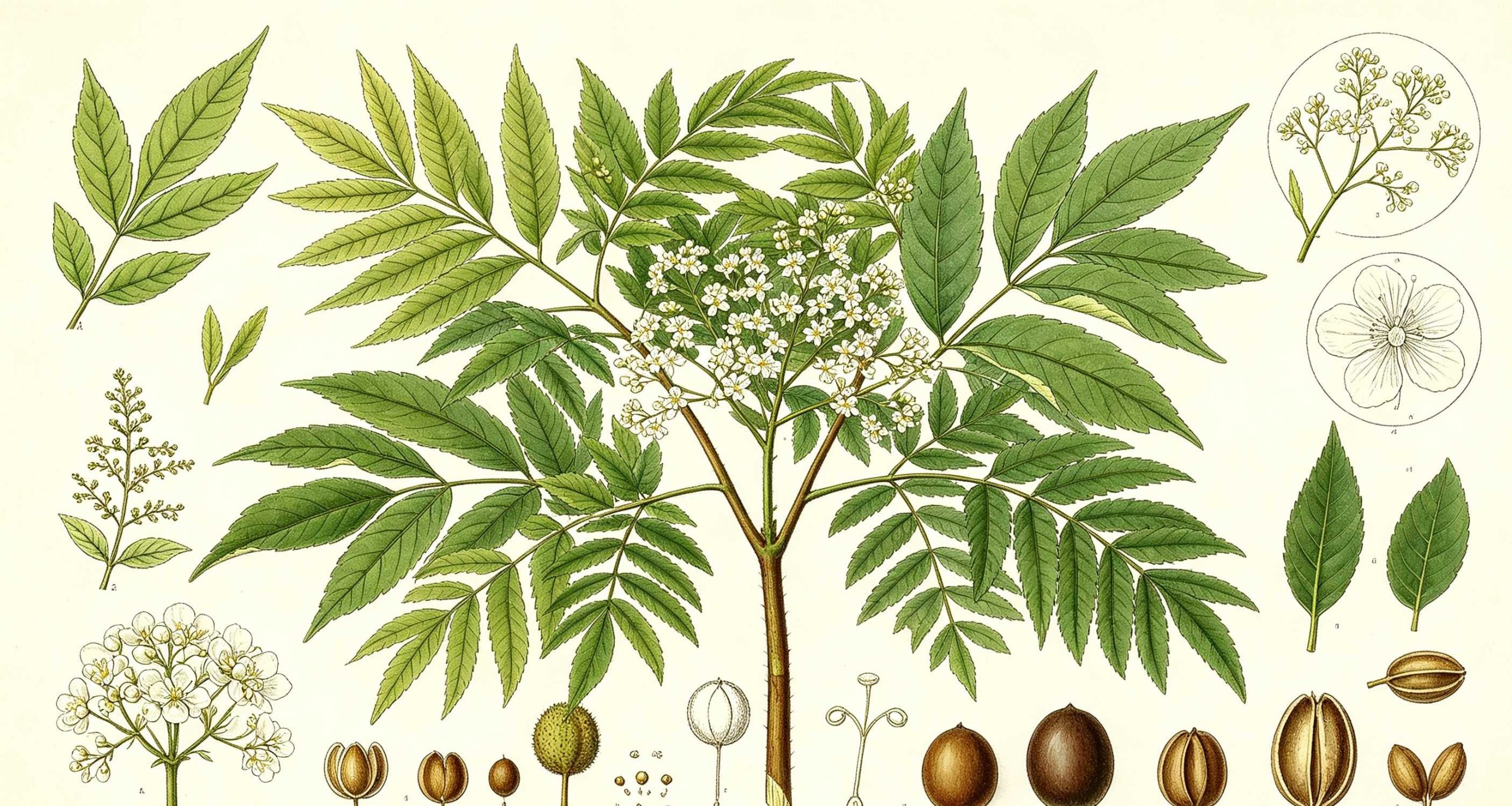
LATIN NAME: EUODIA HUPEHENSIS
COMMON NAME: Hupeh Euodia
In the mountain woods and the streamside scrub of central China, the euodia grows as a broad, open, deciduous tree with the large, pinnate leaves of many pointed leaflets and the wide, flat clusters of small, greenish-white flowers in the summer, the red, wrinkled fruits opening to reveal the shiny black seeds in the autumn. The herb steadily grows into a rounded crown, with a mature height of 5-10 metres. It is content in the sun or the light shade and the deep, moist ground.
Scientific Research & Plant Biotechnology
The euodia of the Hupeh hills comes up in the studies of the aromatic trees of the rue family, its pungent, pinnate leaves and its red autumn fruits keeping it in view in the work on the traditional tree barks of the Chinese mountains and the ornamental trees of the temperate garden. The research looks at the way the flat flower clusters draw the summer insects, the red capsules split to shed the black seeds, and the seed biology of the small, glossy seeds.
Ecological & Economic Value & Wide Applications
In the autumn garden, the euodia hangs the flat red clusters of fruit against the yellowing leaves and feeds the birds and the bees through the season. The aromatic bark and leaves have a long place in the regional traditions, the quick growth fills the awkward corners, and the tree makes the fine specimen, the wildlife tree and the trouble-free garden tree. It is a tree for the open, sunny, well-drained place.
To grow the Euodia from seed, stratify the cleaned seeds in damp sand over the winter.
Stratify the cleaned seeds in damp sand over the winter, and keep the young trees in the open, sunny spot. The pinnate leaves unfold with the warm season.
LATIN NAME: Euodia hupehensis
COMMON NAME: Hubei Evodia
LATIN NAME: Euodia hupehensis
COMMON NAME: Hubei Evodia
The Hubei evodia is a handsome, upright, broad, deciduous tree of the warm woodlands, and its fine, opposite, pinnately compound leaves and its large, rounded clusters of the many small, white or creamy-white, fragrant flowers, followed by the small, round, reddish or black fruits, have made it a treasured and fine tree of the garden. Growth leads to a rosette of leaves, to fifty centimetres. It is a species of the flowering tree in the rue family, and it is native to the warm woodlands of the central and the eastern China, while it is grown as a treasured ornamental tree, and it is known as the Hubei evodia.
The Hubei evodia belongs to the rue family, Rutaceae, and it is a species of the upright, broad, deciduous tree, native to the warm woodlands of the central and the eastern China, while it is grown as a treasured ornamental tree, and it is known as the Hubei evodia. It is prized for its large, rounded clusters of the many small, white, fragrant flowers.
Scientific Research & Plant Biotechnology
The Hubei evodia has a real and distinguished place in the research. It has been studied in the horticulture, since its large, rounded clusters of the many small, white or creamy-white, fragrant flowers have made it a treasured and fine tree of the garden, and researchers have examined its growth, its flowering and its cultivation, while its value as an ornamental and bee tree has drawn attention in the international horticultural press as a tree of the garden. The plant has also been studied in the ecology of the insects, since the large, rounded clusters of the many small, white flowers of the Hubei evodia are a fine source of the nectar and the pollen for the honey bees, and researchers have examined the flowers and their value, while the study of the bee plants of the garden has been of continuing interest, and the evodia is a fine friend of the honey bees. The species has also been studied in the chemistry of the natural products, since the fruits and the parts of the evodia contain the fine alkaloid and the oil compounds, and researchers have examined the plant and its constituents, while the study of the natural products has been of continuing interest, and the plant is best appreciated as a subject of study and a fine tree of the garden rather than a casual remedy. For a tree of such fine value, the Hubei evodia has a rich and continuing record of study.
Ecological & Economic Value & Wide Applications
Ecologically, the Hubei evodia is a generous tree of the garden. Its large, rounded clusters of the many small, white flowers feed the bees and the many insects, and its small, round, reddish or black fruits feed the birds, while its fine, broad, leafy crown gives a fine cover and a shelter to the birds.
Its economic value is real. The Hubei evodia is prized for its fine, fragrant, bee-loved flowers, and its value has drawn attention in the international horticultural press as a tree of the garden, while its fine, rounded clusters of the white flowers have made it a treasured tree of the bee garden and the ornamental garden. For a grower, the Hubei evodia is an easy and rewarding tree, and for a gardener it brings a white, fragrant, bee-loved tree to the garden. The seeds respond well to a short soak — place them in a cup of just-warm water for a little while, then sow them at only a shallow depth in a pot of sandy, well-drained soil, press the surface lightly, keep it evenly damp and give the pot a bright, sheltered spot.
# Euodia hupehensis Practical Value & Application Euodia hupehensis stands out as a high-value broadleaf tree widely utilised in ecological landscaping and apiculture across temperate climate zones. As a dependable late-season flowering species, it produces abundant, sugar-rich nectar that remains accessible to pollinators from mid-July through late August, a period when many native flowering shrubs cease blooming. This extended flowering cycle fills a critical food gap for wild honeybees and solitary pollinators, supporting stable colony development before autumn food scarcity sets in. For large-scale honey forest construction, this tree serves as a core planting material. Mature specimens develop rounded, dense crowns that cast moderate shade, making them compatible for mixed interplanting with other nectar-bearing trees and herbaceous pollinator plants. Its moderate growth rate simplifies long-term forest management; young saplings do not require frequent pruning to maintain open understory space for companion flora. The species tolerates mild altitude variation and well-drained loamy soil, adapting well to mountain fringe zones and rural marginal land unsuitable for intensive crop cultivation. Beyond apicultural use, Euodia hupehensis delivers solid ecological restoration benefits. Its robust root network stabilises sloped terrain to reduce soil erosion, while seasonal leaf litter decomposes rapidly to replenish organic matter in depleted soils. The thick foliage layer provides shelter for small insect species and ground fauna, boosting local biodiversity within man-made woodland habitats. Horticulturally, the tree works well in park borders, roadside green belts and botanical demonstration plots focused on pollinator conservation. Unlike fast-growing Tetradium daniellii, it thrives in partially shaded positions, expanding the range of sites available for pollinator garden development. Its compact fruit clusters create subtle seasonal visual interest without producing invasive self-seeding, cutting down ongoing landscape maintenance labour. Traditional regional utilisation also recognises its medicinal properties. Dried fruit extracts from Euodia hupehensis have long been incorporated into herbal formulations, valued for mild regulatory effects on digestive function. All harvested plant materials for herbal use are sourced from mature wild and cultivated trees, with no collection from juvenile saplings to preserve natural regeneration. Commercial forest operators favour this species for mixed multi-purpose plantations. It requires minimal pesticide intervention thanks to natural pest resistance, lowering overall operation costs for long-term honey production projects. When planted in grouped stands, overlapping flowering periods amplify nectar yield per unit area, raising the productivity of managed pollinator habitats for both small apiaries and large regional honey forest initiatives.